
These are Swedish communities, as opposed to Sami ones, they've been integrated into the wider Swedish society since their founding, yet these languages are still alive today(though some are critically endangered)
And from what I understand Älvdalsmål is, like all dialects, getting rounded at the corners and getting more understandable to other Swedes.
Even dialects that sound incomprehensible at first, if you're a native speaker you'll get used to it quickly. The difficulty of Älvdalska is superficial, it's actually very close to what you're used to, so you'll learn to understand them and they already know how to understand you.
Sami is completely different. It takes a long time to learn. Go back 150 years, and very few Sami would be able to move to the capital and pass as Norwegian or Swedish, their accent would give them away even if they did know the majority language. Go back another 50 years, and they may simply not have been allowed to even try to pass in many places (as I recall, the first Sami priest in Norway, Anders Porsanger, was rejected by his Trondheim congregation. He was simply too weird for them, even though he was highly educated and of course spoke excellent Norwegian).
I'd argue that the reason locals understand you more than you understand them is, in these cases, that they're effectively bilingual. If they want you to understand then they'll switch to Swedish and you'll understand just fine.
There hasn't been anyone speaking only Mål in a few generations, in my estimate. You either speak both mål and Swedish, or only Swedish.
And no, you don't pick these up easily. I grew up in Rättvik. My grandmother used to speak rättviksmål on occasion (she was bilingual with Swedish) I can understand rättviksmål somewhat. I used to date a girl from Malung, who spoke Swedish usually, but exclusively Malungsmål with her mom. 3 years together and I still couldn't understand a single word she said to her mother. Mål is often conflated with the dialects of the same area, but they are 2 distinct things. Skånska is a dialect,I can understand it fine, even I have to focus a bit more than usual. Dalarna has a dialect too, the one Gunde Svan speaks on TV, it's easy to understand. Mål is separate, and much, much harder.
Rättviksmål is considered the easiest to understand for native speakers of Swedish. Here's a reference text for your perusal: https://shfstor.blob.core.windows.net/rattvik/uploads/images...
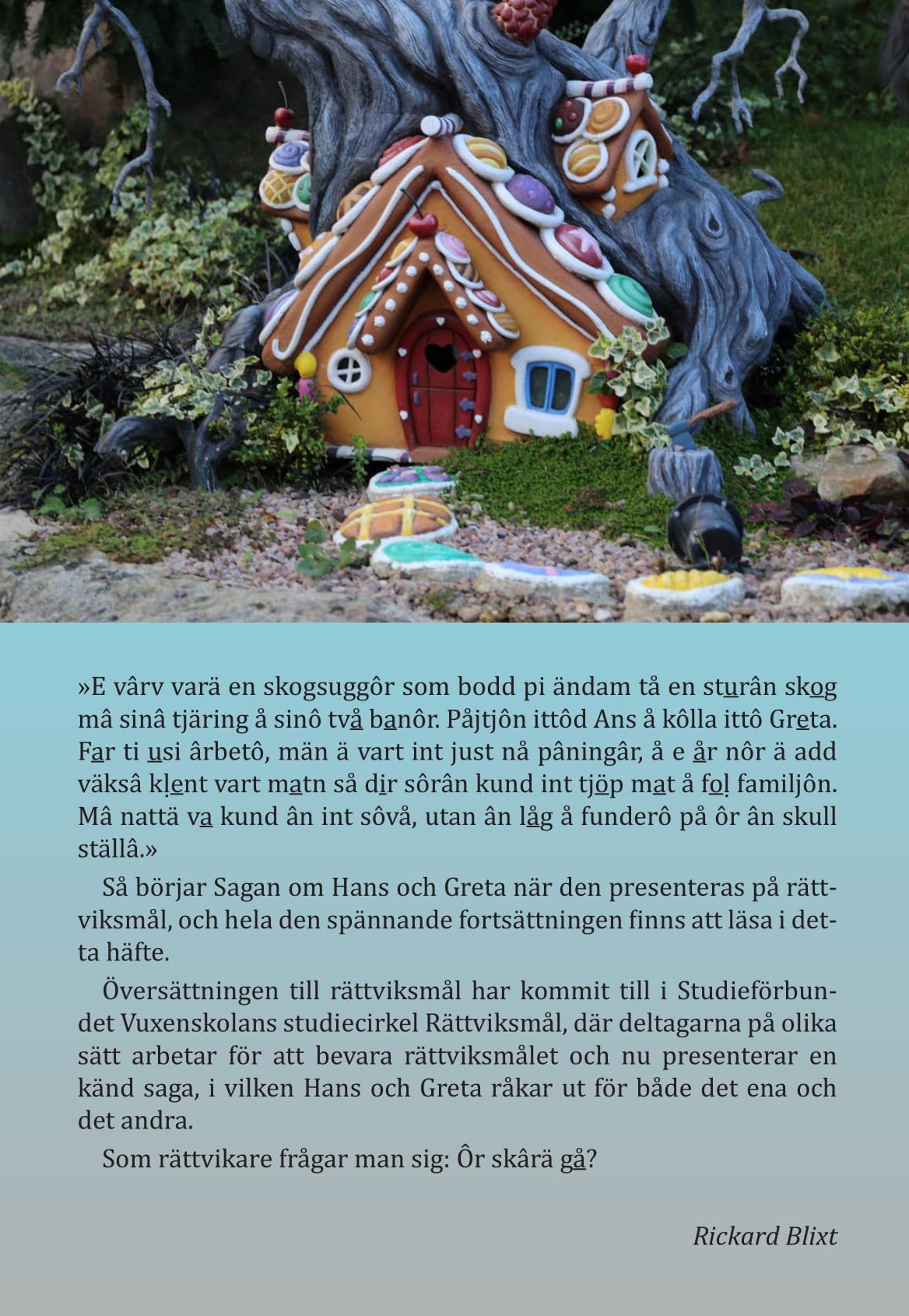
This Wikipedia article is also interesting.
They're essentially separate languages springing from the same roots, and therefore have some similarities.
https://sv.wikipedia.org/wiki/Egentliga_dalm%C3%A5l
You're right that Sami is harder though. It does not share a common root with Swedish, so there are basically no similarities. Even German would be easier for Swedes as they're both Germanic languages, but they've diverged long enough ago that similarities are sparse these days.
The term “dialect” is very fluid, and intelligibility is not a requirement. It is often a negotiated term that has more to do with culture or politics.
In China, they even call Cantonese and Hakka “dialects”, which is linguistically absurd, but serves a political purpose.