
On old school manual focus capable lenses you'll note a small (often red when colors were used to indicate f stops) dot to the left of the focus indication line.
https://commons.wikimedia.org/wiki/File:AiS_Nikkor_85mm-2.0_...
.jpg)
On more modern lenses, is simply a dot. https://www.mir.com.my/rb/photography/companies/nikon/nikkor...
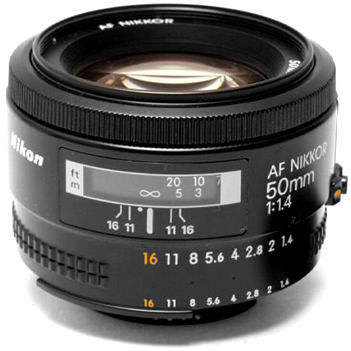
This was the offset for IR photography. You'd focus normally, and then make note of the focus distance and then line up the focus distance with the red dot for IR offset.
---
The UV photography often was done with other glass since the glass used by most lenses does an ok job of filtering UV light.
The 105mm UV lens for example - https://www.mir.com.my/rb/photography//hardwares/speciallens...
It's an oddball enough lens that others don't often make that it keeps getting special runs.
https://www.nikon.com/business/industrial-lenses/lineup/uv/
Costal Optics did a run of of the lens too - https://diglloyd.com/prem/s/DAP/Coastal60f4/Coastal60f4.html...
---
One of the photographers I've stumbled across from days of old who did UV nature photography (what do bees see?) http://www.naturfotograf.com/uvstart.html