
... but, do agree that cheap weapons are still becoming extremely important. Iran is terrorizing the middle east and strait of hormuz with cheap drones, so they are definitely important. Yeah, in the war of attrition, low cost, high-volume options are clearly very important.
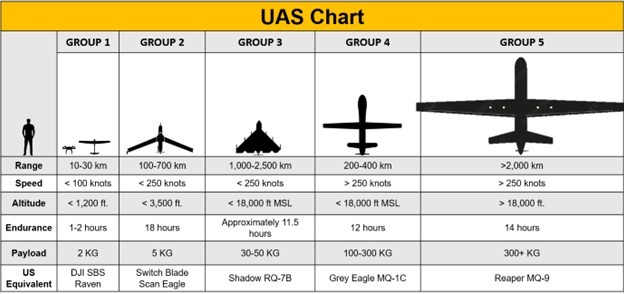
The GP is confusing Iran's neighbours not being ready to counter group 3 drones with the drones being inevitably effective. These drones are by necessity large and slow, because they need a lot of energy and aerodynamic efficiency to get their range. That means that they are vulnerable to cheap counters, which Ukraine is demonstrating very convincingly: even though Russia is now launching 800+-drone raids, the vast majority is shot down.
Even when those drones do get through, they are extremely inefficient. It's not just that they can't carry a heavy or sophisticated payload (more complex warheads are more effective, but way more expensive), the extremely high attrition ratio forces the enemy to try to target way too many drones per aimpoint. Instead of serving a few hundred aimpoints, the 800-strong raid is forced to concentrate on just a few, otherwise most aimpoints will get no hits whatsoever.
But also the only reason 800-strong raids can even be launched is Ukraine lacking the capability to interdict the launches. 800 group 3 drones have an enormous logistics and manufacturing tail, which a Western force would have no problem destroying way before the raid can be launched. For example, Iran in its current state can't launch such raids. So in practice Iran's neighbours would need to intercept only a handful of drones, which is hardly an insurmountable challenge.
[1]: https://mwi.westpoint.edu/wp-content/uploads/2024/05/FL1.jpg
It's a big challenge when you run out of interceptors...
Tankers moving at a slow speed, across a narrow strait.
They don't have to sink to not be commercially viable; a few deck fires negatively impact your days at sea without incident.
Cheap munitions sometimes explode before they are launched, killing crews and destroying platforms.
Cheap munitions mean that CAS is a roulette. You waited for ten minutes for a support fire mission? Sorry, wait for ten more, whatever we launched has failed. Or maybe you're dead because the munition has hit you instead.
Cheap munitions can pin you down. Those cheap FPV drones that are supposedly cheaper than Javelins require dedicated immobile units to launch and guide to targets. Javelins are organic to infantry squads.
Cheap munitions are either very expensive or impossible. There's no cheap anti-ballistic missile and no cheap missile that can sink a warship in the Taiwan strait when launched[*] from Guam.
[*]: alright alright an LRASM would need to be flown closer by an F-35 but the point still stands
This hasn't been true for 3-4 years now, most of the combat drones being used now are purpose built kamikaze drones. Notably the Russians are using Iranian designed Shahed 136s, while the Ukranians have the similar Liutyi. Among many, many, many other models in various roles.
> And let's not forget. The US had napalm, helicopters, bombers, incredible logistics, cutting edge equipment of all sorts. Vietnam had a bunch of sticks in a hole covered in poop. Those sticks sent Americans crying home and we still get movies and games with them crying about how bad it was.
While the Americans absolutely lost in Vietnam really bad, the Vietnamese regular army (PAVN) was extremely well equipped with some of the latest Soviet and Chinese equipment. Hanoi was one of the most densely defended anti-air spaces in the world (because the Americans insisted on trying, again, to kill civiliasn to get them to surrender, which never works), with top notch systems. The PAVN had mechanised batallions with tanks, armoured personnel carriers, anti-tank missiles, even amphibious tanks. The air force also had pretty good quality fighters.
The VietCong on the other hand was a guerilla force equipped only with light and mobile equipment.
The war in Ukraine is being fought with all tiers of systems, ranging from Zircons and PAC-3 on the high end to booby traps on the low end. All of them are essential, and shortcomings on any of the tiers is ruthlessly exploited by the other side. Saying that it's only the small drones that matter betrays over-reliance on the gory FPV kill footage.
"QA, safety, blah blah blah" get implemented on every level as soon as it's feasible. You can just look at photos from Yelabuga and see how their assembly lines are not fundamentally different from Raytheon's. Ukraine is standardising their drone manufacturing. This is inevitable, because faulty munitions lead to
- killed friendly soldiers if the munitions explode pre-launch
- wasted logistic resources if they don't launch
- wasted time and targeting opportunity or friendly units not getting fire support when they fail after launch
The cost of faults is severe and much higher than just the cost of the munition itself.
It seems that you're misinformed about the real cost of modern FPVs used in Ukraine. Reports of sub-$1000 drones are years out of date and heavily relied on salvaged munitions, but there are only so many RPG warheads you can get for "free". Current FPVs are heavier, more capable, and cost a few thousand dollars. Further, it's reported that it takes dozens of FPVs to kill a single "hedgehog tank", which brings the total cost of one kill to a rough parity with "classic", "expensive" systems like the Javelin, except Javelins can be carried by a mobile squad, and launching FPVs requires a dedicated immobile unit with a long logistical tail.
Don't mistake forces not being ready to counter low-tier threats immediately with the threats being impossible to counter. Group 3 drones are very effectively countered in Ukraine, to the extent that it takes hundreds to deliver maybe a few TLAMs worth of payload to the target. There are mature systems being rolled out right now across western armies, from various gun-based solutions to APKWS. Group 2 drones are decimated with cheap anti-air drones. Group 1 drones are being handled with APSes, which work pretty well even in urban environments, as Israel has (very unfortunately) demonstrated lately.