
The current balance where people wrote a paper with reviers in mind, upload it to Arxiv before the review concludes and keep it on Arxiv even if rejected is a nice balance. People get to form their own opinion on it but there is also enough self-imposed quality control on it just due to wanting it to pass peer review, that even if it doesn't pass peer review, it is still better than if people write it in a way that doesn't care or anticipate peer review. And this works because people are somewhat incentivized to get peer reviewed official publications too. But being rejected is not the end of the world either because people can already read it and build on it based on Arxiv.
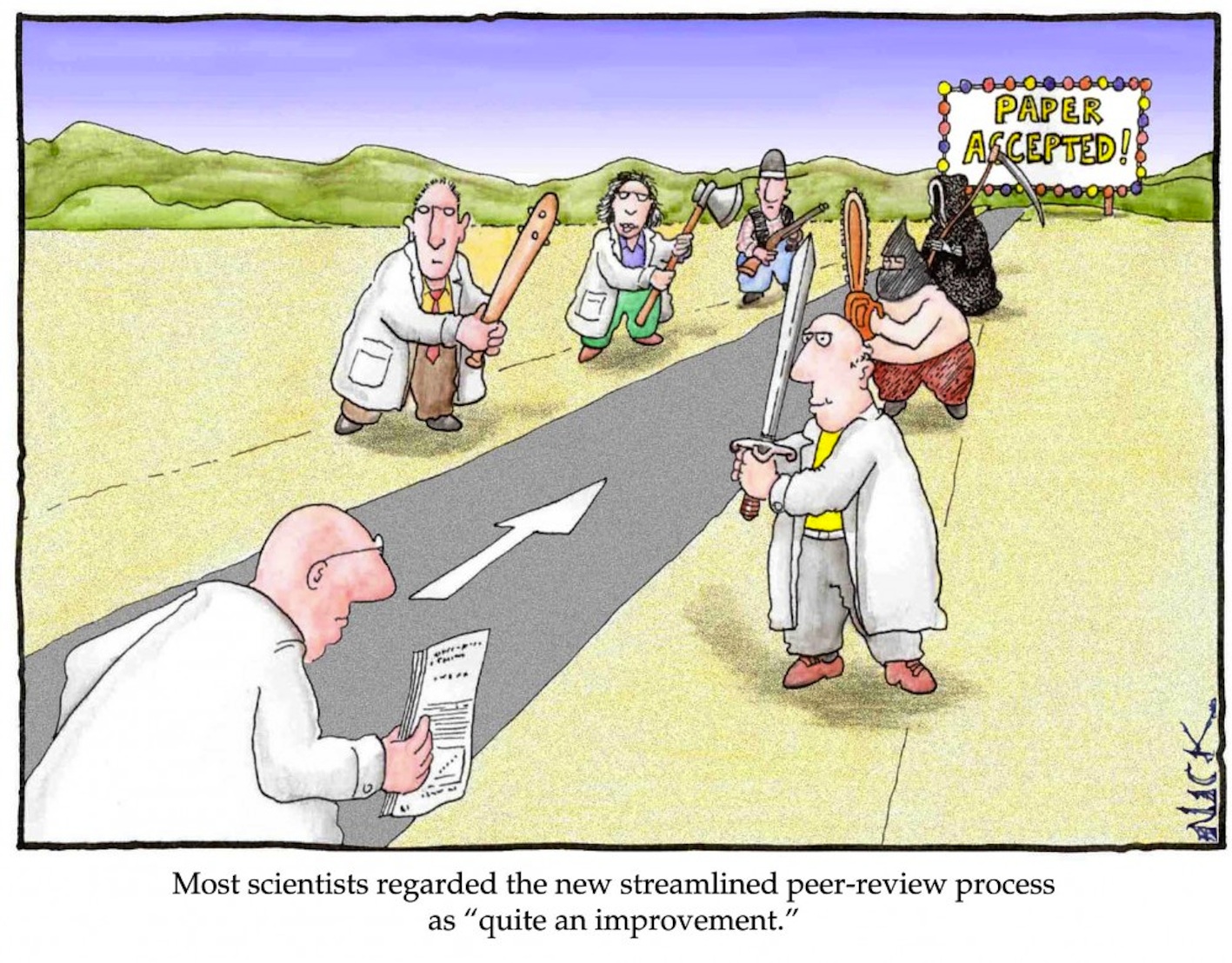
The problem is that "optimizing for peer-review" is not the same thing as optimizing for quality. E.g., I like to add a few tongue-in-cheeks to entertain the reader. But then I have to worry endlessly about anal-retentive reviewers who refuse to see the big picture.
If peer review were to go away, this whole academic system would get into a crisis. It's dysfunctional and has many problems but it's kinda load bearing for the system to chug along.
Maybe we can go back to very opinionated “true” academia,
where there are institutional gatekeepers,
but they mostly get it right on who to award (and not),
vs the current game of
“whoever plays ball with funding sources the best = the best academic”,
which is obviously bullshit.
in much earlier institutions of knowledge and excellence,
the only transparent metric was whether or not they approved you.
The arXiv vs journal debate seems a lot like 'should the work get done, or should the work get certified' that you see all over 'institutions', and if the certification does not actually catch frauds or errors, it's not making the foundations stronger, which is usually the only justification for the latter side.
Others (at least in chemistry) will accept it, but it raises concern if a paper is only available as a preprint.