upvote
Indeed - though the article doesn't really state the boats weren't in existence before the Vikings, it's about ship burials which apparently weren't supposed to exist in Scandinavia until the practice was imported from England. A theory I'd never heard before, but I guess that's on me. In any case, the find in the article seems to contradict that theory.

As for boats, the Viking age has been connected with acquiring sail technology, not so much with boats as such (which have existed for a long time, the rock carvings you linked to show depictions of boat designs which have actually been found in archeological digs, and that indicates that older, different carvings are also true and that boats were used for long distance trade and expeditions a millenium or two, at least, before the Vikings).

If the appearance of efficient sail technology really coincided with the beginning of Viking raids is still in the open I believe.

reply
Stone ships had been burial sites for two thousand years before the Vikings came to Lindisfarne. And long distance trade has been established and given the extent of the Battle of Tollense contact between tribes must have stretched far and deep. And Britain was an important source of tin so trade routes both started and ended there.
reply
Two thousand years! I thought of the stone ships too (these are burials marked by stones laid out in the shape of a ship), but I went searching for an old example and it seemed like the oldest persuasively dated one is from around 600.
reply
Tjelvar on Gotland are presumed to be from 750BCE, and I don't think that is the oldest in Scandinavia.
reply
Oh, nice. That's the one I couldn't find a Wikipedia article on, though I see now it's mentioned under Boge (with a picture). https://en.wikipedia.org/wiki/Boge,_Gotland
reply
I know it's frustrating but media sort of reflects the most cautious and the most adventurous opinions of archaeology. Because saying vikings started at 793 is just a safe archaeological opinion, while even the romans built coastal forts along the british east coast to defend against "pirates".

Then the media will turn around and print something absolutely outlandish based on a total hypothesis, just because it attracts clicks.

reply
Those forts: https://www.roman-britain.co.uk/military/roman-frontier-syst...

This site suggests "Germanic groups such as the Saxons, Franks, and Frisians". That seems like the more parsimonious explanation.

reply
Yeah but again we're coming up against safe archaelogical assumptions based on findings. But when we're talking Saxons and Frisians I find it hard to fail to mention the Angles and the Jutes.
reply
> This site suggests "Germanic groups such as the Saxons, Franks, and Frisians". That seems like the more parsimonious explanation.

More... than what? What do you think Vikings are?

reply
Scandinavian? Different tribes? Danes, at least?

https://upload.wikimedia.org/wikipedia/commons/0/0b/Europe_a...
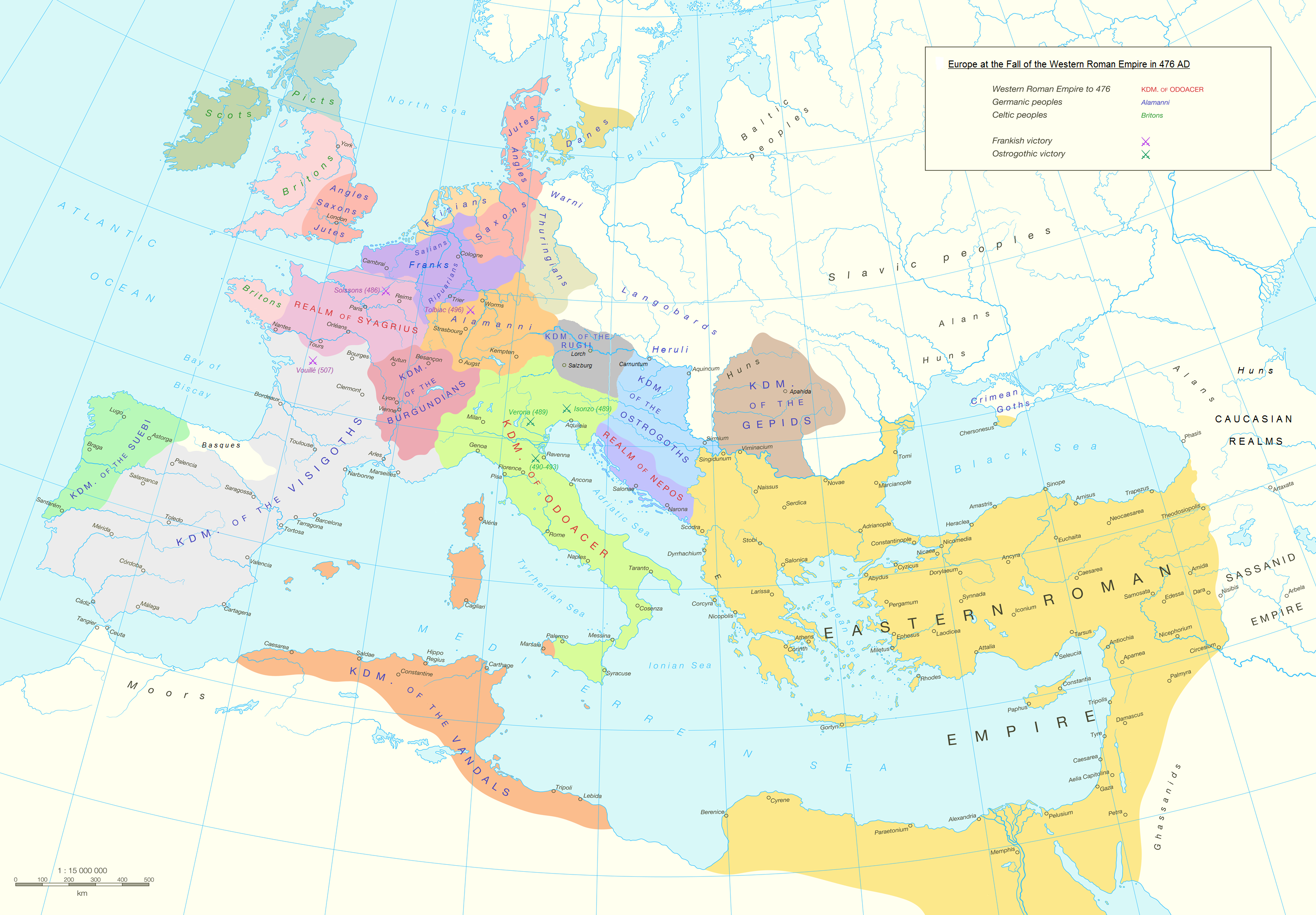
INTPenis is mentioning Angles and Jutes because they were in present day Denmark (and England). You might ask what the cultural difference is, from Vikings, and I'd flounder. Vikings spoke Old Norse, a germanic language related to whatever the other tribes spoke (um, West Germanic, such as Old Frankish). They believed in gods related to the gods of these other tribes and used similar runes.

Well, the Saxons famously had Saxes: https://en.wikipedia.org/wiki/Seax

If you want to say this is an arbitrary modern set of categories ... I guess the Romans are responsible for the categorization really, by writing down tribe names such as Frisii.

reply
Well yeah, there definitely was the period and cultural phenomenon called the Nordic Bronze Age, which also seems to closely match the dating of those rock carvings. You can read more about it elsewhere, but we're talking about relative largesse, reach and cultural interaction easily matching or exceeding that of the Vikings, originating and spanning a large part of the Indo-European sphere of dominance from Scandinavia to Mycenaean Greece and even beyond. Making and accumulating bronze itself drove the development of trade networks and connections of pretty extreme reach and complexity, unmatched for a long time after the Bronze Age Collapse.
reply
how did they do it without AI though
reply