upvote
On 9 July 1537, Martin Luther wrote in a letter to Wolfgang Capito about a lost golden ring: "Pro annulo aureo gratias tibi agit mea Catharina, quam vix unquam magis indignatam vidi, quam ubi sensit, cum vel furto sublatum, vel sua negligentia (quod nec mihi verisimile est, licet usque ingerenti) amissum, quod persuaseram ei, hoc donum esse felix omen et augurium ei missum, tanquam nunc certum esset, vestram Ecclesiam cum nostra suaviter concordare; id mire dolet mulieri."[1]

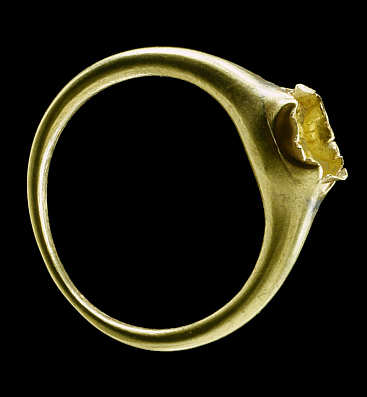
When Luther's house in Wittenberg was excavated about 20 years ago, a golden ring[2] was found that must have been deposited there before 1540. It is therefore quite likely that this is the ring mentioned by Luther in 1537.

[1] See WA, BR 8: no 3162 -- https://archive.org/details/werkebriefwechse08luthuoft/page/...

[2] Here is an image of the ring: https://www.zum.de/Faecher/G/BW/Landeskunde/rhein/geschichte...
reply
Are we expected to know latin, or is this supposed to be a little homework assignment for us? Ridiculous.
reply
Rather obviously these days one can copy/paste the Latin into google translate in mere seconds for relief ...
reply
FOMO burnout is real.
reply
You're expected to use technology to break through the language barrier
reply
Yup, classic Martin Luther!
reply
If my grandmother were to find out that housekeepers occasionally do actually take things, it would set us back decades.
reply
Google Translate:

My Catherine thanks you for the golden ring, whom I have hardly ever seen more indignant than when she realized that it had been stolen or lost through her own negligence (which is not likely for me, although I still insist on it), which I had persuaded her that this gift was a happy omen and augury sent to her, as if it were now certain that your Church would agree pleasantly with ours; this grieves the woman wonderfully.

reply
My mom once was getting ready for work and I hear a pop and hear my mom yelling. I go in and her necklace fell off the dresser; a "dust buster" wall wart was plugged in back there and it fell across the prongs, shorting it out.
reply
This is why you always mount outlets with the grounding pin facing up!
reply
Wow, I never knew they could be installed that way; the US standard doesn't say. Now every time I see a new outlet I'm going to check.
reply
Or have sensible outlet design where prongs are always recessed.
reply
This is why you have modern circuit breakers.
reply
How does that help?
reply
The ground pin, when "up", is higher than the hot, so in certain situations it can prevent something from shorting the hot and neutral. Code (?) or convention requires it if you have a metal faceplate, and hospitals require it. People generally like them mounted ground down because then they look like little faces. :-)

edit: Not code, just convention.

reply
Wouldn't it short hot and ground then, and still turn the necklace into a short-lived fuse?

The more practical reason to mount ground down is that wall warts with ground pins or polarized prongs nearly universally arrange them so that they're hanging down when inserted into a ground-down plug. If the plug's flipped, the wall wart's upside down and its weight is trying to lever it out of the wall.

reply
Yes, in that case it would short hot and ground, which is effectively the same and hot and neutral, since at the main panel hot and ground are bounded together. But if it were, say, a metal credit card or something rigid, it might just fall on the ground, or could hit the ground and neutral.
reply
It doesn't.
reply
... it was an ungrounded plug... Plus it was a chain, so it'd drape across all 3.

TBH, in the house I mount them ground down, but under cabinets or in the garage/shop or etc I mount it ground up.

reply
I think ground up commonly indicates that an outlet is controlled by a switch on the wall. It's not code, but I think it's a convention
reply