
they also had to redesign the door handle and people have gotten stuck in the cars because of that and died. not just one isolated incident... more than one case of the car door not working because it's electrical only and the backup physical release mechanism is under a door panel you need to pop off and reach inside to pull after you just got into an accident and are physically disoriented.
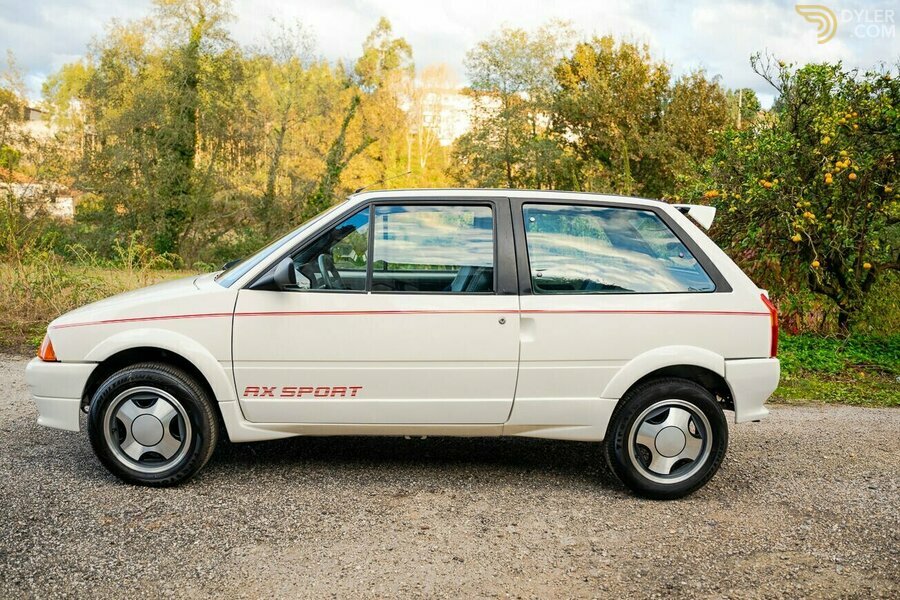
Look at that door handle. Fully flush, NACA profile scoop in the bodywork to insert your finger behind the trailing edge of the door and flick the little lever up to unlatch it.
Give me that, please. I wish I'd never sold my 1991 Citroën AX GT, it was so quick and quiet. Hardly any wind noise, so it must have been very aerodynamic.
https://upload.wikimedia.org/wikipedia/commons/e/ec/1969_Pon...

I can't help but think that the water pump must require about 3 brake gerbil power to turn, and the weight of the solenoid, plunger, spring, shroud, and extra cabling - not to mention more seals to go hard and leak - probably takes more power to haul around.
I don't really care about a car's 0-60 time or fractions of a mile per gallon. If you want to save fuel, lighten your right foot.
I want the car to be simple enough to be reliable and repairable when it eventually does go wrong.
(mostly design clout though)
You don't need a tacho. Some people add them in, like the Mini dashboard in the pic below, but they are absolutely not necessary. We managed fine without them for long enough.
https://treasuredcars.com/public/uploads/2019/10/22/mini_cla...

There you go, 1970 Mini, it's a 1275 version so it has an oil pressure gauge and an aftermarket rev counter.
Does your modern car actually *need* anything more exciting than that?
Compare these:
1982 Volvo, like I bought after I passed my driving test in the early 90s:
https://autopecas.norsider.pt/content/images/thumbs/136/1365...

2004 Range Rover P38A similar to the '97 I drive now although this is a NAS-spec cluster (like with the "unleaded fuel only" placard):
https://www.rangerovers.net/attachments/smartselect_20210517...
Notice something? Both have the fuel gauge, Volvo has a clock but posh models had a tacho, Rangie has a tacho, then both have the speedo, then the temperature gauge.
The Volvo has the idiot lights along the top, the Range Rover has them along the bottom - and in the middle a 20x2 LCD (which in that one looks a bit worse for wear) which shows the odometer, gear selection, and occasionally lies about fault conditions.
Doesn't it remind you a little of how aircraft have a standard "Six Pack" layout for the flight instruments?
We should do it this way.
I wish I still had it.