
If it's the choice between $50 worth of buttons and $100 worth of touchscreen, then $50 worth of buttons wins on cheapness.
And at that end of the market, it works (and it makes sense that it works).
---
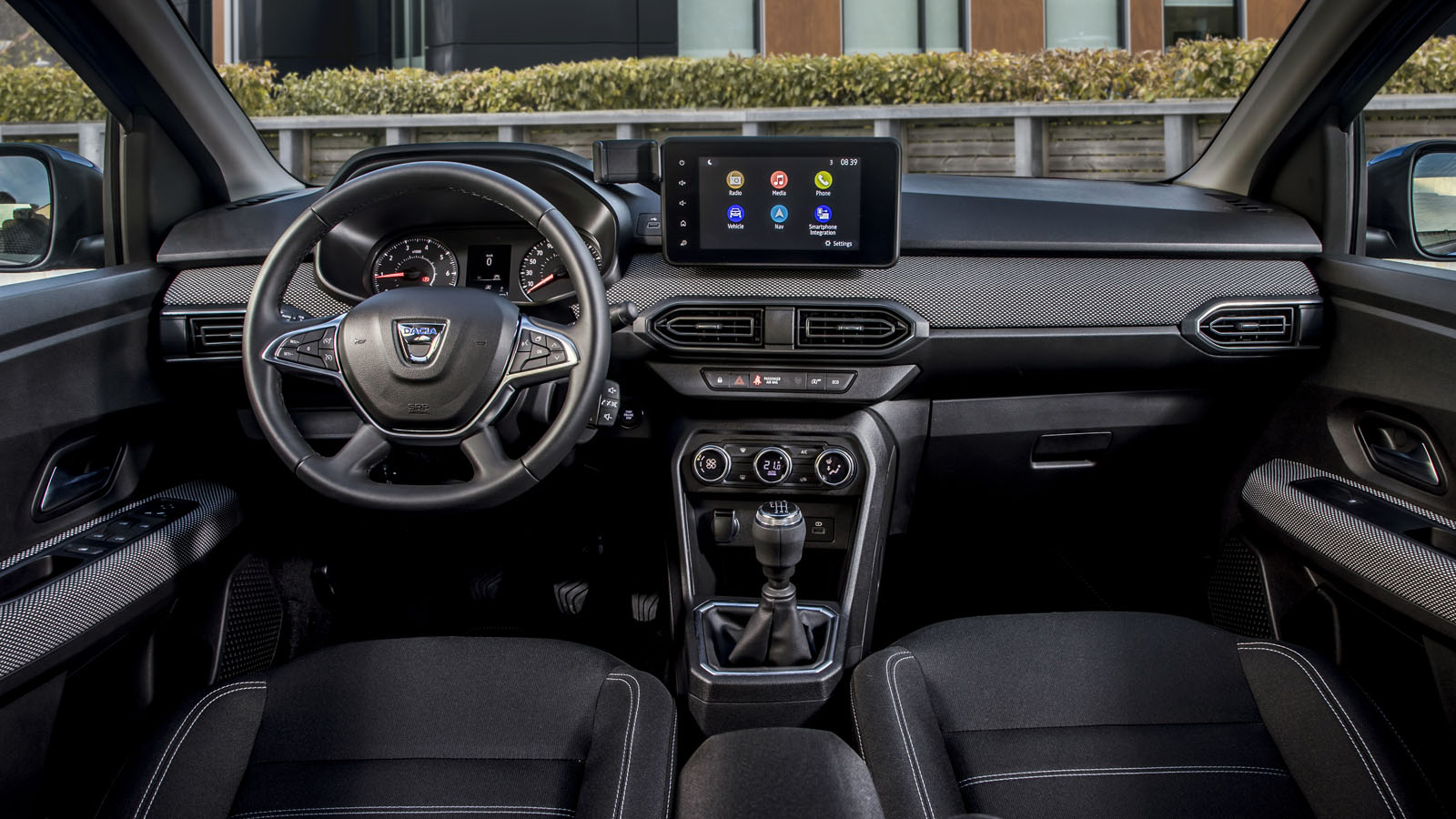
But at the other end of the market: Common luxury cars have lots of features, and KISS isn't really one of the design goals (if a customer wanted cheap and simple instead, perhaps they'd be shopping for a Dacia instead). Things are still built down to a cost, but there's a greater quantity of those things.
When the choice is between $200 worth of buttons or $100 worth of touchscreen, then $100 worth of touchscreen wins.
https://www.topgear.com/sites/default/files/cars-car/carouse...
It wasn't always like this. Mercedes-Benz used to make high quality, straightforward automobiles without all the inspector gadget james bond crap. See e.g. W123, W124, W126. Luxury meant high build quality, safety, comfort, easy maintenance, and a lifetime of reliable, dependable performance. Not features--you get the same basic features (ok, temperature regulated climate control is kind of novel for the late '70s-early '80s W123). But this stuff was minimal. Now the whole goddamn car is an iphone app. It's disgusting.
Electric power windows, vacuum-operated power locks, telescopic steering column, power-adjustable mirrors, a radio that does AM and FM...
Fancy stuff seemed pretty common on those (awesome, stout) German luxury cars.
The more I think about it and read comments here, the less sure I am that the gilded age of simple, reliable cars has ever actually existed. :)
A software based solution you can finalize last minute and with later updates add extra features. Thus if a competitor provides a feature you don't have to wait years for the next new design, but can deliver based on software development priorities any time, to any series you like (even add after delivery)
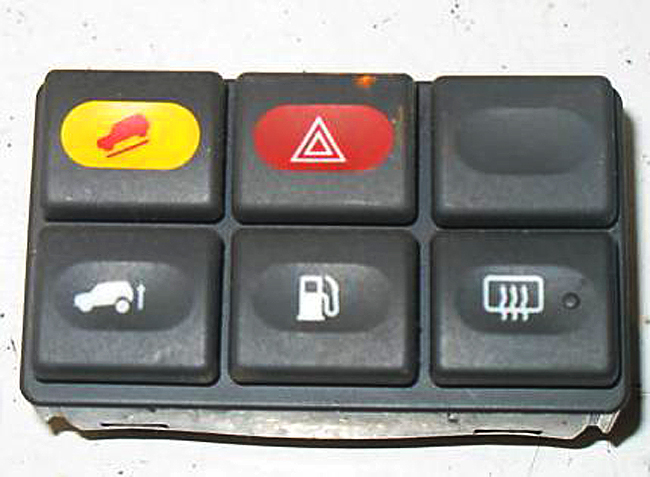
Cars traditionally have very generic button clusters, like [0]. It is even very common to have dummy buttons in there. Combine that with today's cars where those buttons are hooked up to some MCU to send a CAN message instead of being hardwired to a function-specific cable in a giant loom, and it is suddenly quite easy to change button functionality quite late in the design process for basically zero cost: you just need a slightly different label print and a small firmware patch!
Or, if you want to be 100% flexible, go with the ATM approach where physical buttons are placed next to an icon shown on a screen[1]. All of the flexibility and all of the tactile feedback! You can even go for a multi-level layout, with a top row of mode selection buttons, a bottom row of mode-specific function buttons, and perhaps even a big fat dial with haptic feedback[2]. Or even go all-out Elgato Stream Deck[3].
And sure, the fact that slapping in a giant touchscreen lets them decouple UX design from physical controls is going to play a big role. But it is by far the laziest and least user-friendly way of doing so. If that's the best you can come up with, you probably shouldn't be doing UX design at all.
[0]: https://www.classiccarstodayonline.com/wp-content/uploads/20...
[1]: https://media.istockphoto.com/id/672002868/vector/atm-machin...

[2]: https://www.youtube.com/watch?v=ip641WmY4pA
[3]: https://1.img-dpreview.com/files/p/E~TS940x788~articles/8521...
