
If they are co-trained only on activationWeights->readibleText->activationWeights without visibility into the actual stream of text that the probe-target LLM is processessing, then it seems unlikely that the derived text can both be on-topic and also unrelated to the "actual thoughts" in the activationWeights.
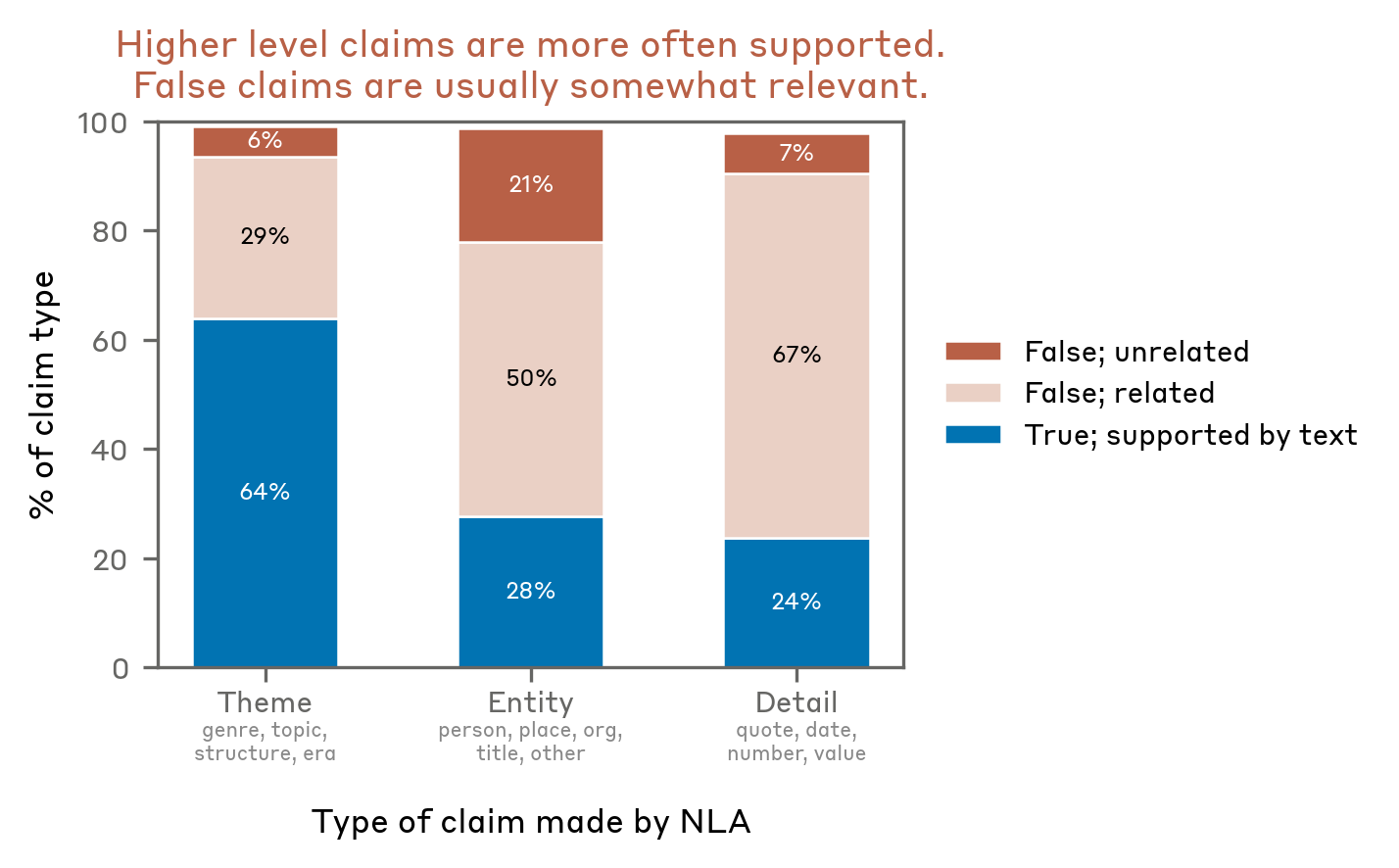
If the RL is brief and limited to a small subset of parameters, the AV will produce reasonable language since it inherits that from the base LLM, and it will produce descriptions aligned with the input to the base LLM that produced the autoencoded activations, since the AR is still close to the base LLM (and could reconstruct the activations perfectly if fed the full context which produced them).
I think an issue is that there is no permanent path to model understanding because of Goodhart's law. Models are motivated to appear aligned (well-trained) in any metric you use on them, which means that if you develop a new metric and train on it, it'll learn a way to cheat on it.
The original model is frozen, so it doesn't learn anything. The copies of the model are learning different objectives and have no incentive to be "loyal" to the original model.
Maybe you're imagining they'll hook this up in some larger training loop, but they haven't done that yet.
EG, could a misaligned model-in-training optimize toward a residual stream that naively reads as these ones do, but in fact further encodes some more closely held beliefs?
It'd be quite a coincidence if the training runs discovered an invertible weights>text>weights function that produces text that both "is on topic and intelligible as an inner monologue in context" and also is unrelated to meaning encoded in the activations.