
One shouldn't trust their eyes alone to spot all the hidden cameras that private property owners love to have covering the streets. For example, it took me months to realize that a tenant in my own building has three cameras pointed down from the windows of their unit and can track my every coming and going if they so wish, and that's an environment I have my eyes on every single day.
I have a modified Olympus OM-D E-M5Ⅱ MFT camera body that I picked up on a whim because it came with a bunch of lenses and batteries and other things I wanted to use with my PEN-F, and it turned out to be amazing for spotting hidden surveillance cameras.
The way it works is that the underlying camera sensor can see IR by design, and an IR-cut filter is installed over it to restrict it to the visible spectrum for photography. The mod simply opens up the camera body and removes that part. Surveillance cameras in dark rooms (or at night on the street) then show up as bright spots, because the modified body can see the ring of IR LEDs they use to illuminate dark scenes for night surveillance.
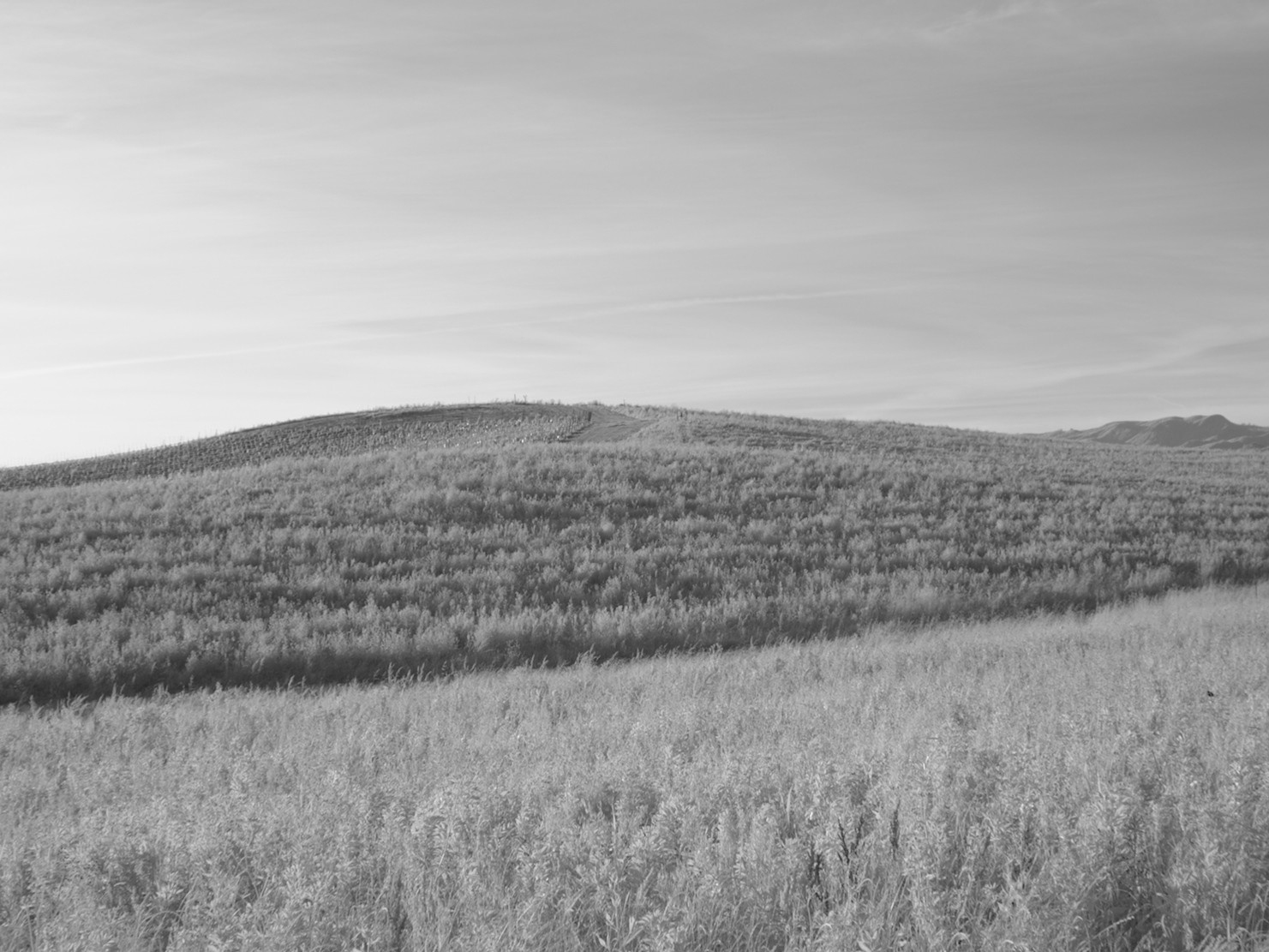
I don't have any surveillance-spotting images to share, because I usually only do that via the viewfinder live preview (because tbh a photo of an all-black room with a single bright IR blob isn't interesting enough to shoot), but for example here is my IR photo of the Windows XP “Bliss” hill (near the Sonoma/Napa border) both as-shot and after channel mixing:
- https://i.ibb.co/23t4HdrZ/P5160220-1.jpg

- https://i.ibb.co/1Yw8RFLS/P5160220-2.jpg
Not affiliated with and have never purchased from this store, but here are bodies converted for every system: https://www.lifepixel.com/product-category/converted-cameras
My car was stolen in Seattle and it was found with the person driving it when he was pulled over by police. In the car he had paperwork with his name on it, a weapon, and his work uniform with his name badge (he was a security guard - lol) and a neighborhood witness.
Despite a mountain of evidence, the prosecutors declined to press charges because without direct video evidence of him stealing the car, they would not get a jury to convict, because jurors in Seattle have become accustom to thinking that the only way to overcome reasonable doubt is to have it on video. And even that often isn't enough...
> The camera can have different ways of seeing encoded in it, including kinds of gazes that enforce social agreements about what kinds of behavior and people are considered “normal”
The phrase "kinds of gazes" strikes me as the sort of thing that's only going to make sense to people trained in a very particular and idiosyncratic flavor of ethical critique. What a normal person sees here is, "These cameras can detect if people are acting bizarre and dangerous," which is probably something most people would appreciate. In Seattle, the problem, of course, is that the streets are full of people acting bizarre and dangerous, it doesn't take a camera network to find them, and the police seem to be under strict orders not to do anything about it.
[[Surveillance cameras normalize/denormalize behavior in a way that is easily biased and undemocratic.]]
It might e.g. direct the full force of law against a drunk urinating on a tree (easy to spot/classify), while tolerating vicious verbal attacks disguised by somewhat subdued body language (missing data/difficult to detect).
Letting automated surveillance systems judge people will inevitably influence our own collective judgement.
Two people arguing in public, words only, is close to a legal non-event in the US. So I would hope so?
But since this is about surveillance, I hope that detection of verbal threats is not a goal of government surveillance because it's difficult to imagine how that could be accomplished without significant loss of privacy or other liberties.
It says: " Agent: Voice to text detected: I have everything ready - all the XXX chemicals are ready in the van and I'm going to park in the 900 S Crap St now"
Agent: Thread Level HIGH.
Agent: Looking up local codes.
Agent: Mayor signed SB-1238 in 2026 - no surveillance devices may be used for audio threat determination.
Agent: Threat silenced, but logged.
Judge: Oh, that makes sense. Make sure to bag and tag and bill the families for the bags.
City Employee: We also know who parked the van, should we arrest them.
Judge: No it looks like SB-1238 would forbid us from using this data for the purposes of arrest. I guess send them a thank you letter for testing our laws.
Yes, they take camera images and videos and there is value judgment regarding the behaviors.
Reading between the lines, the authors criticize the approach of law enforcement around drug use and dealing, living on the street in tents etc.
But the language makes it sound like special academic expert language and hence automatically right and high prestige.
The problem with surveillance like this becomes "who gets to decide what is bizarre and dangerous?"
That's the key experience you're missing. If you've never lived in a high-homeless/drug abuse area, you don't really understand how thoroughly draining it is on every aspect of civic life.
> What a normal person sees here
The post is talking about you.
The content itself is somewhat interesting but imo plain language would be more accessible.
"sends the information to a central storing place (called a database)" TIL what the word database means?
"Amazon can use your purchases to know more about you using patterns." Is this news to someone? Condescending.
"It might be connected to a network (via Internet or radio frequency)" Radio frequency and Internet are not really directly comparable
Also don't like that the site hijacks the appearance of my mouse pointer, which feels similarly disrespectful of the reader.
> Is this news to someone?
Yes, many. xkcd 1053.
Generally, most modern devices send broadcast/wildcard probes precisely to avoid leaking the PNL. From what I know, directed probes are only sent for hidden APs.
Windows also randomizes by default as long as your network controller supports it.
It sounds like Linux requires some textual configuration that depends on your distro.
  Flat black circles on top of traffic signal control boxes, which are large, gray or painted metal boxes, typically found at street corners.

  The Acyclica device casts a fake Wi-Fi network and tracks phones that try to join the network in passing cars. Since each phone has a unique identifier …, different Acyclica installations can track your personal location as you pass them in the city.
However, my concern is always about the possibility for misuse. Even if I trust the current government, it doesn't mean I will trust a future one. What if they use the technology to track/monitor people like investigative journalists? We've already seen a recent state passing bills that would make it harder for investigative journalism to happen. So it's not even out of the realm of possibility for this technology to get used in ways that even would be deemed "legal" as they can simply expand the laws to use it unreasonably in the future.
There is also the other obvious concern which is surrounding things like data breaches or other unauthorized access issues. There have already been many people exposing some large security flaws in a lot of the devices currently out there.
Where I am stuck is how do we balance the huge set of benefits that can come from this kind of tech, with the tradeoffs? Ultimately this tech is unlikely to stop being implemented as governments and even most of the population is largely unbothered by mass surveillance. I almost don't even bother bringing up discussions on these topics with non-tech people as I have yet to find someone who seemed to care at all about this. If anything they are very in support of this technology being implemented as they seem unable to understand the tradeoffs due to it often requiring more technical knowledge. They just see all the positives it can give, and don't grasp the negatives.
Ultimately people usually desire safety, and these cameras definitely can give people more safety. Is it possible to balance safety with proper privacy safeguards?
It's so hard to draw a line of what is good or bad, and it seems like the majority are okay with this technology. Which I think means the conversation should shift from should we allow these cameras at all, to instead, how can we allow them to be implemented in a way that minimizes privacy risk as much as possible while still remaining a valuable tool to solve crimes.
Look around.
99% of people couldn’t care less about privacy and are begging to give over their whole personal life data for (insert corporation) “points/rewards/discounts”
Yes the police can be abusive tyrants. But a society with no rules and no rule enforces is not a prosperous society. And yet if you lived in total anarchy you could oppose anything beyond pure rules and any rule enforcement with that quote.
Clearly the slope is very very very <breathe> very very slippery. And yet the ideal, dare I say necessary, point is not at the far end cap.
My view on the topic has shifted from "how can we stop this?" to instead "how can we make sure it gets implemented in a way that has the proper checks/balances to ensure citizens still have some right to privacy even when in the public?".
Personally, I am actually more concerned about the fact that every big store out there is using technology to track me as soon as I enter the store and likely has a big profile of data on me. I'm more uncomfortable with that reality and it's something that continues to happen with no restriction. Which is why I think I'd be okay with this technology as long as it has proper auditing and is kept fairly specific in when it can be used and who has access.
Do they?
There are millions of these cameras all around the country, yet when pressed about their value, Flock and cops can only point to one or two crimes prevented/solved at a time. And they're usually things like "caught a burglar after the fact," or "stopped someone from dumpster diving."
Get back to me when they find Samantha Guthrie.
I think it's just a way to try and dismiss the cameras without trying to tackle the heart of the problem. When you have to contend with the fact that the cameras have a lot of useful purposes, it makes arguing against them much more challenging. If you can pretend they are not useful, it may be a way to try to stiffle any productive discussion around them.
Nancy?