
This is really a killer feature in my opinion. I'm currently working on pi brains extension that is designed to solve the compaction issue I have, which is, I don't know what the AI knows after compaction.
https://gitsense.com/screenshots/pi-inspect-overview.png
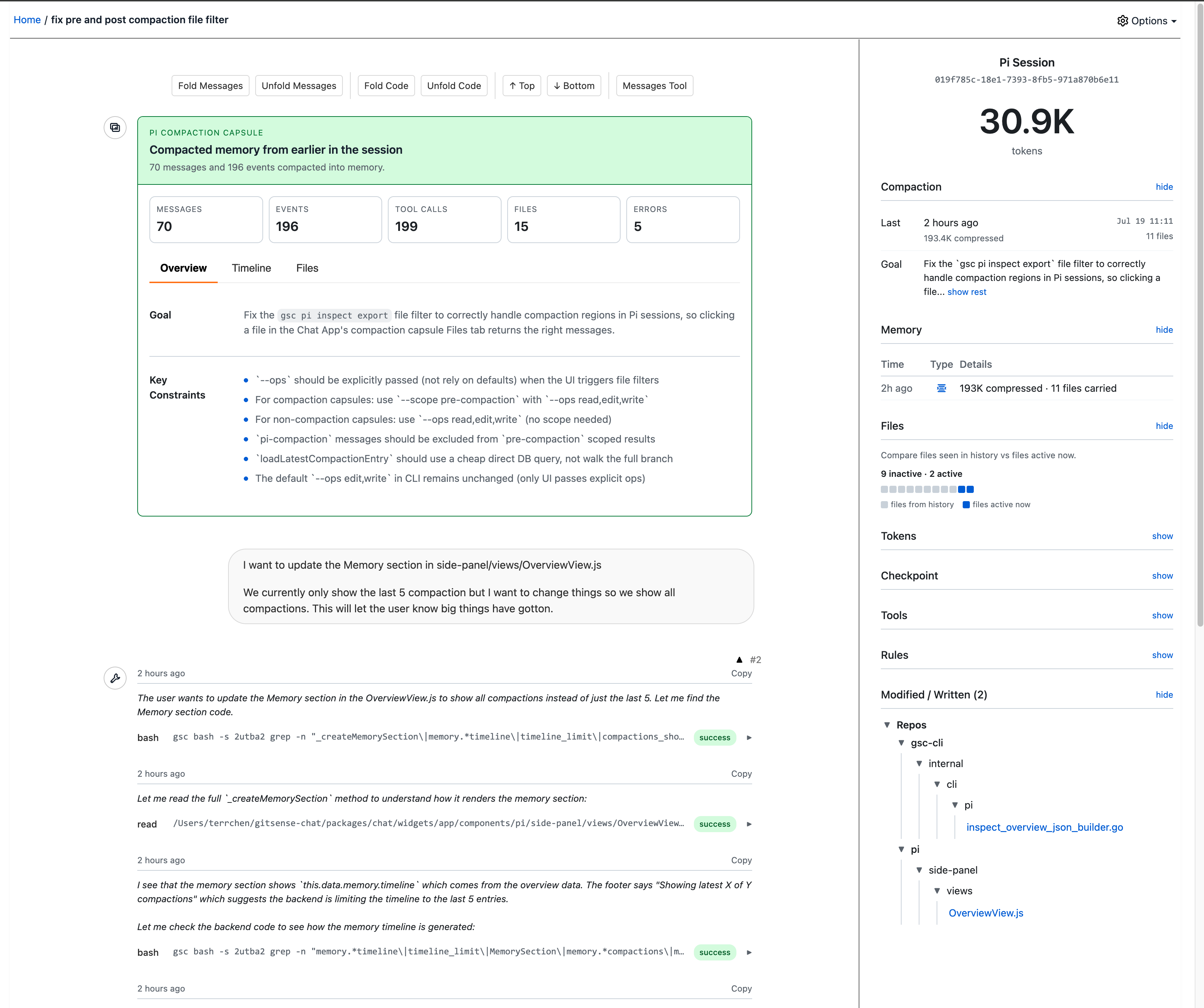
The screenshot shot above contains what I call a compaction capsule which contains all the messages/events at the point of compaction. The "Files" section in the right side panel shows me how many files were read/modified since compaction.
After compacting, I can easily tell what Pi use to know and use `/tree` to go back in time.
I still wouldn't compact more than 5 times before starting a new session since compaction messages persists in Pi.
config.toml
  model_context_window = 27000
  model_auto_compact_token_limit = 17000
model_auto_compact_token_limit_scope = "total"Same. I've told @tibo many times about these issues but apparently OpenAI's focus is on features that buy them the most users ASAP instead of increasing harness quality.
npm uninstall -g @openai/codex && curl -fsSL https://claude.ai/install.sh | bash
OpenAI devs, if you're reading, this is how you lost a customer.
It asks you to create new chats (Claude Design) and Claude Code nudges you to start over too, I think `/compact` is optional though?
That used to be one of the major issues why clearing or compacting context when the context nears 150 to 170k is usually preferred.
It really depends on the session, and what you are doing how far you can push it.
I don't think I've ever pushed past 500k though, it may well fall apart at the higher end of what is officially supported.
^ this is literally what the op did. Don’t flag facts.