
What we’re witnessing now is what should be called corruption. That corruption that everyone has been screaming for years. But finally real.
Remember, the job of these people’s propaganda is not to say that they’re better than the other side. It’s to say that they’re all the same. That’s it. And when you claim that this corruption is just a continuation of previous corruption, just bigger, and not a difference between essentially not having and having corruption (there’s always some small percentage of corruption, just like any crime) is essentially sweeping for them. It’s repeating their talking points.
The difference now is the openness and also the scale. If a president does one bad thing the press will dig into it, committees will investigate, etc. But what if the president does 20 bad things every single day? The press doesn’t know how to report on that and the legal process is as slow as molasses. And by tomorrow everyone will have forgotten because there’ll be new bad things.
It's trivial to remember corruption issues from 100+ years ago (I learned about one in middle school with Teapot Dome and political "machines", and those are hardly the full extent) so this is another one of those cliches that is easy to claim but is never proven. There's always some. Humans gonna human. But that doesn't mean either (a) there's always a high and critical amount in magnitude-of-impact OR (b) it's been definitely increasing.
Let's stop saying it as a general trend without examples.
On the flip side, let's keep pointing to all the specific Trump examples.
It's naive to believe that corruption is impossible or vanishingly rare. It's also naive to believe that the current administration is not a major step change.
Bad news is, you're probably in the midpoint of that meme bell curve. Grown up structures and institutions are designed well, with accountability built-in. Many many good people work in them, who hate corruption as much as you do. Bad actors are whistle-blowed upon, persecuted, convicted, and imprisoned. It's incredibly difficult in practice to do anything significantly corrupt and stay unnoticed. I don't know if you work (like, at a large-size workplace), but imagine doing something shady at your work, surrounded by your colleagues. It's not easy.
The irony is that your unending cynicism is actually turning you into a fool for the other side: the populists that constantly discredit institutions. They figured out that your cynicism (aversion to being scammed?) is so strong, that it can be used to scam you. They only need to discredit everyone else, that's easy. Make conspiratorial allegations based on perceived outcomes, not actual proof. Sell you all the cynicism in the world: everything is broken, everyone's bad. US institutions are corrupt and worthless. This lets them pretend to be experts, because you're now a guest in their version of reality. And they directly financially benefit from your attention.
Institutions maintain real internal accountability (none of these alternative media populists do), implement real processes that work, tackle real issues in ways that take into account all stakeholders, and don't just produce slogans and talking points. I know they're old and not cool, but they work. Unfortunately, very few groups are left that actually defend them, you all got scammed by relentless, self-serving, financially incentivized alternative media into thinking that everything is broken.
Just because things are complex, doesn't mean they're broken. Just because measures taken aren't always satisfying, doesn't mean they are malicious. Don't get scammed into this world view by people who directly financially benefit from selling it.
And bailing out bank shareholders during the '08 financial crisis.
Edit: I don’t really care though, I’m not a US citizen. Trump is terrible still. Shouldn’t have voted him in. :shrug:
It has always existed, but it is absurdly easy now and happening in plain sight.
Kinda like when women say that men harass them in the bars and a lot of men seem confused because we don't think we harass them, when it can be like 1 guy harassing 20 women in a bar on the same night.
So I think it's quite unevenly distributed.
Like everyone here said, they just don’t even care about being “caught”. Not ten years ago most of this stuff would likely end a career or land you in prison.
Now it’s just, “So what? Nobody can do anything.”
It’s not better that the corruption is blatant. They’re rubbing our faces in it, and not the least bit concerned about consequences. The message is clear… there aren’t any, anymore.
And the most insulting was how they telegraphed it all. Accuse people of things they clearly didn’t do… and then actually do all those things.
Well, maybe a bit less than half these days.
> 35% approve, 61% disapprove, 5% not sure
https://www.economist.com/interactive/trump-approval-tracker
And Congress as a whole...
> The approval rating for the U.S. Congress stands at 10%, while disapproval has climbed to 86%, according to data from Gallup. [1]
So not sure what this is really telling us?
[0]: https://fiftyplusone.news/polls/favorability/democratic-part... [1]: https://news.gallup.com/poll/708722/disapproval-congress-tie...
Diffuse organizations like "Congress" or "the party" aren't what you're voting for. Unfortunately Congress really does take it on the chin for the actions of the President in midterms, because that's very recognizable and personalized, and partisan votes (or just staying home) are the only lever people have to express displeasure.
I honestly think most Congress people want to do good for the country. But the system has become totally dysfunctional making it basically impossible to really work on issues. The influence of money is just too much. To me this goes hand in hand with the rising inequality that gives a few people at the top outsized influence. Super PACs don't even have to deploy their money anymore. The simple threat is already enough to bring most Congress people in line if they want to keep their job.
That seems wildly unlikely. Wouldn't there be evidence for it by now? Over the last decades there have been scant murmurs of the US congress sitting down and taking a serious look at what might be good for a country. I'm happy to say that the root cause is a voting public in the US (everywhere, really) rewarding unprincipled liars and punishing principled politicians. But the outcome is that the US Congress is full of unprincipled liars who have little regard for the good of the country, because that would be a principle that gets in the way of political expediency.
The system isn't some abstract concept foisted upon them from on high. They control it. There are some very high-level constraints on them that are all-weather good ideas and apart from that it is a free-for-all. The reason the system is dysfunctional is because that suits the congresspeople.
They may like some republican stances (say, reduced regulations and welfare spending), but despise others (Trump, wars, anti-renewable). Meanwhile they might like some democrat stances (Inclusivity, environment), but not others (high spending, rent controls, etc).
So you're stuck between a rock and a hard place where there's no good way to express your desires. I can totally understand not wanting to vote in such an environment, and disliking the government no matter what. You can't get your specific views represented because everything has been collapsed into two broad camps that average out - and as lots of research shows, no one is truly average.
I simply do not understand American politics.
I ask because I've known people who were shocked at what took place 2021-01-06 but who proudly voted to re-elect Trump.
Today isn't much different: talk to a conservative voter who complains about the tariffs, Iran war, etc. and ask them whether it would be enough for them to vote Democrat, and the answer is near universally no. Lots of people have performative outrage because they're supposed to be outraged at what's going on, but the truth is that there's no line the Republican party can cross which would make them switch votes. Exceptions to this rule are still few and far between as far as I can gather.
You are in good company with most Americans in that regard.
It seems like the whole "we just blame the other side for everything we want to do, and then use that as justification when we actually do it" strategy must be well orchestrated, but the voters themselves legitimately seem to believe it is actually how things work. I am darkly impressed at the skillful manipulation.
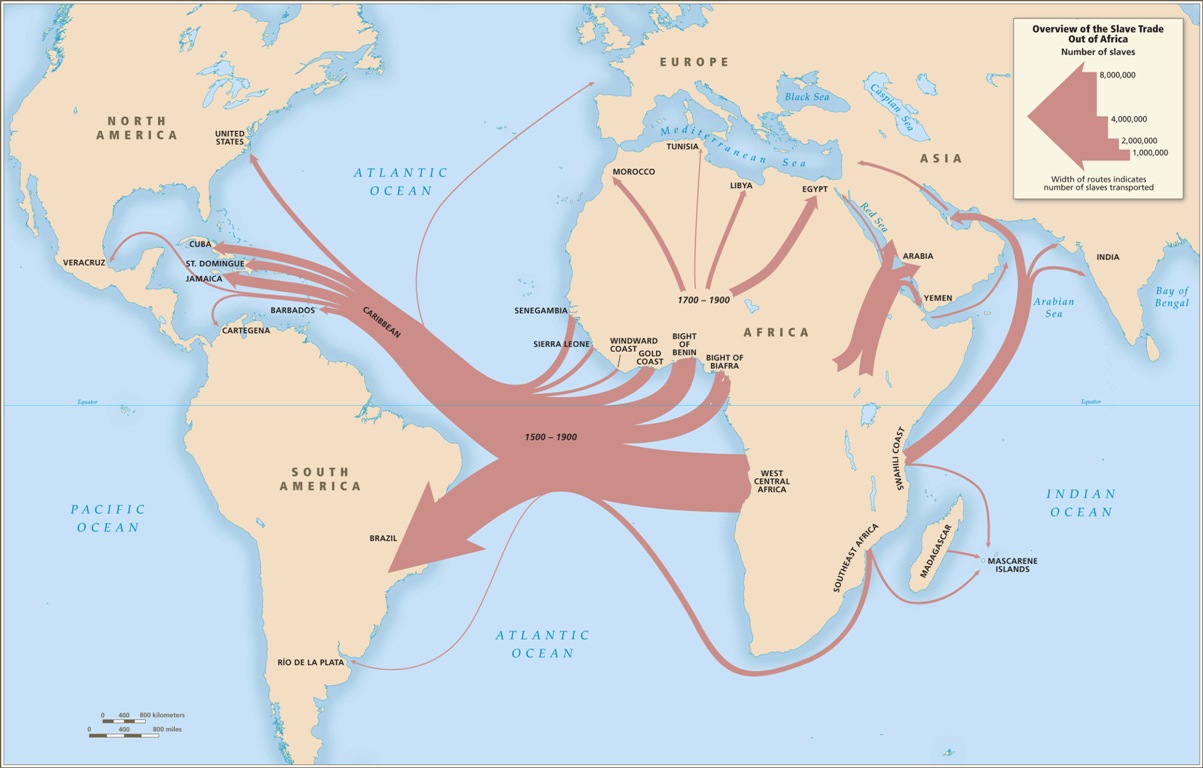
https://www.reddit.com/r/MapPorn/comments/zsnr8q/year_of_abo...
The US wasn't much of an outlier.
As a general rule, anyone who tries to use slavery as a skeleton key to understand US politics is most likely an ideologue with an agenda. Sane people don't propose struggle sessions for events which happened 100+ years ago when everyone involved is long dead. You wouldn't point to a gigantic statue of Genghis Khan to explain what's wrong with modern Mongolia.
I don't think this is a slavery thing. Trump just sucks.
I suppose you could question their sanity, but the point stands - history has a short memory, and a few generations are nothing.
Especially when the after-effects of slavery, including segregation, disenfranchisement through gerrymandering and for-profit imprisonment, and other forms of continuing violence, are still live issues today.
As for the Genghis Khan comparison, I may have made an error. We may just be dealing with severe cognitive limitations here.
...
Most countries’ legal systems, however, carve out an exception for prisoner-workers, permitting the state to require them to work—sometimes for no pay, but typically for very low rates of pay.
There are, even so, multiple potential benefits to prison work. For example, ICPR’s recent research indicated that prisoners who could not work (when prison regimes around the world were restricted during the COVID-19 pandemic) reported many negative consequences, including to their mental and physical wellbeing. At the minimum, work may mitigate some harmful impacts of imprisonment. At best, it may increase prisoners’ prospects of successful reintegration into society, potentially also benefitting society by reducing recidivism."
https://www.prisonstudies.org/sites/default/files/publicatio...
(emphasis mine)
Here's a photo from a Brazilian prison from Wikipedia: https://en.wikipedia.org/wiki/Penal_labour#/media/File:Inmat...

The question is whether the prisons in Brazil are private, and are allowed to sell prison labor FOR A PROFIT, incentivizing both greater incarceration rates, and disincentivizing release.
The answer is no, I’m not aware of ANY other country that allows a private organization to profit off the labor if people imprisoned by the state. At least not any country we would consider 1st world.
It’s absolutely absurd to suggest the current situation is beneficial to anyone but the ruling class and anyone claiming otherwise has never been to prison, never had a relative or friend who has been to prison, or is literally a psychopath who lacks basic human empathy.
Your comment stated: "And does Brazil have their own 13th amendment that allows them to use prison labor as their modern slave workforce?"
The article I linked states: "Most countries’ legal systems, however, carve out an exception for prisoner-workers, permitting the state to require them to work..."
So my quote directly answers your original concern.
Your new concern is about private prisons. Here's a new quote from the article which addresses your new concern:
"Involvement by non-public entities in prison work can take many forms. In most countries including all three of Brazil, the United Kingdom, and the United States, for-profit companies operate entire prisons (or provide services within prisons) under government contract. Similarly, the operators of both public and private prisons in all three countries contract with buyers, equipping prison workshops and using prisoner labour to produce goods and services which go on to be sold beyond the prison."
(p. 15, emphasis mine)
So no, the US system doesn't seem to be especially unusual, according to this article.
You're welcome to decry this practice as inhumane, btw. I just don't think it is some sort of skeleton key which will help us understand every aspect of US politics.
The norm now is to require a wage for mandatory labor, but of course often it's just a pittance. (Only 6 US states have uncompensated labor.) But even when you require minimum wage, many criminals owe restitution, so it could be and is taken away again.
Many US states have penal labor systems just like in Europe, that is nominally opt out, mandatory wages, etc, but at the end of the day it's always open to accusations of coercion and claims of "slavery".
The rhetoric around the 13th Amendment is exactly why we're in the situation we are now politically. Everything is equivocated to maximize rhetorical impact. Every unethical thing a politician does is "corruption", so when you get open and egregious corruption as with Trump, people can't discriminate and assume it's all the same.
Was penal labor abused to roll back the clock on abolition? Yes. Is penal labor abused today? Yes. But calling it slavery, drawing parallels to chattel slavery, is just irresponsible.
Slavery has existed as far back as history. The idea that people are created equal, and are equal under the law, is very, very new, and that idea has resulted in a great many positive things happening.
A good general wouldn't voluntarily shift the battleground to a region where their troops are weak. Political persuasion is no different. The Democratic Party keeps losing because they cling to unpopular positions on cultural issues. If Trump is as bad as you say, prove it to me by showing willingness to strategically cede ground on a few issues in order to win more voters.
What I do see is media and politicians on the Right characterizing extreme positions held by a minority of folks on the far Left as though they are adopted by the entire Left, and that weak uncritical minds on the Right believe that nonsense. Rush Limbaugh pioneered this technique to profit himself, and Trump gave him a fucking Presidential Medal of Freedom in his first term.
Maybe I should work harder to make my actual views clear. I added a few sentences to the end of my original comment in this thread: "I don't think this is a slavery thing. Trump just sucks." https://news.ycombinator.com/item?id=49572347
Slavery ended in 1865. That's 161 years ago. So maybe there are a few modern 80-year-olds who interacted with 80-year-old former slaves when the modern 80-year-olds were infants. Those 80-year-old former slaves would themselves have no memory of slavery since it would've ended before they could form memories. And the modern 80-year-olds would have no memory of the interaction, since they themselves were infants when the interaction happened.
In other words: There aren't very many of these people, and it's unclear if most of them would count.
You know something which happened more recently in the US than slavery? Prohibition. A trendy, self-righteous moral crusade which didn't accomplish what it set out to achieve, and ended up creating a bunch of problems instead.
I think Prohibition is a pretty good template for understanding the form and tendencies of modern left-wing activist movements. But--at least reducing alcoholism was a good cause that we had a shot at doing something about! Short of inventing a time machine, crusading against slavery from centuries ago seems rather pointless. That's not a problem for activists whose primary goal is to be trendy and self-righteous, of course.
That's not long enough ago to call it ancient history.
It’s impossible to take you the slightest bit seriously. Ignorance and stupidity are ultimately inseparable.
Consicely put, and not nearly present enough in contemporary discourse.
It’s really embarrassing
Yeah, that's not what an scapegoat is.
It's easier to start looking the other way when bullets start flying.
Having said that, I'm not saying Trump was a saint, but it seems this board forgets we just had Obama and Biden running their corruption rings for 2 decades too...
And its clearly been building for a while. Trump and Obama are about as opposite as possible, but they both won by campaigning on "change".
This is true in most political systems. Its how most revolutions start. The commoner is always screwed but they still support them.
I dont think america is all that exceptional. All sides just see it through their filter bubble and miss the forest for the trees.
Modern usage is not about fruit companies.
But it still left a deep mark on people - people who grew up under the old regime still considered it normal to bring gifts (usually alcohol in some form) when visiting doctors - the idea being it would be rude not to!
This is having real consequences - I saw an interview with a doctor, where he showed the reports a big closet, full of alcohol from these gifts.
That was from just the last week. He also mentions colleagues with tendencies for alcoholism dying from this...
Now, if you had some grand master plan to use some part of the federal government to stomp some people in some state for doing it wrong this is probably bad for you. But on a 30-40yr timeline it'll probably just mean a cycle of the feds doing less and the states doing more and the diversity that comes with that.
Like we'll all screech about the EPA revoking this or the DOT ceasing to do that but whatever those policies are, if people want them they will be picked up by the states. In most cases it'll probably be 40-something states continuing to do whatever it was or 40-something states saying that was stupid all along and stopping immediately.
Basically the sky isn't falling.
It also hurts businesses when they suddenly find themselves forced to follow an inconsistent/conflicting patchwork of state laws instead of a single federal law.
That said, it's still encouraging to see states picking up the slack and passing laws to protect their residents, even though I can't help but feel bad for people who become stuck in states where the government doesn't care about them. I hope that people will be begin to flee states where the government chooses to put corporate profits above the well-being of the public or wants to strip them of their rights, but realistically there will be many people who can't afford to move or who feel compelled to stay because of ties to their friends, family, and community.
The environment in the US is very diverse so why is it federally regulated to the degree it is?
Not having to put up with rules that make sense in the arid plains or western deserts is gonna be a huge boon to everyone east of the Mississippi.
The "consistency" argument is like 99% red herring. There's already a huge patchwork because the way federal agencies work is the states do most of the enforcing so you have 50 states worth of precedents and political whims to keep track of. If we're gonna suffer that patchwork it should at least work for the state as they want it rather than just be various flavors of spin on federal rules nobody fully agrees with.
You can run this sort of exercise with just about every federal agency. Stuff like the FRA, DOT and other things where the literal subject matter is flagrantly interstate are where this sort of thing is least true.
Because there’s relatively little need for diversity. Dumping toxic waste into river systems is as bad in Oregon as it is in Florida. Things that genuinely need local management (e.g. wildlife) can be managed locally.
This is where most of the dysfunction comes from, not the classification of what is or isn't a pollutant. Because this is how you get some water rich municipality in the southeast having to adopt stupid rules they don't even want based on some guidelines that were written to be compatible with the water poor west.
There'd be a ton less people who are categorically opposed to the federal agencies if not for this sort of thing. And it goes for most agencies, not just the EPA.
The difference between people doing corruption before and Trump is that the other people had a "legit" lifestyle and worldview but did corruption as a side thing. An ignorant business person like Trump has corruption/intimidation/coercion/deception etc. as a lifestyle because someone like him can't live in the world that he is living in without this lifestyle.
Trump isn't really corrupt in the same sense as Obama because they are fundamentally different. You could even say more educated politicians that are able to understand what is going on are more evil.
People won't tolerate evil politicians anymore because they understand they are being robbed by the financial system and aren't getting their piece of the pie. It has to be a break to democracy (war?) or economic reform or Mamdani/Trump style government from now, it is really unthinkable people will keep electing Biden/Hilary/Harris/JD Vance kind of politicians anymore unless there is a big breakthrough in brainwashing
Similar to the "Death of a Euphemism" [0], where some politicians decide they don't have to cloak their proposal in the trappings of reasonability any more.
I highly recommend the whole series, as it has renewed relevance today.
At some point you realize there is a game that you were never playing and it becomes a bipartisan issue.
For evidence, refer to TFA.
I read the article too, in what sane world is it okay if 70% of citizens thought their governments + corporations are corrupt over a 20 year time span here. Society apparently has get quite bad for the last 20% to realize the state of things.
The only thing I got out of this article is that both parties + the F500 need to be destroyed.
I don't know, if we'd had an overwhelmingly Democrat-dominated government, we'd have comprehensive bans on government insider trading and we'd correct the bad ruling in Citizens United. Corporatism is definitely a bipartisan issue, but at least Democrats recognize it as a problem, while to Republicans it's a feature. Not everything in politics is symmetrical, and misguided nihilism is actually how we got where we are. Turns out the road to hell is paved with "it's both sides."
We had two years under Biden with Democrat control of the House and the Senate. They passed no legislation to ban insider trading.
It probably didn’t help that the poster octogenarian for insider trading was Speaker of the House
> and we'd correct the bad ruling in Citizens United.
CU was absolutely the correct ruling as it just means I can take money from wherever I’ve earned it and spend it on publicizing my message.
Prior to that you had to buy a media company to have the same effect. It was perfectly fine for Fox News or The NY Times to focus articles and segments on what they deem newsworthy to push their narrative. But if I made my money selling widgets, I couldn’t spend it the same way.
It’s a perfectly reasonable ruling.
> Corporatism is definitely a bipartisan issue, but at least Democrats recognize it as a problem, while to Republicans it's a feature.
The same people probably complain the Senate is an antiquated body that should not exist because mob rule is the only true voice of the people.
Destruction is easy, as we are all witnessing.
Making things better is hard. It takes commitment to incremental change, often having to overcome setbacks, and accepting that the product of democracy is inherently nonlinear.
Democracy also demands that its participants understand that most of the time what each individual wants to be, will not be exactly as they envision, since that would be autocracy.
If you think I (or virtually anyone else) am a fan of the two-party system, you probably aren't paying very close attention to... anything.
Things can be varying levels of imperfect. Things can be imperfect and acceptable, imperfect and bad, or imperfect and extremely extremely bad. It's not a sign of intelligence not to be able to discern between them.
But we didn’t have to vote DJT into office as a counteracting force. Whether every decision is bad or not, not my point. It just seemed obvious that he wasn’t the right guy.
Some people can’t vote against their party. Some people believe write in is the move.
If you want to protest, please do it. But throwing away your vote is not a protest, it’s a method of ceding a small amount of power.
It's way more comforting to believe that Bill Clinton's buddies (or whoever) got rich selling industrial America overseas to the cheers of the progressives who thought all that stuff was dirty any way because at least that way it looks sane and planned and rational, albeit selfish, than it was done out of ignorance or malice.
And once enough people believe in the corruption, it manifests itself because it's perceived as how things are.
What if they weren't short-sighted and not hostile? Look at Germany, which did not do this and instead kept strong provisions in favor of organized labor and protecting their domestic industry from foreign entrants.
They can't keep doing it anymore. That would have been our future. But we pivoted to high skilled services and it has served us immensely better than if we had tried to defeat other powers in industrial and manufacturing where they had a clear advantage we didn't, in terms of cost.
Of course the supporters of one particular political party is much more better at gymnastics of the mental kind than the other side. Having no spine makes it quite easier...
My hope is we will, one day, have an administration that roots it out using modern fraud detection, gets rid of waste, shuts down non-profits that funnel monies to their founders (anything where "overheard" is over 50%), stops insider trading amongst politicians and government workers, but I don't see them voting against their greed.
[1]https://ballotpedia.org/Changes_in_Net_Worth_of_U.S._Senator...