upvote
Its always speculation that would be trivial to actually test.

1. Do not connect to network 2. Create unauthenticated WiFi network 3. Monitor WiFi network

Strange no one has ever done this simple af test to backup their claims

reply
If TV manufacturers wanted to be underhanded then they could actually make this much harder to detect by delaying the connection to new unauthenticated networks for e.g. months or only after seeing another device connect and then using that device's MAC when it is not around.
reply
Still super easily detectable even if they clone a MAC.
reply
I have an unprotected guest network with a captive portal and an LG C1. I have never seen the LG pop up in the logs for the guest network.
reply
Because they don't. It's too much guesswork, and honestly pretty complicated. From the user perspective the TV would appear to go offline every now and then, so also somewhat easily detected.

It's much easier to just throw a $10 5G modem in there, pay the $2/year subscription fee for service, and extract data that way. Assuming a 5-10 year relevant lifespan of the TV, they'd throw $20-$30 on top of the sales price for the modem and 10 years of service.

The 5G modem could run completely independent of the wifi network, be a completely different circuit, and you'd never know it was there.

reply
Except they don’t do that either. I’m not aware of any TV that bundles a 5G modem. Are you?
reply
almost all new cars have cellular modems reporting all kinds of shit, something like over 90% of new cars. what makes you think tv companies aren’t?

even the ones that aren’t yet, we’d be incredibly incredibly naive to think it’s not on their radar.
reply
For one, you can take apart your TV and see that it doesn't have a SIM card
reply
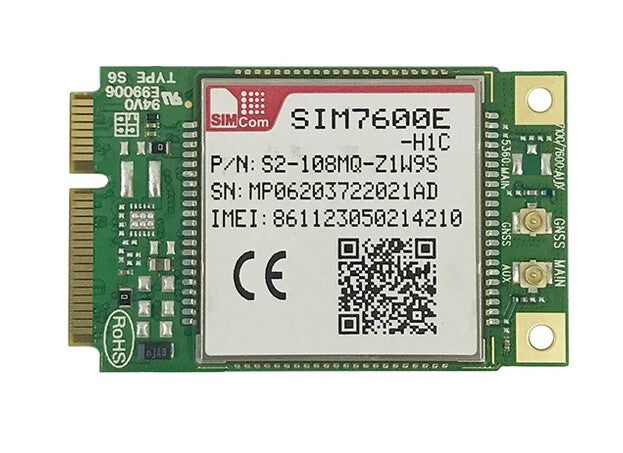
Can you spot a device like this : https://www.intersign.dk/cdn/shop/products/868e2a0dce897d05a...

The linked image shows a module meant for easy integration, but it could also simply be a part of the main board of the TV. They could "hide" the GSM antenna alongside the wifi antenna.

reply
They could also use something like Amazon Sidewalk or ATSC 3.0's dedicated return channel.
reply
They could (although I’m not sure of the 80Kbps that Amazon sidewalk allows is really sufficient for the purpose of uploading ACR data), but is there any evidence that any TV manufacturer actually is? The reality is, why would they bother? 95% percent of people that buy a “Smart TV” hook it right up to their WiFi as soon as they take it out of the box.
reply
80Kbps is enough, after all they don't want to accidentally ddos their server.
reply
ACR isn't generally a lossless 4K snap shot but indexed 32x32 pixel blocks from arbitrary locations on screen. In some cases it's even a fuzzy hash of the content source, and while 80Kbps isn't a lot, you can still push out data in a timely manner.
reply
Seeing how things have recently been developing, I'd bet on it already being the case or at least in active development.
reply
If you think its already the case, how come nobody can provide any evidence of it? As stated above, it’s trivial to test. Surely if Brand X was doing this, there’d already be blog posts, youtube videos, HN posts, etc. about it?
reply