upvote
I have a silly pet "project" that I've been using with different models, where I provide an image of a patch sheet for the Behringer Poly-D synth and ask for an html version and this is the first time I get something that, while still needing some tweaks, basically looks like the patch sheet. Before this, the closest had been Fable, but that still was nowhere near the actual patch sheet.

This is the sheet: https://fernandoipar.com/content/music/poly-d/gemini-argon/c... (the annotations on it are by me)
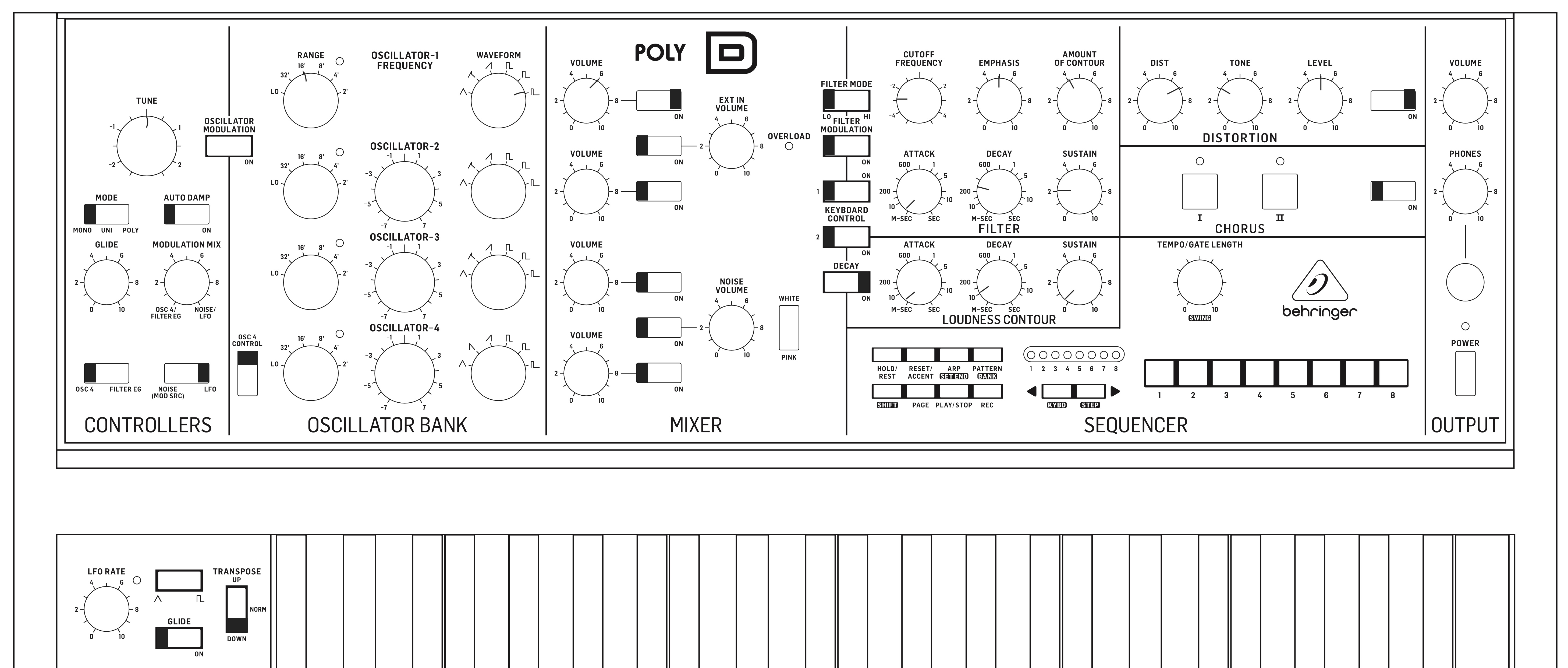
And this is what Argon created: https://fernandoipar.com/content/music/poly-d/gemini-argon/b...

For this simple prompt: https://fernandoipar.com/content/music/poly-d/gemini-argon/p...

I'm honestly impressed.

reply
Me in 2025 https://news.ycombinator.com/item?id=44759781

> If it's on HN and is a meme at this point, it will end up in the training set.

> It's kind of fun to imagine that there is an intern in every AI company furiously trying to get nice looking svg pelicans on bicycles.

Google listened and assigned a few interns, I guess, for the task

reply
That's exactly what I was thinking when I saw https://www.assbench.com/ posted a while back: "oh no, this is going to be somebody's job".
reply
Unfortunately, for me the renderings crash or hang in both Firefox for Android and Chromium/Vanadium on a Pixel 10 Pro. :\
reply
omg that's hilarious
reply
prompt is to detailed (llm written?) better test of model creativity is to not constrain prompt
reply
NGL, I think this might be my favorite benchmark, ha. While the Chinese labs asses are a bit off, I certainly have big hopes for their next versions. Their hearts are certainly in the right place.
reply
It's the smaller training data /s
reply
SVG is useful for actual tasks, not just looking good in a silly "benchmark"
reply
Beyond SVG, these things have been RL'd on 3d reconstruction (which carries over), and I expect given the public reaction to recent frontier advancements in 3d capabilities that this will get allocated a larger share of the post training budget in the future.
reply
What I'd kill for would be an app where you take a pic of scribbles and drawings on a whiteboard/notebook and the app turns it into SVGs you can then continue to manipulate digitally on PC/tablet.
reply
Why would you kill for this? Why not just generate svgs with any editing software?
reply
>Why would you kill for this?

Figure of speech.

>Why not just generate svgs with any editing software?

How do you do that from the whiteboard/notebook?

reply
Inkscape and https://github.com/visioncortex/vtracer can both do this.
reply
They can represent something in vector, but it's always very hard to use the result for anything else. Like, the paths doesn't make sense, aren't grouped to the logic elements etc.
reply
ChatGPT does that decently well
reply
Last time I tried, it did not. That's why there's a place on the market for an app just tuned to handle the transition seamlessly, rather than having you fucking around with prompts in LLMs.
reply
I for one don't want a whole app for that, not anymore. It's a small task whose result is an input to something else - ideal for a tool for LLM (or script) to use.
reply
>I for one don't want a whole app for that

Everyone says that until ms, apple, google, etc introduces this polished feature as part of their tablet imaging editing/document collaboration office suite. Then everyone can;t get enough of it.

> It's a small task whose result is an input to something else - ideal for a tool for LLM (or script)

Have you actually tried this? If it's a small task then why can't LLMs actually do it? Kind of like the pelican test. Every LLM can do a SVG pelican but most of the results are unusable in practice for production/productivity purposes.

Every LLm can extract some half-broken SVG hallucination of your jots, but I'm asking for an app that's polished and works accurately 99% of the time, which means a dedicated app/model tuned specifically for this task, and nobody makes this yet.

reply
> Everyone says that until ms, apple, google, etc introduces this polished feature as part of their tablet imaging editing/document collaboration office suite. Then everyone can;t get enough of it.

I don't feel like I'm a representative sample of general userbase, so I won't dispute this too hard. For me, it's rare but it does happen. Still, 90% of my mobile experience is "how is this so broken, why is it missing the obvious follow-up feature that completes a workflow, and why, again, am I not using a laptop for this?".

> If it's a small task then why can't LLMs actually do it?

What if they actually can?

This is exactly what Karpathy was talking about the other day[0]. If your only LLM experience is the default chat app in chat mode, then this doesn't make sense. If your experience includes using agentic harness like Claude Code/Cowork / Codex/ChatGPT Work, then it's obvious.

The LLM app in "chat mode" will just zero-shot you a pelican, or digitize your notes into SVG, and maybe improve on it a bit if you complain about the result. The same app[1] in "agentic mode" will digitize your notes, refine the SVG against the original image, reduce it to probable strokes based on high-frequency patterns in the photo and knowledge of how people write, OCR it, save both the text and SVG to your library, then extract parts you wanted and insert them into a document, typeset the rest of it, and print it on your printer - all in response to a single prompt.

LLMs in agentic mode are very good at stringing long and advanced workflows; today, if you give them shell access or computer use, they will use regular apps for you if that's the easiest way to accomplish the goal.

> Have you actually tried this?

Yes![2].

That's why I can confidently say: there is no limit to this pattern. LLMs can handle apps just fine; giving them tools just saves time and tokens.

Another example: I'm currently resurrecting a 30 year old game, and the other day I asked Claude to hack on a way to run it headlessly, so I can use my computer while it plays with it. It did, and then immediately leveraged it to just causally run several instances of the game in parallel, entirely in the background, whenever it needed to playtest something.

--

[0] - https://news.ycombinator.com/item?id=50047422 - was on the frontpage two days ago.

[1] - Claude and ChatGPT now have both modes in their mobile, web and desktop apps. I personally use Claude Code a lot, but exclusively through these surfaces (I can't be arsed to deal with TUI at home anymore). IMO, these tools are already within reach of regular users - the users just didn't notice it yet.

[2] - Not with SVGs, but equivalent with voice recordings, and yes, Claude Code set up and is managing the whole local processing pipeline. Recordings go in, Markdown (or more advanced signal processing) comes out, and in itself, it's not a task, but merely a step.

reply
Of course it would be nice if google actually added SVG support to google slides...
reply
We all said it: https://news.ycombinator.com/item?id=46978726 (8 months ago)

> How many pelican riding bicycle SVGs were there before this test existed? What if the training data is being polluted with all these wonky results...

But Simon has demonstrated before that asking for any animal doing something silly will still get similar results from the same model.

reply
I recently learned that there is an animated pelican riding a bicycle in 1988's Who Framed Roger Rabbit! https://simonwillison.net/2026/Sep/18/the-creative-spirit-of...
reply
Do you think this might be a kind of subconscious origin of your idea? A second of a move you saw in your early life / teens stayed with you as an example of an absurd thing to draw?
reply
It's possible, but I think it's more likely that I was inspired by the TikZ unicorn thing, my love of pelicans (we have thousands of them in the harbor ten minutes from my house), and my knowledge that bicycles are difficult for humans to draw.
reply
It's still clearly not a part of any model's training set in the sense of pelicanmaxxing in particular. It's either a capability to generate arbitrary SVGs (or even something broader), or no specific training at all.
reply
Yet, they're all almost exactly the same in style and composition.
reply
Certainly not because all labs are pelicanmaxxing on the same exact image. Most patterns are similar everywhere. That's the result of training on the same datasets and scraped web contaminated with other models' outputs, combined with similar training methods and resulting mode collapse. Try if e.g. dolphins knitting socks in spacesuits are similar on all/most models.
reply
This and your original comment aren't compatible.
reply
Certainly true but I think the question is “does targeting the SVG pelican mean that the quality of all SVG output improves?” If so it’s a worthwhile thing to target.
reply
It's a little bit like any benchmark, especially microbenchmarks. It is useful as far as it reflects the broader use cases, but the risk of overfitting to the specific task and not the broader ones is very high.
reply
deleted
reply
Sadly, this is all that managers know to do: take a metric and try to optimize the heck out of it. They don't care about research, technology, "don't be evil", etc. And Google is run by managers now.

Expect Google models to be benchmaxxed as much as possible, but don't expect commensurate performance on real-world tasks.

reply
>> this is all that managers know to do: take a metric and try to optimize the heck out of it. They don't care about research, technology

This is not true. It is needless negative hyperbole that IMHO doesn't belong on HN.

reply
I'm speaking from 30 years experience in the Valley, having worked at several big companies.
reply
While this might be overly cynical, it's also a powerful validation of the exact feedback loop that you want to have in an organization.

If what you say is true, then the next set of benchmarks will be written to illuminate the true reflection of real-world tasks. Then those get benchmaxxed so managers can show "numbers go up."

Repeat enough times, and you get materially and genuinely improved products.

The burden is on the press, outside researchers, and general tech industry to both write and care about the metrics that matter.

reply
For sure, they saw your comment and got some interns on it.
reply
They said they are training for svg not pelican svg specifically
reply
Maybe so, and yet it's still not enough -- the pelicans all have flaws.

They look remarkably good, sure -- but not perfect.

reply
I end up getting SVG output for all kinds of things, and never once have I asked for, or gotten, a pelican.
reply
As a cyclist, I tend to pay more attention to the bike shape than most people. Everyone knows what a bike looks like, but as with LLMs, most people would struggle to draw one - correctly connecting all the different tubes at correct angles etc.

I note that even these bikes are not actually rideable. For a bike to be stable, the front wheel axle needs to extend forward a little ahead of the fork - the fork must ”bend forwards”. This is what actually keeps the bike upright, not gyroscopic effects or some such. Given LLMs are generally good at basic maths, im surprised they get this wrong.

Maybe a bit less so in this case though. As per the announcements, the model was actually trained for this prompt, so was fed some training data. I can well imagine the data there was just not so good.

reply
I love this one https://www.gianlucagimini.it/portfolio-item/velocipedia/

People drawing bikes, scroll down to see they having made renders of all the drawings. Hilarious

reply
That's absolutely not true. Zero rake forks are totally fine and very common on BMX bikes for barspins.

You can also ride a negative rake fork. They are less stable, yes, but a far cry from not actually rideable, cf https://www.instagram.com/yourforkisonbackwards/

reply
I was going to say… my children frequently ride with their bars backwards without issue.
reply
If that's the case, how do bikes like this work?

https://www.walmart.com/ip/Huffy-26-inch-Rock-Creek-Men-s-Mo...

(apologies if I'm misunderstanding).

reply
The front axle is in front of the fork in that photo.
reply
It looks exactly like the images the model generated. The fork certainly doesn't bend forward -- it's perfectly straight.
reply
At the place where it splits in two it also goes shifts forwards a bit
reply
I feel like perhaps this is a bit too nuanced of a critique. While I do see what you are saying on many images of bicycles, there are also many that that I do not see it on. Close to half of them, in a quick Google image search, have forks appear straight and the axle is dead center on the ends of them. If there is something there, I am not seeing it even when trying to specifically look for it.

I'll also note that, using a piece of paper as a straight edge against my screen, there is a very slight forward curve on the low and a bit more on the high responses. Medium does appear to be perfectly straight.

reply
Yeah but if 99.9% of people would get the bike totally wrong, why does it matter if the LLM doesn't get it perfect.

You're nit-picking on a detail no one actually cares about.

reply
You can really see the effort in the details.

Subtle highlights on the metal frame, sweat beads, jaunty little hat…it has style. At least compared to the rather literal ChatGPT outputs. https://static.simonwillison.net/static/2026/gpt-pelicans-gr...

reply
Is it me or is there maybe some carryover happening where the pelicans are portrayed as expending different degrees of effort too? Like, the high effort pelican has a determined look on his face.

Is the prompt context telling the models what their effort level is, and the ambient presence of that concept of ‘high effort’ in the context window is leaking through and affecting the portrayal?

reply
I don't know if this is how the OpenAI effort levels work, but for Qwen 3.8 27B the effort level really does get translated into the prompt.

https://huggingface.co/Qwen/Qwen3.8-27B/blob/main/chat_templ...

xhigh: "Reasoning effort is set to xhigh. Please think carefully through the task, validate key assumptions, consider plausible alternatives, and prioritize correctness, consistency, and clarity in the final answer."

low: "Reasoning effort is set to low. Keep your thinking brief and focused, moving directly to the conclusion without unnecessary elaboration."

reply
Recently, I’ve discovered that Claude can render great SVG versions of user interface screenshots. I ask it to substitute simple SVG friendly landscapes for any photographic images that happen to be part of the screenshots. The results are much better than they should be, especially with Opus. Usually good enough to be used on a website as a way to get an infinitely scalable, much smaller version of a screenshot. But clearly, I should try the Gemini models on this real world task. That’s where we’ll find out if all of this training to beat the benchmark actually pays off.
reply
At some point Simon needs to move from Pelicans to something more complex. Every time a new model is launched by major Frontier company, I already know with certainty that first HN comment on the news would be about how Model is drawing the Pelicans.
reply
Agreed. It's a fun cultural tidbit but not really a useful benchmark for model capabilities.
reply
did an LLM thats not very good at pelicans type this
reply
There's plenty of highly complex benchmarks for this stuff. Simon doesn't need to do that.
reply
Simon’s headstone is going to have a pelican on a bicycle, isn’t it
reply
He deserves a full parliament
reply
It does very good at Pac Man. I would say as good as Opus 5.5, it was slightly cheaper, but took twice as long.

Argon: https://jonclegg.github.io/pacman-bakeoff/dev/#gemini-4-argo...

Opus 5.5 https://jonclegg.github.io/pacman-bakeoff/dev/#claude-opus-5...

reply
It's obvious OAI hillclimbs the image generation -> SVG loop. I'd put money down on that being why OAI's pelicans have a yellowish tint that matches the yellow tint of OAI's earlier image models.
reply
Why are all these AI's making the pelican's pouch so large though? Unless they have some huge fish in there or something they don't tend to look like that... Is it that it's drawing a "cartoon" pelican or something?

https://en.wikipedia.org/wiki/Pelican#/media/File:Pelikan_Wa...

reply
Pouchbench. There's an RLVR grader that performs pouch detection and area estimation. Bigger pouches, bigger reward. Soon, all will be pouch.
reply
Well, a photorealistic pelican would generally be in a raster-graphics format rather than an SVG, so yes, cartooniness is expected.
reply
A pelican with an empty pouch would have no need for a bicycle to get home.
reply
And certainly not one with a basket.
reply
Pouchmaxxing
reply
The SVG is cartoonish, and to be honest, most of human-made SVG art is cartoonish or stylized. It's not a format with realistic expectations.
reply
How many cicles before pelicans become photoreallistic SVGs and them come back to stylistic artistic abstract renderings?

Also, that first tweet contains a commentary that, for me, explain a lot about the public misconception about how current AI works:

> wait, does this mean you guys are actively training svg generation? i was mostly amazed by it thinking the models doing better at it by itself due to becoming better at reasoning.

No, it's not better reasoning that drives current AI, it's better examples we have been giving them. Whole army of people generating content for the frontier labs.

Also, reasoning improving the out of distribution part, like computer use, tool use etc.

reply
> public misconception about how current AI works

Another case where allowing oneself to anthropomorphise LLMs a little yields better intuitions.

People don't get more skilled by raw reasoning, either. They improve their skills with better textbooks (pre-training data), more practice exercises (RL data), and generally goofing around (self-play).

reply
Wow, those are I think the best looking pelicans ever so far
reply
Definitely the best looking on a shirt. Already had my agents add the Gemini 4 Argon pelican on a bicycle as a tshirt on pdoomers https://pdoomers.com/products/pelican-on-a-bicycle/?model=ge...
reply
simonw, your pelicans are so famous now that the frontier labs can just RLVR for SVG images explicitly.

It's a simple manner of prompt...generate concept art with nanobanana, measure, llm creates svg with text, measure the distance between rasterized svg embedding to nanobanana art....do post-training RL on a 3 million such images and matching embeddings.

I swear this will be a canonical example of Goodhardt's Law in action.

You have to switch to a new benchmark that isn't so easy to run a verifiable rewards pipeline on...Perhaps a longer horizon task where it's easy to mess up midway.

reply
Why? Don’t you think the steady improvement in pelican bicycling SVG art is itself a worthy field of endeavor for LLMs to be optimized for?

Yes, Simon has made pelicans a benchmark and now models have grown very good at rendering them. Is there a reason to believe that this isn’t manifesting as useful skill in general in SVG generation?

reply
The sample is too small. As long as the models are reasonable close enough to each other there is really nothing you can learn from this benchmark when its just one prompt.

It would perhaps be slightly interesting if the prompt was run 100 times for each model. I doubt the pelicans would look identical.

reply
doesn't this mean that you should change the pelican test to something else?
reply
If a result is suspiciously good I run a spot check with one of my many other SVG things.

Here's 'Generate an SVG of an armadillo in fishnet tights jaywalking on Mars' for Gemini 4 Argon: https://tools.simonwillison.net/markdown-svg-renderer?url=ht...

Some other models for comparison: https://tools.simonwillison.net/markdown-svg-renderer?url=ht...

reply
Front bicycle wheel in all Argon examples is still wrong. This bicycle will not be stable. Axis of rotation of front wheel needs to be in-front of axis of rotation of steering wheel. Frontier VLMs still do not understand how bicycles work.
reply
Check the "high" thinking output again. For what it's worth, it's there.

However, how the front fork rake affect stability is I believe a little complex. I doubt this old article is the last word on the subject, but it's a great read nonetheless, and note especially the ultra-stability of the reversed fork bike!

https://physicstoday.aip.org/features/from-the-archives-the-...

reply
It starts to be so good that the model doesn't really matter. Each model starts to have its own personality, and it's the personality of the drawing, like a real artist, that defines the style of the pelican, and that makes it harder and harder to decide if it's good or bad.
reply
That's true.

I've noticed that chatgpt is working harder. But still I prefer Claude, it just feels nicer to me.

reply
You gotta fix your tool on mobile browser, both firefox and chrome don't work.
reply
Excellent, but not perfect -- if google really is training to pelicans, then clearly they are not capable of perfect pelicans.

As one point, the high pelican's arm is see-through/messed up.

They do look worlds better than previously, to be fair.

reply
Since we know jagged intelligence is a thing, how useful of an indicator is the pelican test, regardless of if labs are optimizing for it or not?
reply
That of course depends on what you want the model to do. If you are into artistic SVG rendering, it's still very relevant.
reply
That pelican left leg stays so firmly on the left side of the bike. Superintelligence ftw
reply
At least you should make sure this post is entirely generated by agent, otherwise I'll not grant my agent the credibility score on this comment.
reply
Regarding the pelican test. Maybe someone will know this.

Modern models can make nearly photorealistic games in threejs. So why do they struggle with these pelicans?

reply
Models seem to have very interesting blind spots. While https://assbench.com/ may seem like a joke, the results are very illuminating. One might expect far better results given the detailed prompt, allowance for render checks and iteration, the number of human figures the models are trained on, and clarity of tool use (threejs).

However, result quality really drops off once you get out of the top 5 or so.

(NSFW note: all buttocks are covered by fairly conservative bikini bottoms and show no genitals, bulges, etc.)

reply
The models that are really good at 3D modeling tend to also be really good at pelicans. I think the skills are strongly related - it's about having good 2D (and now 3D) spatial awareness.

The test is always going to be hard though, because it's an absurd image to ask for.

UPDATE: I like this theory about using an agentic harness that can render and iterate better: https://news.ycombinator.com/item?id=50073879#50074395

reply
> it's about having good 2D (and now 3D) spatial awareness.

this is a really profound insight

reply
"Pelican on bicycle in SVG" is an adversarial example on multiple levels - out of distribution, ill choose of tool for the task, and anatomical impossibility of real pelicans using typical bycicles.
reply
But often these models mess up drawing even just the bicycle part.
reply
I remember a submission a few years ago about a guy asking others to sketch bikes. Most of the time the drawn bikes wouldn't be rideable.

https://www.gianlucagimini.it/portfolio-item/velocipedia/

HN discussion: https://news.ycombinator.com/item?id=17699017

reply
To be fair, humans can’t draw a bicycle either.

https://www.wired.com/2016/04/can-draw-bikes-memory-definite...

reply
The pelicans are one-shot with not tools: Think a bunch, write a bunch of SVG, done.

The pretty 3d stuff you see are agents controlling a Blender MCP in a loop where they look at the scene, think, adjust the scene, repeat.

reply
Yeah, that's a good point. My basic pelican test doesn't allow the model to render their work and iterate on it. The 3D models all come from agent systems that are rendering with Blender or screenshotting with Playwright along the way.
reply
Have you looked at assbench.com? Even with threeJS rendering, screenshotting with Playwright, and iteration (check the prompt) some of the models are shockingly bad. I wonder whether the rendering quality is affected by the requirement for skin physics on click; if so, it raises a valid question about models creating pretty pictures but break when interactivity is required.

(As I said in a separate comment above, results are all bikini-clad and not revealing. However, whether it is NSFW is up to you/your work policies.)

reply
If you allow rendering and iteration on the basic pelican test, does it improve the final output?
reply
It didn't last time I tried that, but that was for GPT-5. I need to try again with more recent models.
reply
I’d really like to see what each model comes up with if given a basic harness to render and iterate. They’ve all gotten pretty good at basic one shot pelicans, but seeing what they do when given a direct goal, and even getting a time lapse of each image as they edit and adjust would be really fun.
reply
Very easy to do. It's a nice silly thing to try, so I'll conduct this very important experiment and update you on the results if I remember to do so
reply
A lot depends on what the models were specifically trained for using reinforcement learning. Modern models are generally OK and everything, but they're only really good at the things they have extensive RL for.
reply
> Modern models can make nearly photorealistic games in threejs. So why do they struggle with these pelicans?

Are you sure they're not fetching free asset packs for that?

reply
Yes. I've been doing a bunch of 3D experiments with recent models, you can check the session logs and see if they've retrieved anything. They're building the 3D models directly in code.

I even built an environment that allows execution of Python code to render with Blender but allows no other interactions (including networking, I sandbox that off). They can create good 3D models just fine - here's a Faberge Egg by Gemini 4 Argon: https://tools.simonwillison.net/blender-viewer?url=https%3A%...

reply
Have you tried editing SVG by hand?
reply
The fish in the basket on high is a lovely touch.
reply
The fish in the basket is a nice touch
reply
deleted
reply
> Google are the only lab who have publicly shared that they have specifically trained for SVG output

wasn't the whole point of pelicans is that labs *wouldn't* train for that?

so now the benchmark is ruined

reply
deleted
reply
Honestly surprising if other labs aren’t training for svg generation. Feel like SVG’s are going to be really useful for dynamic UI generation stuff that goes beyond cobbling Html together
reply
Nobody cares about the AI heckling pelicans.

Give me reverse engineering bench and agentic coding.

Leave making visuals to humans who actually have aesthetic sense unlike whatever made this mess

reply
shun the heretic!
reply
I've been dismissive of the SVG-of-pelicans benchmark, but last night ChatGPT (on the website, toggle set to GPT-6 High) generated some SVGs and included them in our chat. I'm not sure that this feature was that valuable in this case, but it seems that textually generating SVGs is now a product feature at least for ChatGPT. The SVGs had some clear issues and I found myself wishing that it had done a better job: the nose of the rocket is overlapping with the rocket body, and in the second image I think there's only supposed to be one orange line but it tried to add styling or something that went wrong.

<https://tools.simonwillison.net/svg-render#%3Csvg%20font-fam...> <https://tools.simonwillison.net/svg-render#%3Csvg%20font-fam...>

- I was having trouble embedding the SVGs as links, and ChatGPT recommended Simon Willison's SVG Renderer as a workaround.

Just my 2 cents on the pelicans benchmark: I think it might help if you were a bit more explicit about not taking this one benchmark too seriously. I know you say that at times, but at other times (such as the comment I'm replying to) you elide it which can read as a seriousness about the benchmark.

reply
Holy shit, these are like art. Especially the bikes.
reply
still radial spokes on both wheels of the bike which is disappointing. no real bicycle is built this way
reply
Buddy, there's a Pelican riding it. No real cloud is like that, no real sea is like that, no real gulls are like that. And that's fine because it's a cartoon.
reply
deleted
reply
[flagged]
reply
[dead]
reply
The models are solving Millennium Prize questions and making progress on the Riemann Hypothesis, yet the top comment is still looking at pelicans somehow. To me, it feels even more superficial and pointless than arguing about the presidential candidates' tie choices in a debate.
reply
what is even the point of these now? labs are most definitely training on this question now. I feel like this test scratches the surface of a "real" test for these new models
reply
It attracts at least one comment like yours on every single thread, so I guess the main purpose is to kick off a race to see who can post that comment first.
reply
The roof is always raising month over month. If you were to make a harder version of the benchmark, what do you think you'd like to see the agents do better?
reply
Yeah the main point of a 120 DB noisy party at 4 in the morning is to see which neighbor complains first and then make gleeful comments about it!
reply
it actually makes a lot of sense that this is an elaborate troll account
reply
People who are unable to comment on the underlying technology or capabilities because they don't know or don't care to inform themselves sure can feel good that they have an opinion on pelican art.
reply
I enjoy it. Many readers here look specifically for Simon's pelican comment when a new model launches
reply
It's merely become part of the culture of new model drops even as it's become a bit less useful as a diagnostic.
reply
low version doesn't have a chain.

Medium and high are fixies apparently, (or they have a worm gear, although the hub doesn't look big enough for that), since neither has a derailleur. That would also explain the lack of brakes at least.

Low is still obviously failing the "test". It's pedals are not actually attached to the bike either.

Medium has a handlebar that goes through the pelican's beak. So I'd say also failing.

For the high, the only nitpick would be that the bell isn't quite on the handlebars and the stripes on his scarf don't line up correctly.

reply
It seems to be a deadpan inside joke around here that everyone pretends to care about the pelican test.
reply
Memes and self-promotion.
reply