upvote
You'd be surprised how some parents advocate using phones because "My kids need to learn how to manage the technology". Well, kids don't, since the technology exploits our primal drives. You don't give heroin to kids so they know how to manage it.
reply
I agree on heroin, but I think we should give all teens a class on recognizing and managing addiction. Take them through a few cycles of getting on and off caffeine, plus various digital addictions. Alongside traditional education on recreational drugs, prescription drugs, nicotine, alcohol, gambling, and the nature of addiction. And of course spotting addictions in others and how to help them.

Given the widespread commerical exploitation of engineered addictions, I think it's vital knowledge to have a good life.

reply
That would be a great idea, but how to prevent the ol' "mommy mommy, we learned about shooting smack today!".
reply
Knowledge threatens the racket.
reply
> My kids need to learn how to manage the technology

there is some value about this. Unlike heroin, at some point the kids will have to use technology and learn to manage it.

But there must be better ways than unfettered access during school hours.

reply
When I was a kid we just had dedicated classes on how to use computers…

even in university I had a mandatory class that was on how to use Excel and Word for “basic” things

Despite being a super nerd and already knowing how to use computers I still ended up learning a few tricks lol

reply
What is there to learn? Phones are locked down. You can't learn much about technology with a locked down device.
reply
deleted
reply
actually that's one plausible reason why Germans handle alcohol so much better than Australians and Americans. They get access to it as teenagers supervised by parents and don't go crazy, so they don't associate alcohol with going crazy.
reply
Its generally true of many other countries too and there seems to be a correlation: the stricter attitudes to alcohol are, the worse the alcohol problems

I think the "supervised" is important. My kids had small amounts of alcohol at family meals. Quantity and strength rose with age so they were ready to handle being able to drink whatever they wanted when they could buy alcohol at 18. Its one of many things that kids learn better from adults than from people their own age.

reply
> My kids need to learn how to manage the technology"

which is a bonkers excuse because there isnt a single other technology we require 24/7 access to. Its more likely that some parents expect 24/7 access to their kids.

reply
I also found it weird. I graduated in 2011 when teachers still confiscated phones. I found it baffling that between then and now we entered a period where that became something like a taboo.

I’m not surprised we’re back where we started but the fact that we ever went on this journey to begin with is weird.

reply
A friend who is a teacher said if you try to confiscate them you get parents showing up complaining it’s a safety issue. The Principal doesn’t want to rock any boats and hides from it.
reply
To be clear it's about 2% of parents that do this, if that. And they are consistently horrible parents - shocker. The worst part in modern times with social media and the like is that people started caring what the 2% think for fear they'll got rant on social media or whatever. Not to say we should be discriminatory or whatever, but seriously - the unambiguously correct answer to this is 'We're sorry to hear you feel that way, and wish you the best of luck finding a new school for your child.'
reply
There are two problems. One is that we've let that 2% hold everything hostage.

Another is that a public school is legally required to offer an education. All children are legally entitled to an education. If you're private, you can tell them to pound sand.

reply
I hear what you are saying, but it’s important to remember we already have a very long list of things kids can’t bring to school or it will be confiscated and/or they’ll be sent home/suspended.

While many of them are safety related (knives, bombs, etc), some are not. Porn magazines, and I bet some “subversive” material would do the trick too.

So it’s not unprecedented for public schools to say “if your kid brings x to school, they are not welcome”

reply
> All children are legally entitled to an education.

understood. But are the parents entitled to be stupid? What does that have to do with offering the child education. Since when is educating children a democratic process amongst parents? why is it OK that we don't treat teachers as professionals and instead assume parents know best? I say this as a parent by the way.

It's almost like school is a big babysitting service lol.

A lot of stuff has gone off the rails in the last 15 to 20 years.

reply
> But are the parents entitled to be stupid?

The bar for having a child is quite low. Schools are bound by geography and whatever income that provides.

> It's almost like school is a big babysitting service.

It most definitely is, and the issue as you've pointed out is a lot has gone off the rails in 20-25 years (15 years is actually too short of time frame).

Part of what has gone off the rails is that most of the structures that undergird our society (US) had been left to rot as economic gains in smaller and smaller arenas dominate. It's not healthy, it will almost certainly destroy American society, but the people with capital do not care. Some are actively gleefully participating in the destruction.

Also civics should be mandatory in all public schools starting at age like 10.

reply
"But are the parents entitled to be stupid?"

Not to be too snarky, but have you met a person recently? lol. People are surprisingly stupid, and they don't become wiser after becoming parents.

reply
Anyone is entitled to be stupid. That's kind of what the country is based on.
reply
Maybe they were not harmful back then before social media became big and people got cheap and fast data. Back then phones could basically just text and call and confiscating them was most likely excessive.

I remember when in highschool and sure there was social media but nobody had a smartphone.

reply
Maybe this is an American thing? Here in Ireland lots of kids would have had 2G 'smart phones' capable of running AIM, email, etc in the mid 2000s. By around 2008 / 2009 most kids would have had an iphone or one of the final generation of non touchscreen smartphones that had raced to catchup in features. By 2011 literally every kid would have had an android or iphone (android's were much more popular for a few years due to price, here in Europe - they're still far more common than in the US).

I graduated school in 1999, and every single kid was texting constantly. Phones had become ubiquitous in 1998 due to an Irish bank giving a free cellphone out when a new account was opened.

reply
1998 was firmly beeper territory for my friends and I. I didn't know a single person with a cell phone. We weren't exactly in some tech backwater either - grew up in the SF bay area.
reply
That's crazy to me. I vividly remember everyone I knew going from not having a phone (unless their parents were wealthy) to suddenly having one. For years kids would trade 'free codes' to get around the price of texting - this was all 'pay as you go' so you bought credit from stores to call and text. I suspect the mobile companies were leaking these 'secret engineer codes' in order to boost the popularity of texting. But I did have some awareness that we were quite ahead of the US in adoption of mobile, based on TV shows and such at the time. Incidentally, prior to that literally no one I knew had a pager. Just didn't penetrate at all here beyond drug dealers and emergency services.

At the same time, the reverse culture shock occurred in 2007 when I visited the US for the first time, and all the cyber cafes had gone. Replaced by wifi. I didn't have a laptop at the time, or a wifi capable smart device, so I spent days searching for cyber cafes everywhere I visited. I remember using a gaming cafe in the University of Phoenix, and searching Korea town for one of NYC's remaining cafes. The stress of getting around the city alone before having access to a device that could run google maps, was no joke.

reply
Same here.

SF native, and in ~2000 I had this beauty:

https://www.manualslib.com/manual/1065399/Motorola-Talkabout...

reply
I had a mobile phone around 1998. It was a brick. Wouldn't even want to carry that around with me. Ditched it after a few months. Next time I had a phone was 2008. By around 2004 most classmates had a phone, but I didn't. Wouldn't even have known what to use it for. Call my parents? What for. Talk to classmates? I can do that in person.
reply
This is the phone AIB bank were giving away in 1999 in Ireland. Far from a brick, pretty compact actually. We texted after class of course, all evening. Where everyone was going, who'd 'gotten off with who'. Gossip, just like today.

https://www.mobilephonemuseum.com/phone-detail/philips-savvy

reply
That's a 1999 model. I had a phone earlier than that.

https://upload.wikimedia.org/wikipedia/commons/2/29/Siemens_...
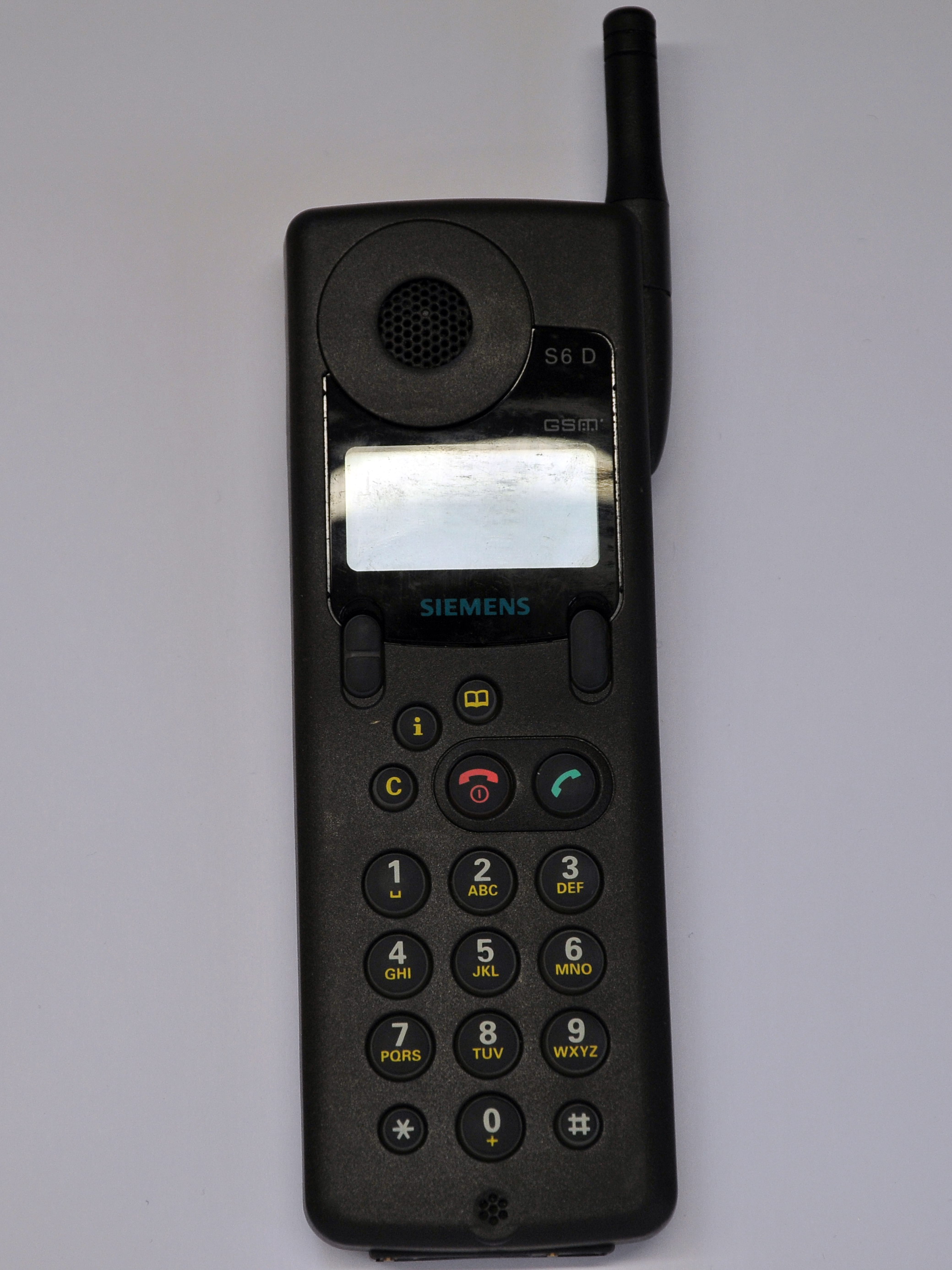
> We texted after class of course, all evening.

And here I was happy to not have to deal with any of them after school.

reply
Hey i spent a lot of hours playing snake on my Nokia and drug wars on my TI83 in school in the 90s. There are always ways to ignore boring teachers, i guess modern phones just make it easier.
reply
I used to be envious of the kids with TI-89s who could play more games.
reply
My school confiscated flip phones if you had yours out in class. Before smart phones constant texting was already a thing for young people, plus even dumb phones had games.
reply
I think children end up having phones for the journey to and from school. It's the reason I think a lot of parents first get their children phones. If they are travelling a distance, on public transport or being picked up somewhere by parents then I can understand that. It's hard for a school to say that the students can't have phones for the travel to and from school.

The issue then becomes what happens to those phones during the day. If school have lockers, that is an option, but not all schools have a lockers.

In the case of one of the schools here, they don't have enough lockers for everybody. That school had a 'phones mustn't be seen in lesson time' policy, but that obviously is too easy to abuse, with e.g. students going to the toilet in lessons or just accessing their phones anyway, which isn't hard when they have the phone in their pocket.

They now have switched to lockable pouches that phones have to go in during the day and are locked during school hours (with an 'unlocker' available when they leave school). This works better but requires quite a bit of staff time checking the pouches in the morning (students will do things like put calculators inside instead!) and costs money. I can see why not all schools have gone that route.

reply
They never were "allowed" but teachers don't have any actual power to confiscate the phone and then if some teacher did confiscate the phone parents would step in making a fuss about children rights yada yada.

So it ended up teachers not enforcing it and kids not being afraid because no one could do anything.

People are quite quick with not caring about rules they are not going to be punished or ostracised for...

reply
Exactly.

However, if in the 90s someone told me that in the future we'd all have the equivalent of a TV set with 1000 channels on our office desks, and people would think it was normal, I wouldn't have believed it.

reply
It wasn't until 24/7 social media that it started to have such a negative impact though. My first phone I think was a Sony Ericson Z-something, and of course me and everyone else brought their phones to school so we could share mp3s over IR during recess, but during class the most distracted you ended up being was trying to type and send SMSes while not looking at the screen.

A far cry from what seems to be going on with schools today due to smartphones, social media and all that comes with essentially "one big 24/7 public group".

My guess is that a "social media ban" would have the same effect, but it's a lot harder to put in place, so easier to just ban phones overall.

reply
There are already multiple ways of blocking social media on kids phones. I think the kid safe SIMs available in the UK give you that option, you can use DNS that stops looks ups, my router lets me have blocking rules for specific devices...
reply
Parents can do that (and some do), but that just turns your kid into a social pariah.

Kids who love school phone bans love it precisely because it affects all.

reply
I home educated so the pressure was less because kids had a variety of rules so they adapted.

Some parents were stricter than me, some a lot less so. At one point I set up a Jitsi server so one girl whose parents did not allow chat apps could talk to the others. They were unusually strict.

I also had my younger one use some things on a computer rather than a phone.

reply