
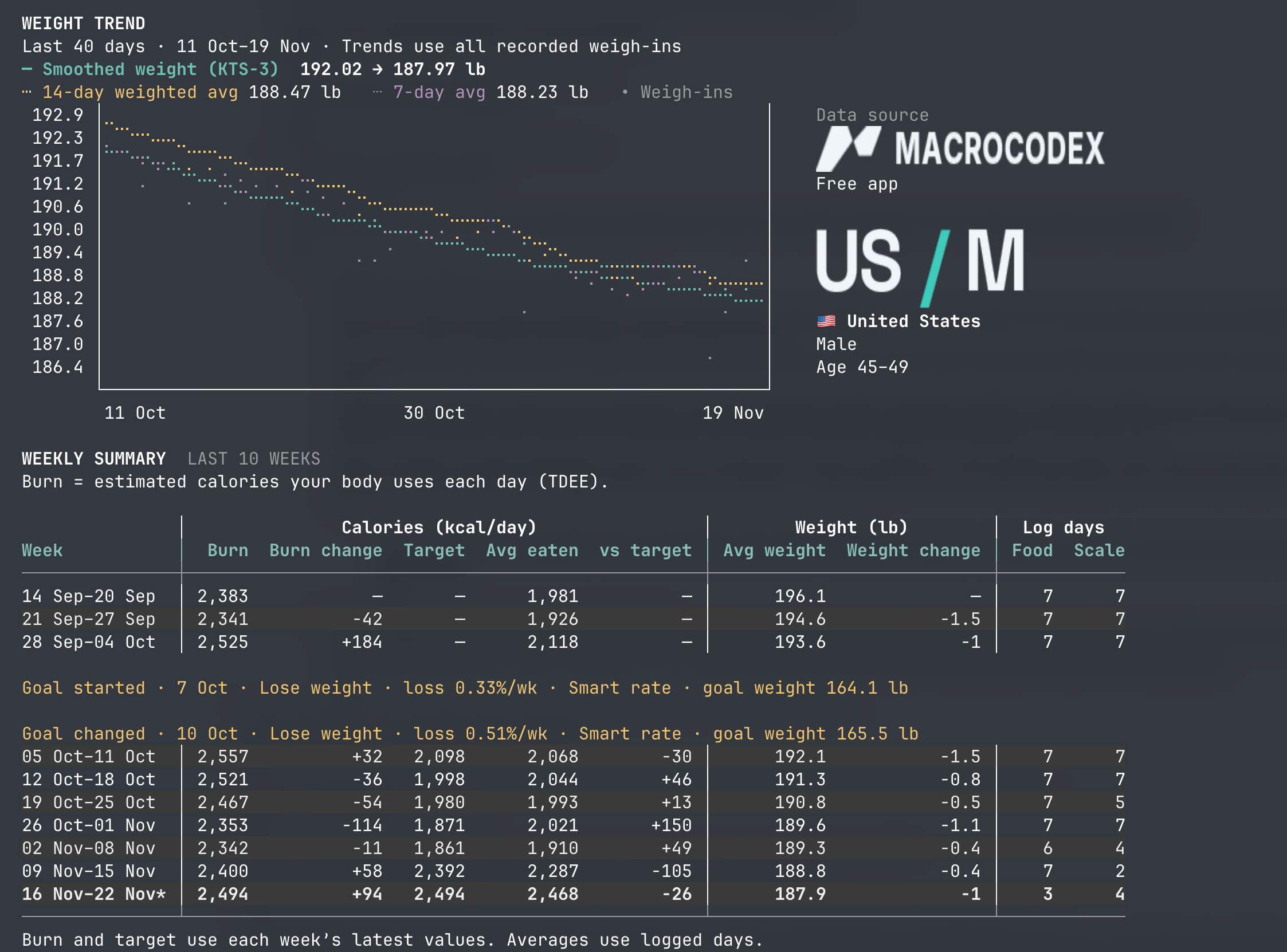
Here's the proof of a calorie deficit working: https://i.ibb.co/F41dPj99/e53d5859da28.png
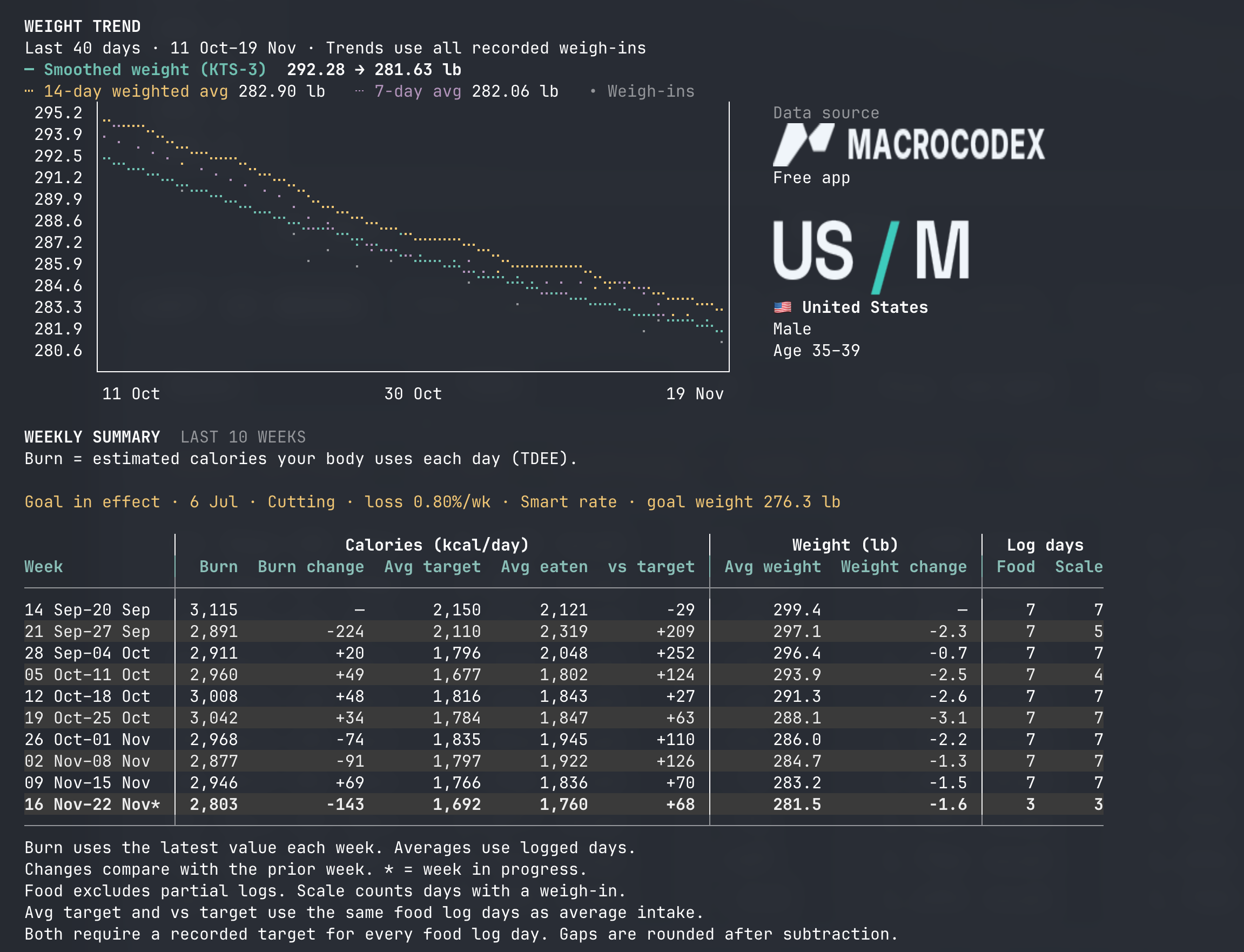
Each row in the table is a week.
Remember, you’re explaining to a five-year-old. You can’t stop a five-year-old from digging deeper and deeper. They aren’t discouraged by hand-wavey explanations.
It is not intended to be anything more than a mental model for evaluating how well people you don't know understand something you don't understand yourself.
> Calorie Deficit
Trying to change mass by reducing energy, that might be the very most simple explanation of why calorie counting is misguided.
The more correct one would be pointing out that humans aren't dumb matter-to-energy converters. For many people, the body will happily down-clock quite hard in response to a calorie deficit; for others, it'll create irresistible psychological urges to fight the limit.
I'd probably go towards scenarios: imagine the body is a block of flats, and the municipal government decides for some reason to cut the city heating allocation for the block by half during a harsh winter.
Things that will happen include some combination of desired outcomes (people improving insulation, replacing radiators with newer ones, closing windows more) and undesired outcomes (people losing jobs and staying home and not paying bills, people starting fires indoors, tapping infrastructure to direct more heating to themselves, sabotaging neighbors, outright threatening or murdering neighbors to take their fuels, going out to the streets and rioting or attacking neighboring buildings or city council, etc.).
There's probably a simpler explanation to give, but I currently don't know an example of "self-regulating system" that most normies would understand. "Homeostasis" would be a perfect term, because it's something kids are taught about in primary education - unfortunately, as far as I know, most adults have no first clue what it means.
https://i.ibb.co/HThyPcSX/f0b1704b2cf3.png
https://i.ibb.co/vCFYB87j/7ee73cd7ce4d.png
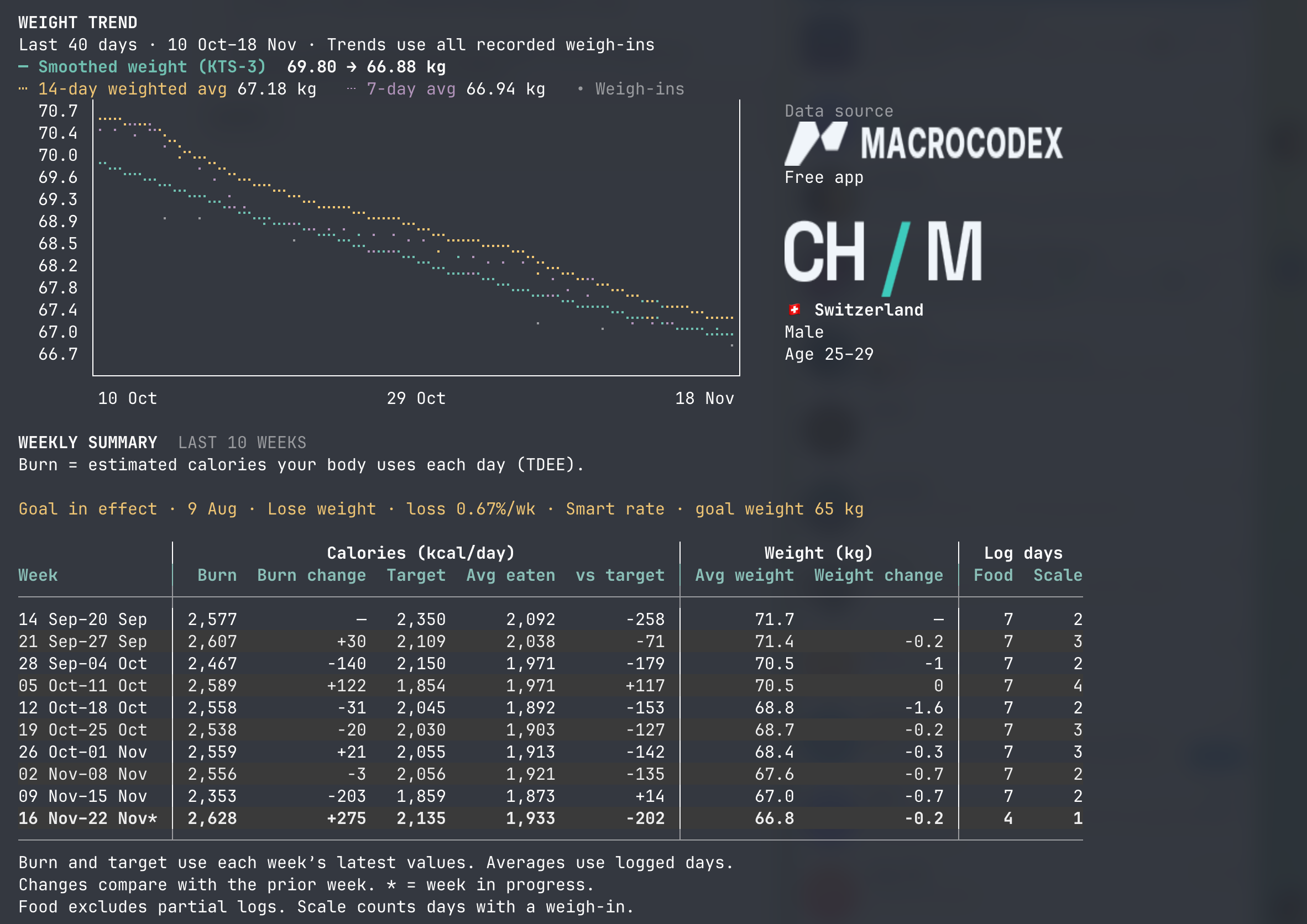
method of maintenance tracking: https://macrocodex.app/knowledge/rethink/adaptive-tdee/#macr...
There will be so many studies at population level of how lower BMI correlates with people overall healthier, but that doesn't guarantee that slightly obese people would get healthier through weight loss.
Yes, none of it simple.
Also, (simplified) mass is a form of energy, so I am not following how that assessment would explain the fault with the approach.
Trying to actually and reliably measure what happens on food intake at an individual level is near impossible anyway, so keeping the explanation simple would be a step in some direction IMHO.