
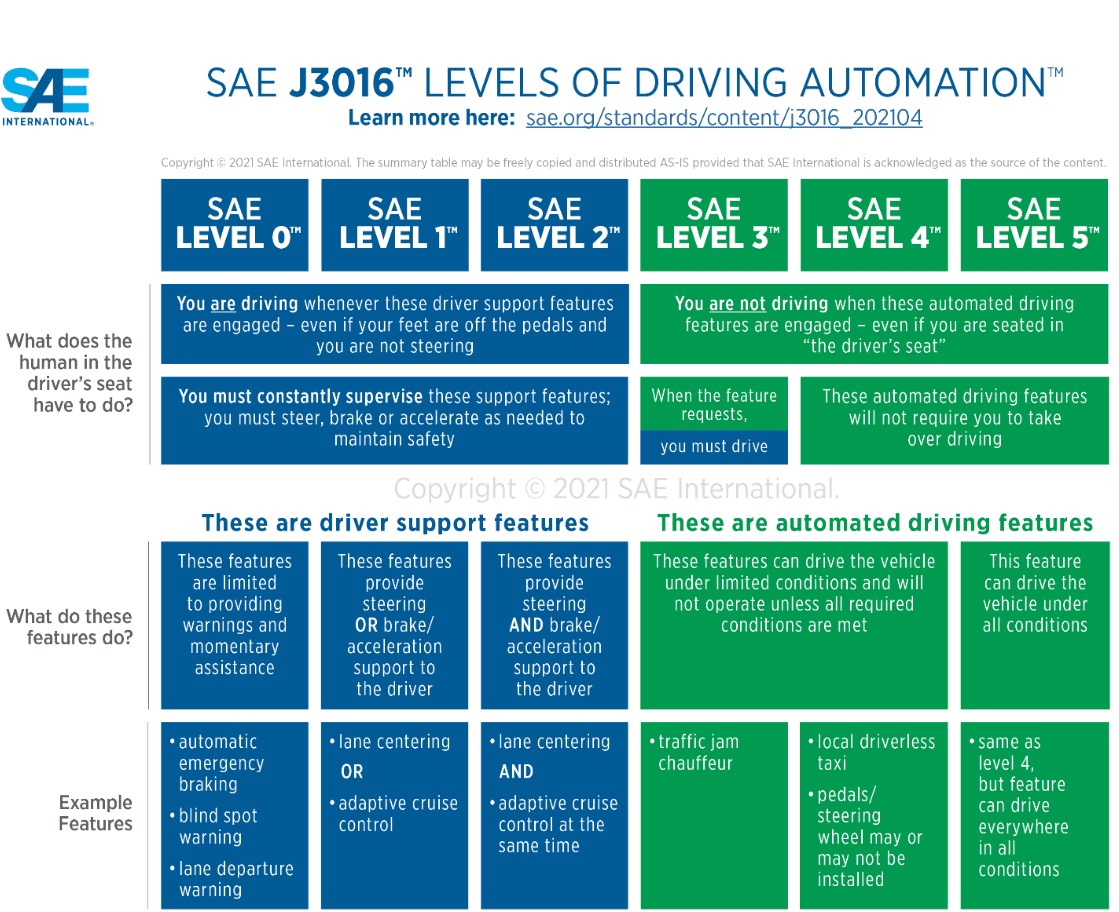
If you don't pay constant attention, you will never notice when it slips in a bug or security issue
I’m in left lane on highway. Tesla ahead of me but quite a ways away.
I realize as I’m driving that the Tesla is moving quite slow for the left lane driving. And before you say it, yes there are lots of people speeding in highway left lanes too.
So - I passed on the right rather than tailgate. Look over and see a guy leaning back in his seat. No hands on wheel. Could’ve been asleep. And driving 10-15 mph slower than you’d expect in that lane.
To your point about using it FSD the way you do, makes total sense to me. Which implies you would also cruise at the right speed depending on the lane you are in, unlike my example.
I wonder what's taught to new drivers about this sort of situation. My intuitive feeling (driving for almost 30 years) is you drive with the flow of traffic when traffic is present. I don't see too many left lane drivers glued to speed limits, but it's obvious when someone is a fast or slow.
I'm asking because I feel I must be missing something, inasmuch as to have my hands on the wheel while not controlling the car is an experience with which I'm familiar from skids and crashes, and thinking about it as an aspect of normal operation makes the hair stand up on the back of my neck. (Especially with no obviously described "deadman switch" or vigilance control!)
It's just nice having a 'second set of eyes' in a sense. It's also very useful when driving in unfamiliar cities where much of my attention would be spent on navigation and trying to recognize markings/signs/light positions that are atypical. FSD handles the minutia of basic vehicle operation so I can focus on higher level decisions. Generally, at inner-city speeds, safety and time-to-act are less of an issue and it just becomes a matter of splitting attention between pedestrians, obstacles, navigation, etc. FSD if very helpful in these situations.
I was watching the Tesla display on my way back home from LaGuardia airport last week (passenger, not driver).
No accidents or close calls, but it was obvious that I might be focused on 1 or 2 things in that very busy and chaotic environment whereas the car (FSD or otherwise) sees more than 2 things and possibly avoids something on my behalf.
I appreciate your thoughtful and detailed response. I'll need to think about it for a while, too. It had not occurred to me to consider the possibility that someone else's FSD might protect me from the general incompetence and unreliability of amateur motor vehicle operators.
(Jumping a light in the dark? Not thinking or learning to navigate by verbal instructions from your satnav or phone, instead of compromising the primary sense you must constantly use to drive without risking manslaughter? I'm sorry, but if this is the standard, I really can't describe it other than it is...to say nothing of your considering safety less important, as you say, in the "inner city" that is my home.)
I don't know what this means.
> Not thinking or learning to navigate by verbal instructions from your satnav or phone, instead of compromising the primary sense you must constantly use to drive without risking manslaughter?
Navigating involves reading street signs, block numbers, and traffic markings. These are all visual elements that can distract from safety monitoring. How many minor accidents result from driver's trying to figure out where they are, or need to go?
> I'm sorry, but if this is the standard, I really can't describe it other than it is...to say nothing of your considering safety less important, as you say, in the "inner city" that is my home.
My claim isn't that safety is less important in city driving, it's that driving is far safer due to lower speeds. There's more time to react and lower risk of catastrophic results when driving at 35mph. The challenge for a driver isn't sudden loss of control as you may experience at 65+mph. The city driving challenge is trying to track markings, signage, pedestrians, and parked cars while also navigating and managing the vehicle's basic operation. FSD can track all of that without distraction and leave the driver responsible for more human reasoning tasks.
When I'm driving I know what I'm doing, what I'm planning to do and can scan the road and controls with that context.
Making me have to try and guess what the car is going to do at any given time is adding complexity to the process: am I changing lanes now, oh I guess I am because the autonomy thinks we should etc.
I agree that there are situations where what I do as a trained driver is different from augmented cruise.
A good example (or perhaps I'm wrong) is this: in a lane, car pulls into lane in front of me and between the car further ahead. Now I don't have enough space in between me and that new entrant. But instead of using brakes (unless eggregious), I bleed speed until I make space I want. Augmented cruise doesn't do that - it hits brakes.
So, from behind, I think it looks like I'm using my brakes a lot more than I am when on augmented cruise. And excessive brake use distracts the driver behind me.
I've got plenty of experience, and (feel as though) I know most of it's failure points. I had to drive my 30 minute commute last week, and it was decidedly unfun. I have seen the future and I don't want to go back.
Too bad that project failed.
Airline pilots aren't supposed to take a nap, and there are occasionally articles about the various things that have gone wrong because the pilots weren't paying attention.