
Dieter Rams is the only UX/UI designer, who became famous - outside of Germany. Hartmut Esslinger kind of popularized DR, what an irony, that two Germans made history, but of course not in Germany and even in Germany DR wasn't well known. Braun was a brand and statement, but because the devices were and still are extremely convenient. Braun never put design or beauty in the spotlight - it wasn't recognized as such and therefore not of value to capitalize on.
VW? "No one needs Apple Car or Android. We are the world wide Nr. 1 in car business, what does a computer company know about cars? hahaha"
Hubris, resulted into a failed attempt to build in 2 years a complete Car OS. It was so bad, I was mocked back then, because I bet against it.
I am the only one who successfully build a No Code platform in financial services that became such a hit internally, that it became the standard. dbCORE is its name.
Very long story, but design by committee is the norm in Germany, and since outsourcing is the way to go, vendors sell changes all the time otherwise they lose the customer.
Value chains like Apple or Google are inconceivable and no one in Business has a background in CS.
Porsche 997-2 had the best UX/UI there was. Fantastic blend of nobs and touchscreen. It blew my mind, really. This was 2008. The iPhone came to light 2007!
Really, highly impressive, extremely functional and almost no friction at all. 90% was top.
And to the haters: Show me any company or product from Germany in IT that is Top 100 globally. Only SAP is or has been featured somewhere below the bottom. And I gurantee you, no one fell in love with its UX/UI...
https://drmory.com/wp-content/uploads/2018/08/TARIFPLAN_Inne...
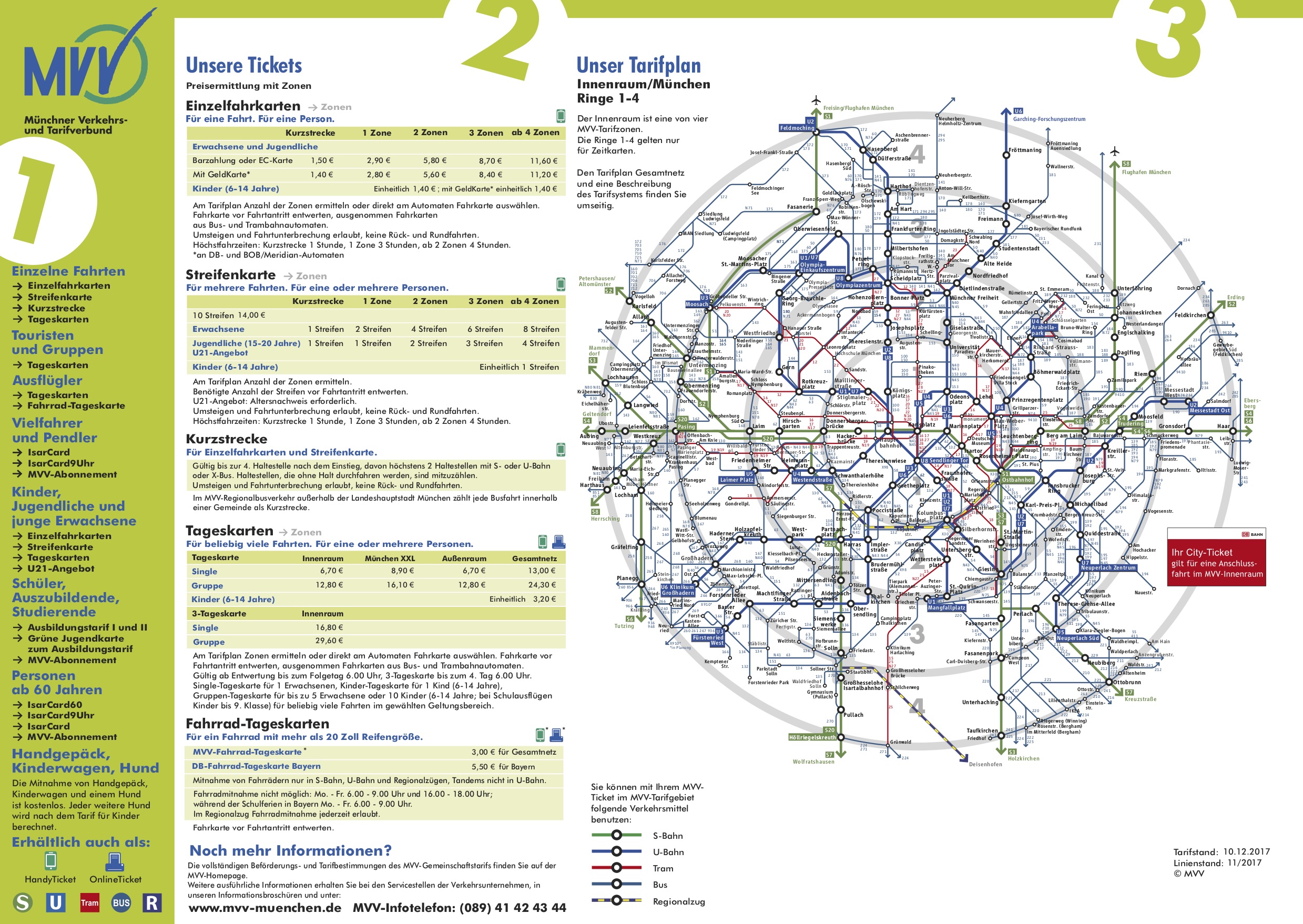
I remember seeing it back then in the subway, looking for directions and feeling really confused about it. "Damn why didn't I get a transportation systems PhD before coming to Germany!"
Also I wouldn’t want to disagree with you outright, there are still a few important German companies in the IT sector (or related): Siemens, Infineon, Deutsche Telekom, Bechtle, TeamViewer come to my mind.
What Siemens exemplifies is that the strength of German industry is not pure software, but high-tech machinery. While Siemens and most of its spin-offs are doing somewhat okay, the stocks of its spin-off Siemens Energy have risen by ~700 % in the last 3 years.
I rely on Siemens automation products at work. They give me end-of-life warnings a couple of years ahead - and maintain a spares inventory for a decade and change after EoL.
That basically ensures I am never caught out, and makes me more than happy to (grudgingly) accept all their ideosyncracies...
So many product companies fail to think about that -- they're all thinking about this quarter and very few take a long term approach and really try to have customers for life. They all say that want that of course, but too few are really committed to it. There are a few brands that I buy that are committed to quality, and they usually cost more (initially, but probably not in the long run). I'm fine paying more know that they really tried to do their best and didn't let nickels and dimes get in the way of an otherwise great concept.
Origin: German, HQ: German, Accounting regime: German, Main stock listing: German, Executive board: 5/6 German
None of them famous or being praised by customers for having amazing UI/UX though, because they're not consumer products, they're targeting engineers who either don't care about UX, or don't have a choice in the matter because their company is buying it, not them.
Cars on the other hand ARE consumer products and do need great UX, and German companies long forgot how to do that since they operate everything as a cost center and outsource everything they perceive ads no value.
>the strength of German industry is not pure software, but high-tech machinery
Yeah but there's more margins in pure software and more buyers in the world for consumer devices than for high tech machinery. Apple can probably buy all of Germany's machine tool makers if they wanted to. It's the perk of selling to 7 billion consumers in the world.
> the stocks of its spin-off Siemens Energy have risen by ~700 % in the last 3 years.
Just like every energy and defense stock in the world right now, but that's to be expected and somewhat offtopic for SW and UX.
If we look at some of their other consumer and healthcare spin-offs like Gigaset or Healthineers, they are doing insanely poor, which is embarrassing.
Ageing population that finds itself overwhelmed is my guess. There are exceptions, but they are far and few between.
“The company is the largest non-American software company by revenue and the world's fifth-largest publicly traded software company by revenue. In June 2025, it was the largest European company by market capitalization, as well as one of the 30 most valuable publicly traded companies in the world.”
kind of ironic because, IMO, the only priority for UX in a car like that is a steering wheel, gas pedal, and brake pedal.
/not jealous.. well maybe a little :)
To be fair, it is outsourced to Harmon/Kardon.
Many automakers use them for their headunits (ex. both my Chrysler minivan and my Porshce have HK headunits). The headunit in my porsche is also in some VW models and for the HN crew there are some fun hacks you can do with a usb stick to customize some features, including making carplay fullscreen (tap the porsche app to return to the porsche UI)...
A juniper Model Y is very fast, no engine noise, can drive itself better than a lot of cars on the highway for a similar price, doesn't need gas - convenient if you have a fast charger at home/work, fewer moving parts to think about in your day to day and control.
I like knobs and AA and will never make that trade... but it makes perfect sense for many people who don't mind the interface.
I'm glad Genesis still has knobs and Lexus is getting back to that now. The German luxury cars can't rely on fantastic engines alone forever.
Fast? Sure.
Also a reason why suvs and their more ridiculous variants picked up so well. People don't need cars that are worse to drive, but sure as hell they want one because others have them.
That said, they've also been buying ads for the last few years as their growth has sputtered in the face of competition.
I miss that car. I would buy one again in a heartbeat if BMW still made them.
That's a pretty long list of things for a simple driving machine.
But anyway:
It came with two cup holders in the center console, BMW part 51168205367. There were two more cup holders in the middle armrest for the rear seat. Two additional cup holders were also available, which fit under the top of the glove box -- BMW part 51168184470.
I loved that car and it was brilliant to drive, but it did not represent a "strong stance" about drinking and driving.
It was a rather complex machine that came fitted with plenty of cup holders. :)
A better design would be to have a smaller diameter clip-in piece so you can size down when you have a smaller item.
Same thing with Premiere, or the Pioneer CDJ. It’s not the standard because it’s a joy to use, it’s a standard because it’s functional.
VW was supporting CarPlay from launch and the VW MEB dash was on all pro material of Apple for ages.
6000 people to develop a software stack for VW.
Go figure. The fact VW supported CarPlay early is footnote in this comedy.
But Hetzner Cloud UX/UI is wonderful, compared to the rivals, Digital Ocean, Google, AWS (yea those are bigger and offer more, but still)
Comments about this dreadful UI/UX on german cars feels really decade old.
In any case I rent cars quite often, mostly get Korean, Japanese and German cars with few rare US ones, and I really don't see those differences across the board software wise.
They all suck, they are all slow, clunky and unintuitive.
I have never used the native UI of my Samsung Frame. I haven't used any car's own navigation or music app in at least a decade.
(Mk8 GTI)
I couldn't help myself and just watched a video demo of it https://www.evshift.com/242850/how-to-adjust-the-heating-and...
The actual rage it induces LOL!
I have no idea what you are talking about. I think all recent VW cars (since 2018) support Apple CarPlay and Android Auto. CarPlay works great with our VW ID.3.
Also, since a refresh a few years ago, the in-car system has had great UX/UI. We are perfectly happy with it and this is after almost two decades of iOS + having tried the systems of various different cars (including NIO).
We do not have anything to complain about, except more physical buttons would be nice, but the latest generation is bringing them back (e.g. the new ID.3 NEO). We are considering upgrading to the ID.3 NEO soon (or maybe Hyundai).
What?
My BMW i4 has iDrive 8.5 and it's excellent, and i've had Mercedes and Audi and VW and Honda and SAAB.
the BMW and the 40 years ago SAAB (i bought it very used) both were easy to operate without looking away from the road.
Games count I suppose?
This means engineering is not attractive and no longer something to build life around.
It takes years of learning, patience, trial and error for not much different remuneration than jobs requiring far less commitment.
There needs to be a screen, but it should be used only for optional features. It shouldn't be required. The 9x1 generation got that. In the 992, you can't even open your garage door without fumbling around with the stupid touchscreen.
https://www.bmwgroup.com/en/innovation/innovation-network/te...
For example, BMW tech offices exist in Silicon Valley and Shanghai, among other locations.
German cars have been very well-regarded in terms of their automotive interfaces by the automotive press and reviewers as well as customers.
Watch any Doug DeMuro [1] video and on the subject of infotainment systems and you’ll see that BMW and Mercedes are up toward the top in terms of usability and customization.
You’ll see brands with good technology reputations like Kia refuse to put a GPS map in the gauge cluster while the Germans have been doing it for a decade plus now.
I will also remind us all that Mercedes beat Tesla to market on level 3 autonomy.
The only companies beating the German brands on tech are EV startups in China and companies like Tesla, but of course those companies are doing so mainly because they are replacing physical buttons with that technology, and generally integrating a lot of gimmmicks that are low hanging fruit compared to the things they can’t replicate as well like driving platform dynamics.
[1] I choose Doug DeMuro for this because he’s somewhat “in the middle” on technology. He prefers touch screens over purist physical controls for many functions but isn’t wildly biased toward them or incredibly tech savvy like the kind of person who blindly embraces Teslafication. He’s the kind of reviewer that will miss the “but actually there’s a setting for that” solution for his nitpicks, effectively showing the car as an layperson who isn’t techbrained but also isn’t your dad who wishes the screen was gone entirely.
All the provide is a squeeze money scheme by making everything paid upgrade, laggy software, buggy software, bad range and much more.
There's nothing good about most German cars anymore. Bmw neu klasse is finally a decent answer but it took how many years?
Also, my 2020 Mii Electric is 100% physical buttons. Pretty great.
Frankly, I am wary of anything but VWAG at this point.
It's the same old story about how hardware companies can't do software UX, except extra amplified because of the strong emphasis on hierarchy, formal degrees and their, errm, heavy processes.
Much as people seem to dislike when I say this, but, Europe simply cannot compete anymore in technology and tries to legislate away its problems, which, while sometimes something good does come out of it like the DMA, it does not help long term when there are no good home grown big tech (or indeed, any sector in the top 100) companies of their own.
One of the main reasons Europe doesn't have a lot of big tech companies is that a lot of its most innovative and successful companies get bought out by the giants in the US before they reach that scale themselves. I expect this is going to happen less in the future because of the recent shifts in opinions though.
Mistral, Zendesk, Basecamp, etc. left Europe for the US early on. If we take into account European founders who started their companies in the US right away, the list is even longer.
My own country - the UK - is (in)famously not a part of the EU and I don't think anyone would seriously claim that we have no technological innovation or successful tech businesses here in Cambridge. The city is practically overflowing with tech startups either spun out directly from university research or keen to employ people from the local tech community.
But what tends to happen is that when one of those companies reaches a certain stage the founders will cash out. Not everyone needs to be the next Bezos or Musk. Not everyone needs to see their company of 20 or 50 or 100 people grow to 5000 with international divisions set up before an eventual IPO. Not everyone wants to go through multiple rounds of VC funding and then have to run their company under the influence of the VC's people on the board. There are a lot of founders who would be very happy to take an eight figure payday after 10 or 20 years of working on the business and then have no need to work any longer if they don't want to and the freedom to do almost anything they want for the rest of their lives. I've personally known a few of them. Some did effectively retire. Others later started something new. But one thing I don't recall a single one of them ever expressing is regret over the timing of their exit.
If anything I'd say what is missing here is a culture where people feel the need to carry on past that stage in their startup's growth. And so instead of that successful business continuing - perhaps after some other form of exit for the founders - as a local company that might eventually become big enough to buy up other successful startups we instead see them get taken over by companies ultimately run from the USA because they're the ones with enough resources for an acquisition at that scale. Of course there have been a few that did become much bigger before an eventual exit - ARM is probably the most obvious one locally and for all the tragedies in the Autonomy story it was another - but they are the exception and not the rule here.
To come back to the car business we were originally discussing today - I doubt very much that we will build the next Tesla or BYD or even Polestar here in Cambridge - but I could easily imagine a startup here developing the next generation of car control system and then selling the IP to one of those companies as the exit strategy.
" “To start a direct confrontation with USA right now is probably not the smartest way to react,” said Christel Schaldemose, the Danish social-democrat lawmaker who led the drafting of the Digital Services Act."
https://www.politico.eu/article/jd-vance-waging-war-eu-tech-...
Perhaps we will have a "Beijing regulatory effect" positively impacting the world like the Bruxelles and California ones.
Similar thing with batteries on airplanes, tube trains, ferries and underground garages. China cares about fire hazard, other countries care about ideology.
Not even ideology anymore, see US. Democratic country has been attacked in a biggest war since WW2, and they've decided to halt all support and attack Iran instead.
The equivalent would be if the US started to run a socialist planned city of 15 million people somewhere, just for the sake of it. There's pretty much no other place that in the last 30-40 years has as much of a spread of policy experimentation as China has had.
FWIW, I'll take the one not dropping bombs to keep their BFF happy, boosting right-wing shitheads, threatening to invade their real allies and slapping dumb tariffs on everyone.
I’m honestly torn on which one I’d pick, but there’s a TON of likely state-sponsored pro-China propaganda on the internet, so I consider it a patriotic duty to push back for the sole reason that we can still freely talk shit about the one (for the time being, as long as you don’t mention the blessed martyr Charlie Kirk), whereas the other blocks the internet and imprisons people for dissent.
Mazda used to have do the best most user friendly controls and bragged about it as a differentiator... but the new cx-5 is a touch screen-only monstrosity
Then again, I'm someone who likes the yoke steering, and invested a few weeks acclimating to the lack of steampunk turn stalks.
For physical controls, it always comes down to "What did you want to do?" There are very few that are actually needed.
https://sim-lab.us/cdn/shop/files/mercedes-product-image.png...
