
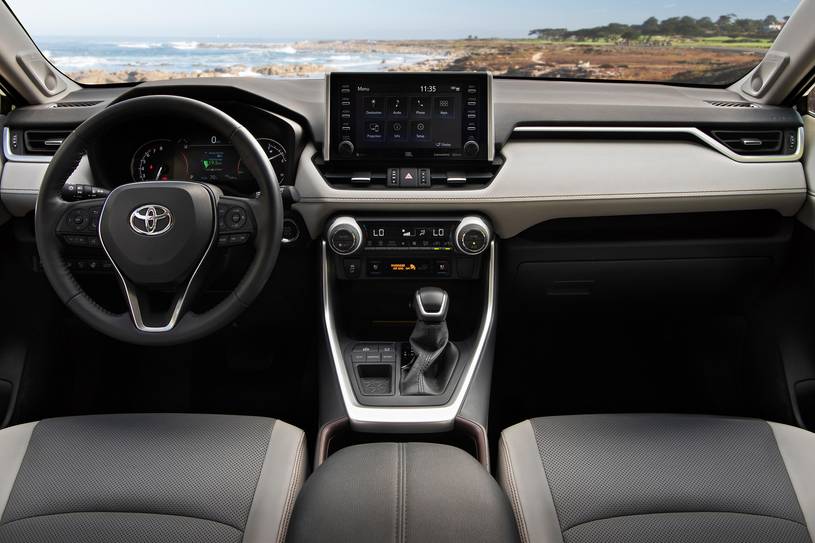
White one is harder to tell obviously, but the shape of the mirror looks the same, and you can see the top of the dash has a chamfered shape that looks an awful lot like this pic: https://media.ed.edmunds-media.com/toyota/rav4/2022/oem/2022...
Posting a video demo probably isn't a great idea for this kind of thing. I'm sure some sicko could have figured this out just from the sound the locks make.
It's a one minute video, would it have been so hard to redo it.
Edit: raining downvotes, well fuck me, I guess you all prefer sloppy shit.
“Thanks for the nice write-up. Gotta admit the video still irks me. Like, portrait to landscape mid-recording… Since it was only a minute, think re-recording would be well worth it.”
In the past few years, we'd found ways to remotely control vehicles from Honda, Acura, Nissan, Infiniti, Hyundai, Genesis, Ford, Porsche, Kia, and Subaru, but we'd never found a vulnerability that enabled remote access to either an Automaker #1 or Automaker #2 vehicle.
Why would they be so circumspect? Presumably the automaker has fixed this by now.
After we reported the vulnerability, both automakers fixed it within about two hours and rotated the affected credentials. The affected systems served customers in multiple regions; we tested the complete chain only with US accounts and vehicles.
Often when the situation is "Most makers are 1/10, but we're 0/10" a small amount of effort can get you to 4/10 and until the attackers up their game you look stellar, even though in reality you're still doing a poor job, everybody else was much worse
A cursory glance seems to suggest it’s right and it took less than 2 mins to both ask and check its answer, which is a little scary.
[1] https://github.com/ide/lexy/blob/main/docs/vehicle-status-an...
[1]: https://transconnect.com/en/blog/car-theft-in-europe-popular...
IMO the practical solution to this problem - because telling companies "just do security better" works as much as telling fat people "just eat less" - would be some kind of central registry of car parts. This was already implemented in iPhones back in the day that if a repair wasn't signed off by Apple, you couldn't install a new part to your iPhone. I imagine that if the government had a similar thing but for cars, then thieves would stop stealing cars because each stolen part would eventually be flagged somewhere and the end customer would be upset, never coming back.
I say "government" because companies cannot be trusted to make a simple interface "log in -> enter part number and car license plate -> ready to install". I assume that outside of the US the "log into government website" part is already solved in one way or another. On the privacy side, it really shouldn't be controversial, assuming that people are already used to the VIN having a repair history tied to it.