
I understand that such models can be used by malicious actors, but it’s fair to have it publicly available (and play on your side in case of emergency). This is what changes the world in a better way, I think, not the guardrails.
Cybersecurity capability might be nerfed
The tool calls will be, among other things, something like ReadFile, RipGrep, PatchFile, Shell.
When people talk about the value of different harnesses, they're also implicitly talking about the quality of the system prompt.
The same exact model, when given a different set of tools and a different system prompt, can behave differently.
I think creating your own agent is the Hello World of agentic coding. Instead of Rust, I used D for mine.
(no personal opinions of either, links might be useful)
I think that OpenCode is nice, their CLI version is enjoyable and their desktop/web version is okay:
I also quite like driving OpenCode through something like Kepler / Paseo and tools like that (with those I can still use my Anthropic Condition by Claude Code being treated similarly - as something that gets tasks dispatched to it, while the GUI I see is Kepler / Paseo).
On the desktop side, ZCode was surprisingly usable for something that came out of nowhere (I wasn't aware of it at all before trying out the GLM Coding Plan): https://zcode.z.ai/en
(however, it's much faster to use Plan Mode to build a plan of what it will do, and then execute the plan in Build Mode. you can also have the AI make a script that will be executed deterministically)
And this is coming from someone that's not particularly a big fan of Theo. T3 Code should get more recognition; people aren't just aware of it yet.
I’ve stopped using it completely now.
It works nicely in the browsers on my tablet and phone, too.
On exe.dev you can ask it to customize itself, and it will automatically rebase your customizations when upgrading to a new release.
I only found this yesterday, and it inspired me to start testing out OpenCode.
this is the integration branch for https://opencode.ai/v2 . it has been for months. it's where the Effect-based refactor has been landing.
That said Claude Code is perfectly fine. I just prefer the integrated experience of using Cursors since I already use VSCode, but I still mostly use Claude Code because of their Max/Fable plan.
Anyways, please try mine!
i like to challenge my assumptions and try new tools
that's a very compelling use case, thank you
CC works but for me it felt like increasingly they have zero incentive to make it a great experience. You hear folks like Boris talk about spinning up thousands of agents over night and agents chatting back and forth in GitHub issues and while I think it’s great from figuring out what the future looks like I don’t think it represents the reality of ROI today. So the folks building the tool are so disconnected I am simply not sure it’s a great experience anymore.
Is that the main concern though, cost?
That being said, I had to nope out of a similar thing from GPT 5.6 today, so it appears to be a US frontier lab issue. Claude is particularly bad though, as it produces far too much code even when I tell it not to, unlike GPT (and Kimi) which at least listen to me a little better.
More generally, I want a usable human review experience, and Claude code doesn't deliver that for me.
IMO part of it is that the underlying LLMs have gotten better enough that harnesses feel better even if they haven’t changed. I have a toy harness that barely implements the features you’d expect and it works surprisingly well. Like there’s literally nothing clever, it calls tools and that’s about it, and it still mostly does the right thing.
Edit: lol, I don't think ACP is even actively developed anymore. It seems to have been merged into another seemingly pointless standard with an even worse name, A2A. [0]
What’s the counter argument? pi and ohmypi are pretty fantastic. Of course like all developer tools it depends how you do your work but I am not sure what you are trying to achieve in your comment.
I feel like there should be some mechanism to prove you own the code/app/site/whatever and it will remove the guardrails from the LLMs allowing them to find and fix these vulnerabilities.
You can't guarantee everyone else will use a neutered model.
In this case, you can put whatever you want between the harness you're running (or modify the harness itself), and essentially "lie" to the model. Any verification technique would be fairly trivial to bypass, while you continue to run the harness locally.
Anthropic was stingy as hell with its Fable and cybersecurity nonsense, switched to OpenAI which is much better but still not enough. I'm tempted to switch again...
If it won't attack my stuff, it won't help me build my stuff to be secure.
What do you mean with this? Honest question!
Most of these are under embargo, but it seems there are a lot of CVE here from a wide range of popular software, many considered critical or high.
I understand the argument of "people are not actively looking", but isn't the cost for such a scan getting lower by the week, and Anthropic's Project Glasswing is supposed to find them quite a while ago?
That was my thought too. For all of Anthropic's talk about their "adversaries", it seems Z.AI have been quietly offering fixes for single shot Remote Code Execution flaws in US software (Safari / WebKit) that Apple and Glasswing / Mythos missed, and that Apple would not attribute to GLM.
That was a wtf to me, so I checked Apple’s latest iOS release security content and GLM & z.ai is mentioned once (under WebKit), Anthropic is mentioned twice, Codex is mentioned once. Not clear if there are other instances where the model did most of the work but wasn’t credited. I didn’t bother to check other releases.
It’s very likely they found all of them, but that the same happened that happened to Microsoft a couple of decades ago: NSA orders not to disclose / fix them so that they can put it in their collection of unfixed zero days.
I'm not a gambling person, but if I was this would be my bet.
You have to consider that having an LLM scan for vulnerabilities is hardly infallible. It is a search guided by heuristics and given a large enough codebase, it is unlikely to identify all vulnerabilities.
Personally, I've had Fable 5, GPT 5.6 Sol, and GLM 5.2 all looking for correctness issues in an old abandoned WIP codebase of mine and all of them found some that the others hadn't discovered. Now, correctness issues aren't the same as vulnerabilities, but the same principle about using heuristics to find defects applies.
This makes perfect sense, but that conflicts with the impression put forward by Anthropic and OpenAI (in particular) that they alone occupy 'frontier model' spots. Frontier models should large dominate their competitors on a capability basis, but if GLM 5.2 (now 5.3) is routinely finding bugs / vulnerabilities missed by Fable and Sol then GLM might be genuinely a frontier-grade model by itself.
Not necessarily. Even near the frontier, we don't really have a total ordering of capabilities, but a partial order. And even frontier models make plenty of mistakes. Combined with the randomness inherent in searching large codebases for vulnerabilities or correctness issues, it is entirely plausible that even much weaker models (and GLM-5.2 isn't even weak) can stumble upon issues that stronger models missed.
My current hypothesis – for which I have only limited evidence, unfortunately – is that it is better to have multiple reasonably powerful (but not necessarily frontier) models looking for issues than just one very powerful one. And even then you're likely to miss out on some issues.
For normal software it would be as you say, but LLM progress is so ridiculously fast that things go from "bleeding edge" to "eh, you'll do" in about that timeframe, and "eh, you'll do" to "why even bother with this old rubbish?" in the same again.
Or, from a different perspective, we can expect some new frontier model from Anthropic in a week or two, and from OpenAI in a month or so.
We cannot trust a single company to report security issues, it’s good to see competition in that domain
Is it possible to build heavier traditional linting to catch whatever is being caught in a more deterministic way? It seems to me that would be far more efficient in the long run (even if the efficiency is only for the AI to know that aspect was already checked).
Not with Anthropic's models!
Complete speculation, but I wonder if they and Anthropic are scanning very different codebases and Anthropic's skew would be in the other direction.
Maybe "It's really hard" is more accurate? We (humanity) for most part basically agreed to ban the usage of various chemical weapons in wartime, which seems to have drastically reduced the usage of it, even though it's still used by shit actors today from time to time. But it's hard to deny that usage didn't decrease after banning it, which makes "banning" maybe not completely useless for certain things.
"Banning" things that can be easily copied over cyberweb transportation pipes feels like an fool's errand though, regardless of what it is. It's just too easy to get around, compared to actual physical items I suppose.
Regardless of whether or not adversaries are using them, the US has by far the most compute available, and we've now hit the line where major providers are no longer releasing their best models. The public gets the "current" level of intelligence, while the US government gets to control access to the actual frontier of non-public AI. From their perspective, their enemies using GLM5.3 while they have GPT6 and Mythos6 or whatever is a fine trade.
I don't support a ban at all, nor the US's behavior, I'm just pointing out some facts that change the argument.
[1] https://www.washingtonpost.com/graphics/2020/world/national-...
>This kind of thing works when you have a significant lead in the field
No? It works even if the adversary has the same capabilities. It only stops working when everything is fixed.
I'm curious: to any professional vulnerability researchers reading this, what do you think?
Now i know that reality is worse than the worst conspiracy theorist.
It might not be the reason, but of course it's a contributing factor.
So we might ask if one of the reasons the US is being the bad guy is it's usual spying antics, and we're left asking why China is being the good guy.
Why do you _not_ believe it's a possibility?
Distillation is just forcing the model to use an exam prep workbook for training instead of generic publicly available textbooks. The models themselves has to be smart enough for that to work. It's the exact same thing as Asian tiger mom double schoolwork strategy, to paint a picture.
It's almost like there's an actual cost to developing these models, and the Chinese don't have magic dirt that allows them to do it at a fraction of the cost.
Maybe so, but I'm not sure I'd like to live in China of all places. (Don't get me wrong. Lotta places I'd like to visit if I ever got the chance, and China's on that list, but to live there? I don't think so.) Maybe one of the Nordic countries?
Someone still has to run it. The analysis and fix could be someone's machine but not committed / published.
How are you all toying with running this kind of thing in a mega quantized way locally? Two weeks out from released weights, but this is still just GLM 5.2 with post-training magic.
These Chinese models cost less of US SOTA models to run, even if they are less capable. Providers can just run them, offer cheap tokens, and pocket the margin.
I just don't see how you justify a trillion valuation for US AI labs when the underlying models are being commoditized this fast.
Whether AI works or is useful or not isn’t even the question anymore. It can fulfil every promise Sam Altman has been making and will still make no financial sense to justify these valuations.
In summary, regardless of country of origin, availability of inference capacity is the moat protecting the likes of OpenAI and Anthropic, not technology superiority.
[1] https://www.fredgao.com/p/deepseeks-liang-wenfeng-breaks-his
It’ll certainly take years but I would not bet against China’s ability to manufacture something.
It only justifies their long term valuations if they can leverage that temporary monopoly for technological superiority (they can't) or lasting market share (they can't).
Chinese models prove there's no technical advantage, and the software side is heavily commoditized so there's not much advantages to market share either.
The very exponential that you are relying on to give you runaway improvement is also giving exponentially increasing data to your competitors. All else being equal your competitors stay a step behind but you never develop a monopoly either. That's the best case for Anthropic/OpenAI. In reality, training data is just one variable, exponentials don't last forever, and your competitors will get better at capturing a bigger slice of training data.
a) indicative of problems that aren't already out there in the wild? (no) b) are the responses I'm getting so good and novel that the model can improve itself? (no)
It's the garbage in garbage out idea, just scaled up. If the model gave a bad answer, and I didn't catch it, and you now train on that I/O pair (my perhaps crappy prompt, the bad output), then you're not going to improve anything.
Is lack of inference chips due to the trading blocks by trump administration? What if Trump agrees to sell chips to china, would they collapse then? That's not a very strong position to be at
IMHO, this has the impact of softening the impact of data centers sitting unused in the long term if they can still serve open weight models, even if Anthropic or OAI have to scale down their expansion rate to pay the bills.
Regardless, reality has to give at some point; these valuations don't make any sense. We've been valuing GenAI as disruptive work, when in reality they're much closer to cloud providers with a beefy, one-pony-trick R&D department.
so, you know, they're as vulnerable as utilities at this point, if only there were people who gave a shit more about society than greed.
When Xi Jinping did the announcement of their open weights push, they might as well cancelled their IPOs....
I close-out all my positions by end-of-trading everyday… so when the day came when there was a very clear and very scary indicator during early trading hours, quickly followed by SpaceX’s catastrophic fall right after opening bell, that was the end of my involvement….
And I fully expect oAI and anthro to be the same way. They’re being propped up with private loans, subsidies, and other tricky bookkeeping techniques. You would think their CEOs would pivot away from their current public personas. Ironically, they are like a poor man’s Elon Musk… and that doesn’t bode well for their companies
Second, humongous models are impractical even for them to deploy widely. They’re best used as teachers for smaller, more efficient models that can crank out the volume they need to sell.
Finally, there is a data wall. Sure, they can keep scaling RL on math problems and code. But with everything else, where will the supervision come from when they need several orders of magnitude more?
That's assuming the infrastructure needed to develop models stays available financially and supply wise. A lot of the services used to train and develop models are supplied and funded by people who are looking for multiple returns of investment. If/when OpenAI and Anthropic valuations fall and they inevitably get acquired, will Meta/Alphabet/Microsoft still want to spend lots of money for unclear returns in the short-term? Nvidia and co are on a one way train service to hype town. I don't think they will be happy to get on a coach to hype town Temu version. The shareholders likely won't.
Also, the backlash against LLMs is growing rapidly. AI content, data centres, etc is quickly gaining negative connotations outside of visual and music artists circles. While existing models are going nowhere, developing more advanced models is very quickly getting unpopular. LLMs Data centres increasing people's bills, Anthropic destroying old books, chat bots giving unethical advice to vulnerable people, etc. It won't be long before LLM infrastructure becoming an electoral issue.
Will a small research oriented community be big enough justify maintaining the apparatus needed to produce infra tech at a profitable level post OpenAI?
Also, take in consideration that the AI trade infected a lot of other trade in the economy, if you decide at some point to move your money to a place that is safe in case of a downturn be sure to carefully evaluate that’s actually the case
Compare and contrast how the dot-com bust did _not_ lead to global financial crises. Nor did Black Monday, nor the recent string of bank failures in the US.
('Manufactured' above means that central banks are responsible. I make no judgement on intent here. Around 2008 it was incompetence by the Fed and ECB as far as I can tell. The Fed started paying interest on excess reserves and the ECB even increased rates. Twice. Amongst quite a few other missteps.)
It is said that it comes with all hardware and software required to run inference or training with an open weights LLM.
The existence of this product, which competes with cloud-based offerings like those of OpenAI and Anthropic, is presumably the reason why the Palantir CEO criticized very harshly some time ago the business model of OpenAI/Anthropic.
While I doubt that the ethics of Palantir is any better than of OpenAI/Anthropic, in this particular case I have to agree with Alex Karp about "Sovereign AI", i.e. that only losers will make their business completely dependent on an external entity like OpenAI or Anthropic, who are certainly not trustworthy.
It is just a dedicated computer system, which should be managed by its owner, like any other on-prem servers.
I doubt that it has a good price/performance ratio, but it is a solution for those who feel that they do not want to search, buy, assemble, install and configure every HW/SW component.
I'm under no NDA, if you actually want to know what's up.
For a lot of people (and orgs I'd guess) who just go and buy ≈$20 per month plans (or more for teams), they might not even need a fraction of that cost or capability. A lot of them don't even need it for coding or graphics. Even the API access based pricing aren't great from these frontier US AI houses. The distribution of "LLM being" offered will also give rise to many open-router like offering but at the end point level - direct interfaces to the customers. Pick your vendor sort.
AI shouldn't become another "search means Google".
We’ve a hybrid shop, including hosting our own ML infra, and we save a ton from cloud spend with local ML. Easily one million USD over past three years. But it’s not “free”, you are shifting a lot of labor into your plate.
All boils down to short-term/long-term thinking.
For our own model training we needed to do some large scale translation tasks of a large dataset (1M or so documents, 10 or so target languages), running full-size NLLB on-prem saved us an absurd amount of money vs Google Translate API.
(For reference doing 1M target docs into a single language in Google Translate API is roughly $120k list price. You can run full size NLLB on an 48GB NVIDIA A600 and the major difference for us was speed, but for this task time to completion wasn’t an issue.)
Disagree there but I think this is an interesting idea. We would need to find some more cost-efficient hardware to run it on than Nvidia GPUs.
Trump keeps calling his enemies “communists”… then turns around and ‘seizes the means of production’ himself.
I wish they had tried to IPO because then we’d see the judgement of the market on this. But that’s why they didn’t this year. How long can they keep up the charade that their models are uniquely valuable and on the path to AGI?
What's the collusion?
It's what enron was doing; it's what most of crypto's offshoots were doing.
Sure you can blame the marks of the grift and say "well the public should know they're faking all this cash flow expectation".
It seems like you're either driving the grift economy or part of the collusion.
It's similar to how a cult operates, so I'll be frank: your skepticism seems biased.
Enron hid billions of dollars in debt and fake profits.
Is this what you think is happening here?
Bold claim!
All investors.
There’s an assumption that you can spin up the infra and acquire customers within that margin
It's been a few years. Has anyone done this successfully yet?
Which models are most popular in Europe?
Only Nvidia and approved friends can at the moment. Nvidia can even backstop your loan required.
Market is irrational.
- military applications - financial applications - medical - applied science
In all those cases it is achievable for those who have needed training data, and Chinese are not going to get them easily. US AI Labs are showing: give us the data, we will do wonders, promising "singularity"-level future achievements.
Provoking war, this is how the empire "defends" itself, usually.
I just hope that this time it will get stuck in your throat.
> How are you all toying with running this kind of thing in a mega quantized way locally?
Sure, let me answer that in excessive detail. I briefly tried running the UD IQ3_S quant of GLM-5.2, which is 288 GiB of weights (301 GB). Setup was: llama.cpp, 1x NVMe SSD (Evo 980), 64 GiB DDR5-5200, i9-13900HX, and 1x RTX Pro 6000. Token generation around 0.7 t/s. Not remotely usable interactively, but something I could plausibly push a codebase into and come back to a review in a couple of days.
There's potential for that hardware to go much faster, but current local inference backends make poor use of the memory hierarchy. Ideally I would have: always-active weights, KV and hot expert cache in VRAM; warm expert victim cache in host RAM; and disk as a last resort. Instead it's 1/3rd of the layers fully pinned in VRAM (all experts), and 2/3rds running wholly on the CPU with mmap()'d weights. The CPU cores spend most of their time sleeping on disk fills.
llama.cpp has backed itself into a bit of a corner architecturally by trying to support all models on all possible backends. If you look into how their "MoE offload" feature works (not viable for me because it requires enough host RAM to permanently pin the weights) you very quickly realise it's "oops, all bubbles!" due to the static compute graph splits. There are more focused frameworks like DS4 [1] and Colibri [2] which have better support for streaming weights from disk, and support GLM-5.2.
Obviously I wouldn't recommend my setup for huge models like GLM-5.2. Supposedly it can just about be squeezed into 3x GB10, or run comfortably on 4x GB10 (tensor-parallel) for multi-user serving. I'm not sure whether that qualifies as local, but it's at least not a rack.
Not sure about Sol as I haven't used it, but, at least for security work -- does it matter? It's not like you will be allowed to use Fable (or access Mythos) for anything cybersecurity-related unless your name is "Dario Amodei" or you are one of his rich friends. So regardless of how good Fable/Mythos is here it's a completely moot point for normal people, because they can't use it for that anyway.
Imagine asking for permission to use your hammer
However, even being in the cybersecurity programme, Fable refuses to answer prompts that it determines could be even tangentially related to cybersecurity. In fact, for a while, I was unable to use Fable with any prompt, as it recalled from memory that I was a cybersecurity professional, which triggered the refusal even for simple prompts like asking for a chili recipe.
No one gets to use Fable for Cybersecurity work, and Mythos is not available under CVP. Only for select few customers, and there isn't an application form?
I mean what honestly are you thinking Anthropic can do to give you better cyber tools? Their frontier model was literally nuked by the feds for a month for doing it.
Fable is their version with guardrails on everything except "Make me a pelican svg" or "create a to-do" app, that is the version that the government banned
Only a few corporations have Mythos because the US government is whitelisting them one at a time. Anthropic releasing Mythos to the public was never on the table, they would have been shut down in milliseconds by the feds if they tried.
Then the government believed Amodei's bullshit and this is a result of that, this was all self-inflicted.
No, Anthropic did not mind-game the US government into being worried about cybersecurity. The NSA has been paranoid about cyber controls for longer than you've been alive. If Anthropic had come out of the gate saying "no don't worry man, our model is TOTALLY COOL", while simultaneously attacking HAWK and finding core Linux vulnerabilities, I assure you the US government would have caught up about ten minutes later and we'd be in exactly the same spot minus your ability to tell Anthropic they were wearing the wrong dress and asking for it.
Now that Chinese open weight models have similar capabilities, and their guardrails can also just be removed, it doesn't look like anyone has "hacked" into everything because of the scary dangerous models like Anthropic were making it out to be.
The majority of high severity vulnerabilities are not the kind of thing you need a PhD in Comp Sci to comprehend, they are mostly about finding a way to get a system to end up in a state different than was anticipated when entering a particular code path.
Exhaustively looking at code and identifying ways to do this is something LLMs are quite good at. They don’t get tired, and you can run them non-stop.
They're also (generally) quite good at reading the literal meaning of the code, whereas humans often see the intended meaning first, and can be biased.
If you had a tireless junior engineer who was given the job of “make this application get into a state it’s not supposed to be in”, you’d probably get similar results.
What Mythos is quite good at is both the first bit and coming up with ways it could chain that together with other bits of unexpected state to create something that forms a meaningful vulnerability rather than a dead end.
Look at the recent HuggingFace hack. One vulnerability was template injection, another — remote code execution. Combine them and you pwned the remote server.
People working under Project Glasswing reported that Mythos at one point chained 20 vulnerabilities to produce working exploit. Humans don’t usually do that.
They put an enormous amount of compute into bug hunting, and they found some bugs. Fair enough. For me that begs the question: what if they had spent the same compute on generating more tokens with a less-capable model? What if they had spent it on traditional fuzzing?
Okay, here's a challenge: I assume you're not a rich and powerful entity, so try to gain access to Mythos. I'll wait.
> I mean what honestly are you thinking Anthropic can do to give you better cyber tools? Their frontier model was literally nuked by the feds for a month for doing it.
Well, first I'd suggest they stop with the constant fear mongering.
Here's my prediction for what will happen: the Chinese models will catch up to Fable/Mythos. They will be fully unrestricted and everyone will have access. The world will not end. Good guys will use them to harden their systems, in equilibrium to what bad guys have access to, so effectively status quo will not change.
Of course, Anthropic is after regulator capture, so this all likely worked out exactly as planned.
The causality chain here was not "US government says its dangerous -> Anthropic can't release it", it was "Anthropic is fear mongering -> US government listens to their fear mongering".
Agreed.
This release is the first time I'm able to employ a GLM model to write a substantive plan for a complex Clojure PR [1] with both Opus 5 and GPT-5.x playing supporting / reviewer roles.
Initial results are __very__ encouraging. GLM 5.3 -
- follows directions,
- digs into detail, and
- correlates well.
Still not confident about entrusting GLM with implementation - but IMHO, western labs are entirely cooked.
[1] 2K LoC PR in a 55K LoC Clojure + Clojurescript repo
for some reason I couldn't find any way to download it from that website.
Isn't post-training turning out to be the most important part?
The Gemini 3.7 Flash model released yesterday, and all the 3.x Flash models, are still based on the Gemini 3 pre-training run from January 2025 !!
What's crazy is that this is a relatively small model - approx. 750B total, 40B active params, while Sol and Fable are one or two tiers above that (Kimi 3 and Qwen 3.8 also ~3T params).
4x DGX sparks should let you run this at 4 bit at least and there are some folks who ran GLM 5.2 on this configuration in r/LocalLlama
I only have one and am wondering what the benefits are of getting another. I feel I will be disappointed…
For something like GLM, it's larger, has a larger number of active experts, and doesn't support tensor parallel. This means performance doesn't really scale with more Sparks. You can layer split, but then you are still seeing each layer in series and so if anything performance gets slightly worse. I would not expect more than 10-20 TPS on GLM with 2-4 Sparks.
I rather pay a few bucks more and not have to deal with that nonsense
At this point, Anthropic only needs to release models to the public when the competition forces them to.
OpenAI also has a better model (Astra) that they haven't released yet.
They can't release it - it's contaminated, and they will have to go back to a much earlier version. At least I hope they are doing that!
So no, they probably don't have a better model.
The question is whether this steals enough marketshare from frontier providers that they don’t have the capital to train the next model iteration. The open models are going to push down the unit price of an intelligence-token, but there will still be a market for a smarter bot. And as intelligence gets cheaper, the demand for it will rise (see Hank Green’s Jevons Paradox video). Not to mention there’s all kinds of other directions to go at the frontier (world models, robotics, video gen, etc).
Another thing, and this is pure speculation, but if the Chinese model providers already discovered the decrypting COT trick and leveraged it to do RL training, and assuming frontiers plug that hole, then maybe future distillation will be harder.
It’s whether you absolutely need the latest capabilities (at the cost of very high prices, sending your data to them, and being totally at the whim of 2 companies, that can shut you off anytime for any reason).
With how good LLMs are already, there’s tons of tasks where not being at the absolute bleeding edge doesn’t matter, especially when you add cost/freedom/supply chain risk/not leaking your data.
Even more - there’s increasing number of companies that give you ability to post train open weight model yourself, for your own use case. Given how many of the gains today are from post training, if you post train it for your specific use case, you’re very likely get model that you own, that works for you as good as frontier, at the fraction of the cost.
That’s not something for an average Joe to do, but for any bigger business with big spent it’s only natural thing to look into. Just one example - cursor composer - that’s fine tuned kimi.
It’s not whether frontier labs will stop releasing models. It’s whether they can generate enough profit out of them. 2 years ago (even 1) they basically had monopoly and combined with demand explosion as capabilities exploded - valuations grew to insane levels. But math now looks different - they no longer have monopoly.
Assuming the government allows them to lol
in some cases (mainly reverse engineering) I have observed GLM 5.2 jailbreaking itself with no effort on my part, the thinking trace revealed that it did some mental gymnastics to pretend it was a crackme or capture the flag competition.
Even if there was a small/medium gap, the fact that this is a free model beats both of the above on pure economics.
So exactly the same as Opus 5 and GPT 5.6 Sol. It's all "post-training magic".
It does feel like it respects both me and my time.
Thank you, Z.AI. Amazing what difference it makes when the top of your org are actual university professors.
I appreciate they don't just take the opportunity to self-glaze.
Original images: https://image.non.io/neonRamenDesigns.webp
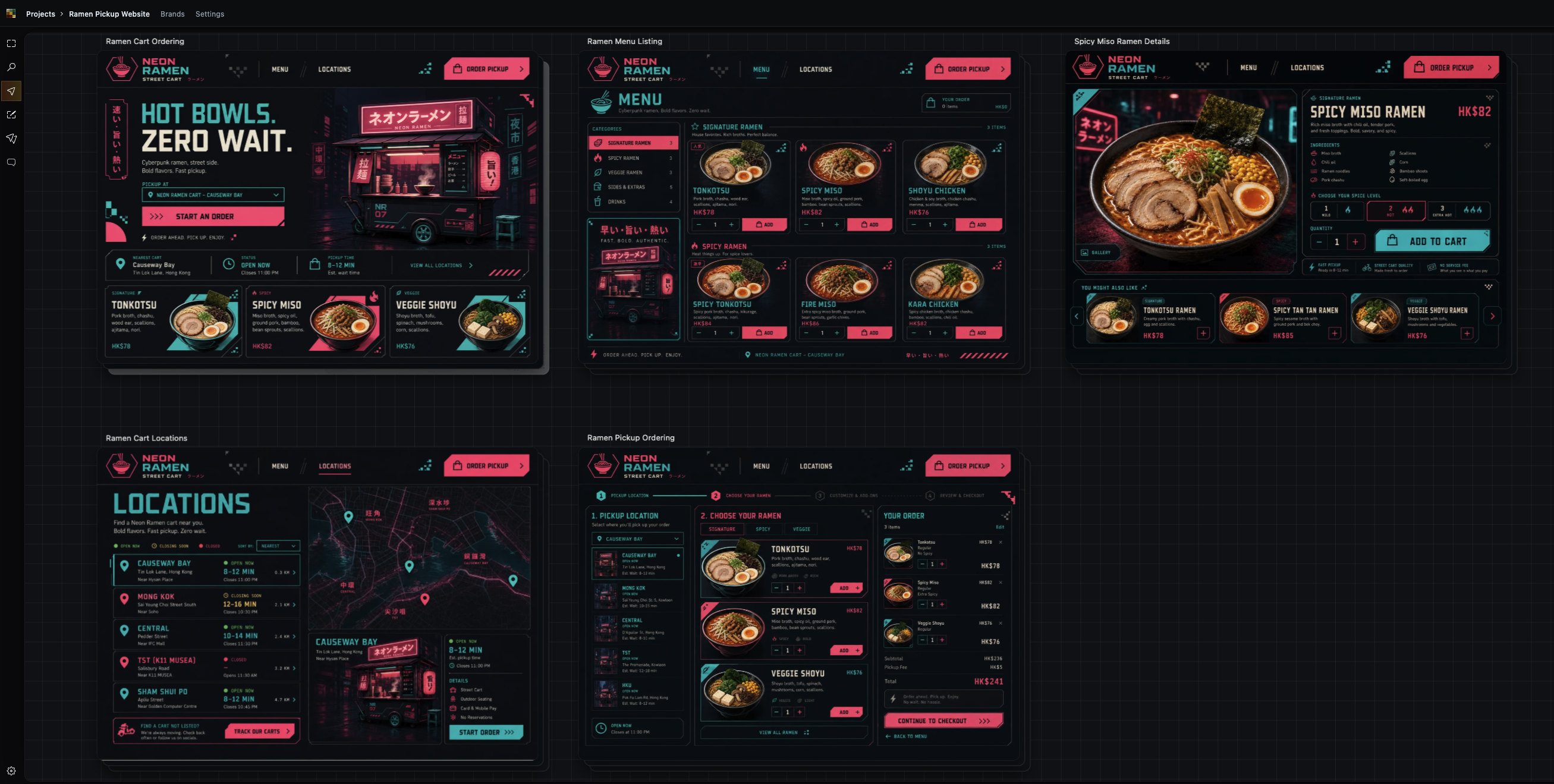
GLM 5.3 build: https://html.non.io/neonRamenGLM5.3
Opus 5 build for comparison: https://html.non.io/neonRamen
For having no vision, it did a tremendous job. I'm pretty impressed it was able to extract so much detail.
The Opus one is still significantly better, but that's to be expected since it's multimodal. Curious to see where a future version from Z.ai lands on this.
Either way that's pretty impressive.
Just 4 weeks ago the "Kimi K3 moment" was seen as a threat to Closed AI and in less than a month Z.ai have cut the parameter/RAM barrier to a third.
Congratulation to Z.ai and all the hard working Chinese researchers who are quitely boiling the frog.
GLM 5.2 has token efficiency problems. It's not a stupid model, but it takes a lot of "thinking" to produce not-stupid results. ("But wait...").
Which makes its pricing deceptive.
I tried to get by through the month of June on just GLM 5.2 and it was ... fine-ish for about two weeks. But the provider situation wasn't ideal.
Love this opening line. And wow, great results.
> As agent capability improves, much of the difficulty in scaling post-training moves from the model to the environment.
It seems we are doing pre-training every 6 months, and post-training every 4-8 weeks now.
I find the performance to size ratio of these models to be way more interesting, selfishly because it makes me bullish on what I'll be able to run on a machine I own over the next few years. The progress is just incredible.
Otherwise we have a world of attackers using open and closed source models against a much smaller group of maintainers that are likely heavily dependent on Anthropic and OpenAI and for whom it may not be a simple matter to just get approval to start using the open model flavor of the month.
The maintainers don't need approval to use GLM.
There will always be a market for frontier labs in the cloud based models - these models will always be able to be bigger, and that will likely translate to doing things local models can’t.
Logically also we’ll likely get to a point where RAM drops in price as production ramps up, and local LLM is both capable and cost effective. This feels like it is coming for Siri / Gemini / Alexa personal assistant type use cases.
So I think the local LLM will become a thing in laptops and phones in a year or two, offering PA type use cases. Professional LLM services will likely remain at the frontier (and in the cloud) for the foreseeable.
We will get to a point where prosumer laptops that etch SoTA LLMs in removable silicon will be as expensive as cars.
There are workplaces that refuse to use LLMs because they fear the devs will expose sensitive data without care.
But there's a significant difference in hardware required between running a 3B parameter model and a 700B-1T+ parameter model.
This reads like a hallucination. What does native speed even mean?
(fable/sol are ~60 t/s, and OpenAI just announced their Cerebras partnership(?) for "ultrafast" mode of 750 t/s)
models aren't able to run that fast right now on our consumer/prosumer hardware. M5 Max for example has a memory bandwidth of 600 GB/s. a 5090 has 3x that, so running the same model on a 5090 is that much faster (provided the model is within 30GB).
running a bigger model on an M5 Ultra is still much slower than running it on a Blackwell chip with sufficient vram, CUDA being a major difference. if apple can bridge this gap, interesting things will happen... and just imagine if M7 Ultra has comparable speeds to Blackwell (or even Rubin)!
GPU Memory Bandwidth: 7.1 TB/s Interconnect Bandwidth: 900 GB/s bidirectional
https://pi3g.com/nvidia-gb300-specifications-including-memor...
If you think M7 will hit even 15% of these speeds you're very optimistic.
He did answer you though. Native is x10 the non-native speed. 50/50 that's not a bot; though it could be a meat-proxy
OC was registered in 2016 though? What do new accounts have to do with this?
The latest on Apple is TSMC is stuck on the next iPhone due to lack of RAM. Good luck getting any Macs. Memory shortage is getting worse.

It is so valuable in practise to be able to have the models see screenshots - I guess if they aren't in the benchmarks then nobody will focus on it. But it completely nixes these for some of my main use cases.
I remember trying their Coding Plan out before the change and the 5 hour limits felt too restrictive then even for light/medium work, especially cause of the whole peak and off-peak thing: https://blog.kronis.dev/blog/z-ai-s-glm-5-2-is-a-great-model...
Nowadays, I’d probably go with their Max plan if the rate limits are okay? Anyone using them now?
Oh also unrelated but ZCode was surprisingly good, which is surprising for a tool that came out of nowhere - even some of the critiques in my blog post have been patched out. Sadly they don’t support using Claude Code as an agent so can’t use it like Paseo or Kepler or Agent Orchestrator.
Currently 20% of my 5 hour limit and 4% of my weekly limit.
  Total: 58.46M
  GLM-5.3 Cached: 56.91M
  GLM-5.3 Uncached: 1.23M
  GLM-5.3 Output: 315.18K
  Cache hit rate: 97.9%
            Full 5-hour  Full weekly
  Total     292.3M       1.461B
  Cached    284.6M       1.423B
  Uncached  6.15M        30.75M
  Output    1.576M       7.88M
Their own estimates are quite different, probably due to their conservative caching estimates vs what I normally get on longer form work: https://docs.z.ai/devpack/overview#estimated-token-allowance
  export ZAI_ANTHROPIC_BASE_URL="https://api.z.ai/api/anthropic"
  export ZAI_ANTHROPIC_AUTH_TOKEN="$ZAI_API_KEY"
  claude-zai() {
      { local -; set -x; } 2>/dev/null
      ANTHROPIC_BASE_URL="$ZAI_ANTHROPIC_BASE_URL" ANTHROPIC_AUTH_TOKEN="$ZAI_ANTHROPIC_AUTH_TOKEN" claude "$@"
  }
  $ claude-zai
Got reminded now of glm-5v-turbo - that 'v' was for vision - will try assign it role [vision] now in omp. See what happens. :-) Often times it's handy when describing gui problems if the harness/model 'can see'.
I am talking about ZCode, the program, being unable to delegate to other harnesses, like using Claude Code (or even OpenCode) within their UI, so that an Anthropic subscription can be used, because Anthropic don't let you use 3rd party harnesses directly.
It's basically what Paseo: https://paseo.sh/ and Kepler https://www.gitkraken.com/kepler and Zed https://zed.dev/ support doing.
ZCode doesn't seem to work at that level, it instead feels comparable to OpenCode or Codex or Claude Code directly, while also being desktop oriented - you just make API calls directly within it.
It's okay if it's not a goal of theirs, it's just that their UI is really really nice and that would be a cool direction for them to also go in some day.
Paseo had a really nice UI/UX, except sometimes sub-agents within OpenCode sessions would hang. Still, quite pleasant if you want something like the Codex or Claude Code desktop apps, but across various providers.
Kepler integrates with issue trackers like GitHub, you can just create a worktree from a ticket and let it churn, seemed like the second most polished option I tried, but there are obvious gaps - like moving cards manually, some missing UI options etc., which I'd chalk up to either the software just being that new or maybe being a little bit vibe-codey. Either way, one of the more promising options if you want something like Kanban board for agents.
Zed is mostly just a (really nice) text editor with some AI integrations, though it seems like they're also building a more agentic product as well - https://delta.dev/ haven't used that one much and am not in circumstances where I'd collaborate with people that closely, but there was a pretty cool podcast episode with the creators recently and it seems like it works pretty nicely for them! As an editor though, it succeeded where Fleet failed and has mostly replaced Visual Studio Code for me. Nothing against VSC, Zed just does most of the stuff I actually need out of the box.
Some of those tools interacting with Claude Code instead of trying to replace it is more or less the way to get Anthropic's models in other tools while still on a subscription (at least for now). How it works under the hood, go figure, there's ACP https://agentcommunicationprotocol.dev/introduction/welcome but also any number of hacky approaches.
To be fair, you can use Anthropic's models in many other harnesses directly, it's just that it then counts against API billing instead of your subscription, which ends up being way more expensive for individuals, but is kinda what you're supposed to do as a company.
You're gonna have a had time getting straight answer to that out of the internet. There are now 4 different flavours of the Max plan floating around (Legacy V1, Legacy V2, New plans, and the current credit ones). And on top of that they have peak times. So ~8 scenarios, 24 in total across all feedback for their coding plans.
So when someone tells you they're having a good time on a GLM coding plan it's damn near unusable as a datapoint unless both parties are very clear about what precisely is being discussed
[It's been good for me though...V1 Max off peak...which is basically the best of the 24]
I haven't tried it in a few months, but it went from amazing to unusable really fast.
But Neuralwatt significantly raised their rates since then.
I break out Claude when I hit some serious roadblocks, but that doesn’t seem to be happening much after the last deepseek flash release.
Deepseek prices just went up, but are still low.
I will def try GLM on my next project
yet but it is still contain a lot of trash. you need better models to process those trash and create a curate dataset. this will happen again and again until there is no more juice to squeeze. and I'm sure we are still not done with it.
> post training
yeah this will be crucial. the big models are already too capable, they are just not that aligned with current agent tasks.
> parameter count doesn’t seem to be a direct correlation anymore
I don't think so, remember that chinese labs do not have as much compute power compare to US frontier labs. that's why deepseek v4 flash had that huge jump and deepseek v4 pro is kinda a disappointment, they just do not have the compute power to proper posttrain the pro model like they wanted. glm is also a relative small model so you also can see the huge jump with just post training. so it does not mean the size does not matter, it is just mean that the chinese labs currently only capable of training smaller models effectively.
LLMs are still surprisingly “easy”. You need maybe a couple dozens of right people, a lot of good quality data and a lot of GPU that you know how to operate. There’s relatively little “secret sauce” needed.
The data is mostly coming from places like Scale/Mercor/etc and net dumps with some filtering and batch prioritization, and RL on verifiable domains like code/math/games.
10 years ago it was super hard to have usable “frontier” ML. You needed very complex data warehouse, feature engineers, feature stores, multi level ranking, calibrations, tons of different model architectures, etc, etc. Each by itself was extremely hard engineering problem and really only handful of companies could deal with that complexity.
With LLMs, 95% of that is gone, infra to support them is greatly simplified. Of course, to make really reliable, performant, user friendly, etc - you still need to a lot of engineering. But it’s very different challenge.
Despite this being the topic du jour of 2025, it was never true. Most of the "we've hit a wall with data" came from communicators / media and not researchers. It got popular because negativity sells. It's a false premise for a number of reasons:
a) Data curation is as important, if not more important than bulk data. Models becoming better at classification leads to better curation leads to cleaner data. Throwing common crawl and pray is so 2023. We've known this since llama3 days, it worked then, there's no reason to think this will not continue to work as the models imrpove.
b) Models are today good enough that you can augment / multiply your data easily with enough compute. You can now have a model take "authoritative content" and create more data from that + scenarios. Say you take a book on computer architecture. You ask models to break it down. Then you ask models to find examples for each topic. Then you ask models to ask questions and offer answers from several viewpoints. Then you take each of those and ask other models to flag inconsistencies. And so on. But you can whateverX your data from one authoritative source + bulk data into 5x - 10x "scenarios".
c) RL is really really really powerful. It's hard to do right (reward hacking, instabilities, etc) but once it works it "keeps" on working. Again, we knew this to be true a few years ago, ever since models really started to do well on math (highly verifiable). It only follows they're getting better on cybersec and other verifiable tasks. But now, with models improving, you get the same data augmentation pipelines as above, just better because they're also verifiable. For example, the way cursor augments their data: take a repo, ask an agent to identify a feature (it can be a large multi-file feature). Remove all code relating to that feature, but keep the original tests in the repo. While training, that becomes a RL scenario: implement this feature in this repo. Verify it with the original (hidden for training) tests. Reward appropriately. Now you can get 1 repo -> 20-50-100 scenarios. Instead of "feed everything into the pretraining", you're now creating scenarios, verify them w/ existing tools, and get your scoring function for the rewards. And, importantly, as the models become better in general, they also become better at this pipeline building exercise. So the next iteration gets trained on more scenarios, better scenarios, and so on.
> how will models continue to get better?
Probably the same. No one can know for sure, but at the moment, despite all the "walls this, slowdown that, plateauing" and so on, there are no signs of slowing down. And, as you noted, this works across the field of model sizes. There are, of course, theoretical information-based limits on size, but smaller models also improve, once "bigger" models can be used as training data generators, oracles for verification, rubric verifiers for open ended questions, and so on.
And smaller models (i.e. cheaper to serve) get to generate more traces during RL, and more rollouts give you better training, and so on. Next up - hardware optimised inferencing (ASICs basically). Once you have that, we can expect another wave of improvements. And so on.
Big models are going to "tap out" on non verifiable fields within ~2 years, just because the pool of experts able to reinforce the models is going to get very small, and as the nuances get finer, the signal from reinforcement is going to get progressively less aligned with the intent. Math and code will be mostly tapped out in that time frame as well, even though we can technically scale them "infinitely," just because the cost benefit won't line up. At that point, most RL will be "gyms" with games that are designed to model designated valuable economic activity.
In the next few years, we'll get small domain specific distillates that are ridiculously smart in their domain (imagine if Qwen 3.X 27B went super saiyan), and even frontier labs will be routing to experts/orchestrating because the cost to serve/TPS difference is huge. They'll still train the god models for PR/marketing, c-suite use and distillation, but using them for day to day work would be like making houseware out of solid gold.
A positive feedback loop then. RL->better model->better RL pipeline -> better model…
And we’ve only recently started getting into the much better RL pipelines
Not really, but a lot of what isn't used isn't very good.
More important is synthetic data. Use a teacher model with RAG with a huge reference library to write synthetic transcripts of idealized behavior for the model. Use models to judge and correct these transcripts. Train on the good ones. Use bad traces to train the model to correct its own errors (e.g. don't train it to produce a bad transcript but if it finds itself in the middle of one train it to self correct).
Similarly, for tasks that can be closed loop evaluated -- e.g. running computer software and programming, unlimited amounts of novel training data can be generated... including for highly original tasks: e.g. run publications in any domain through a model prompted to look for programming problems suggested by the material. Then write/judge/improve transcripts of solving those novel problems.
I expect in the future smaller models won't be directly trained on any internet data at all-- but entirely on simulations of idealized expected behavior from the model under construction. Raw internet data in that case would show up in prompts, but never in the target output (except of course for prompts that are asking it to copy the input).
Hopping for an AgentWorld variant from Qwen but I guess, I have too high expectations.
We just had amazing releases this past two months
kimi k3, glm5.3 qwen3.8 and now glm5.3
These open models are getting really good
Z.ai: Here is our next iteration, neck and neck with Fable/Sol. weights releasing in two weeks.
I know OpenCode Go has both, but their limits seem kinda low, so I'm not sure how feasible it is to run such a task with them.
If it turns out to be bad for them, the US gov will likely suddenly unban models.
The threat is real.
This is like when ‘crypto’ started meaning cryptocurrency.
JieTang (Founder of Z.ai): It won't take that long
Nice to see a commit to open weights straight off the bat
And that is definitely not something I'd like to do with a bot.
Kimi and QWEN are now moving on to a restricted-usage license, which, although is still better than the proprietary American models, is a step back from the open source Chinese LLM culture.
Let those companies with thousands of GPU making millions pay. They should.
GLM model weights have been released under MIT in the past, and there's no indication that this might change this time around.
"Open Source: We will release the weights in two weeks after launch, once safety evaluation and hardening are complete."
Hopefully they will drop it all together and focus on making models that are useful for everyone like their original mission was instead of playing games with politics.
Really curious to see how GLM-5.3 performs on messy, real-world repositories once the weights are released
(In my case "it"=Fable; I assume Opus is similar.)
Man. That would make a lot of sense indeed.
It seems to speak in a shorthand that only it understands, referring back to conversations I never had with it (stuff like "your instinct was right"), and using unusual words for common concepts. That was before the watermarks were announced, but that doesn't necessarily mean they weren't there before the announcement. I don't know what the cause is, but I've begun to have to ask it for explanations a lot more often, and I hate asking it for explanations because it does go on. All models go on, but Claude models are a class of their own in terms of verbosity and purple prose.
It just feels like they're not focused on the models lately, and instead on whatever kind of lobbying and propaganda they're up to. Meanwhile, a handful of much smaller Chinese companies are focused on nothing but the models and are about to lap the US makers while they fart around.
So either I am seeing patterns in noise, or something changed about the model, the harness, the servers or the universe.
   this is from claude, turn it into English for me would you?
   """
   [claude's tortuous prose]
   """
A lot of the total cost of AI is fixing its "truth shaped errors", particularly in the presence of models that are very "gaslighty" when corrected.
GLM-5.2 is really the only model I've spent much time using that I didn't fatigue from being regularly lied to by the model, but that might be partially luck.
/s
What safety evaluation? What safety hardening? They already evaluated it and found it to be highly capable at exploiting security vulnerabilities. So we know it is not "safe", and they don't seem to plan to do anything against it. What could be more dangerous than hacking? Biological weapons research? I don't think Chinese labs are doing anything against this either.
I understand you need to verify the goal is achievable. But if the judge agent has the same goal as the training agent (solve), and both are of the same model, then aren't the judge and the training agent doing the exact same thing? What is the point then? Can someone explain this to me.
$ ANTHROPIC_BASE_URL="https://api.z.ai/api/anthropic" ANTHROPIC_AUTH_TOKEN="zai-api-key" claude --dangerously-skip-permissions
Lately I use Zai in omp (oh-my-pi). It's listed built-in provider can be selected without configs shenanigans. Fits in the overall setup e.g. can select GLM-5.2 (now 5.3), and assign it role [plan] or [advisor]. I got reminded now of glm-5v-turbo. Think that 'v' was for vision. Assigned it role [vision] in omp now, let's see what happens. :-)
Started recently though, mostly been using GLM 5.2 for planning with DeepSeek V4-flash for implementation.
Sorry, but can we not casually drop far right extremist conspiracy theories in little side sentences? [0]
[0] https://en.wikipedia.org/wiki/Great_Replacement_conspiracy_t...