
Looked into rooting - my old firmware would be ideal, but other than a native ambient lighting tap I don't really see anything worth my time. That model probably doesn't have a wide field mic yet to use for home automation.
Not only can they listen in. You have a contractual requirement to tell everyone in range of an appliance that they may be eavesdropped upon.
CONSENT REQUIREMENT: You acknowledge and agree that it is your sole responsibility to obtain all necessary consents from any third parties whose voices may be captured by the Product and to notify household members and guests that their voices may be captured and processed, in compliance with applicable wiretapping, eavesdropping, and privacy laws. If anyone does not consent, you should disable the microphone or voice features in the settings. LGE disclaims any liability for your failure to obtain such consent or provide such notification.
ToS and other click licenses have been making shit up for way too long.
Perhaps we start suing one another for not disclosing the wire tapping, forcing the lawsuit upwards towards LG. It'd be more efficient to sue LG, but lawyers don't seem to be done those things. At least not that I'm aware of
I could hit someone and say it was someone else’s fault, but delusion isn’t a legal defense.
Terms of service are not an absolute "I'm rubber you're glue" type shield against all possible accusations of wrongdoing, however much companies would love us to believe they are.
Even if they did, it's a bad to let clickthrough TOS subvert laws and privacy. This idea that contracts can dismiss all other considerations needs to die.
The issue is that we haven’t made this shit against the law yet.
ToS from a lot of tech companies say the wildest shit that doesn't hold up in court and they should get a penalty for putting that into these documents, as it is misleading and misrepresenting the agreement that the customer has with them.
Until some responsibility for illegal statements in the ToS happens I will read most comments from a ToS with a grain of salt and a lot of skepticism.
How can that be concent?
I'm guessing this is an oversight and the TV does record, but then this is criminal. But, nobody will bother to prosecute them I guess...
Because the buyer has no real ability to negotiate, any ambiguity is resolved in their favor. A judge can also strike provisions that a reasonable buyer would not expect, or that are unconscionable. So it's up to the judge's judgment.
> Sue them for not telling you the TV is recording you
you ask if they're enforceable but that's the wrong question, the real question is will anyone do anything to stop them?
This is the kind of thing that states need to make explicitly illegal.
[EDIT] Smart Media products terms appear to be at https://us.lgappstv.com/main/terms (for comparison here's UK: https://gb.lgappstv.com/main/terms, there are some other EU versions available for e.g. Germany but I imagine UK terms should be quite close and more accessible for most of readers)
> 8. I understand that LGE will retain the collected Voice Information for 6 months to fulfil the purposes for which we collected it, and after this period, it will be deleted or anonymized, depending on the case.
> 9. I understand that this Smart Media Product is a household device. If this Smart Media Product will be used by more than one person, I represent that, in addition to agreeing to this Agreement, that I have obtained consent from all other members of my household whose information may be collected through this Smart Media Product and am providing consent on their behalf.
The discussion seems to imply that they are seen only after purchase (I haven't read the article).
If that is so they are void and unenforceable in most jurisdictions as you cannot agree to something in a contract that you cannot read.
Are such terms enforceable in the US?
What were they thinking? And most importantly: what TV are they using at home?
This comparison rubs me off the wrong way every time I see, because.
1. The notifications clearly tell the behavior (doing $THING until tomorrow).
2. There's a way to turn them "really off".
What LG does is completely different. IIRC from the teaser of this video, the microphone is never "completely" off or apps can re-enable them somehow.
Good design communicates even without language. It is reasonable to see a toggle switch and think it... you know... toggles. The same reason you see a handle on a door a pill before you read the sign that says push. The sign is literally there because the physical design is telling you something different. It is literally mixed signals.
Apple could have done many different things to make the design clearer. Hell, if they really wanted to keep the toggle like design, make it look like a spring.
But no matter what, the current design is abhorrent because they use the same design language for a temporary toggle and a real toggle. It doesn't take a genius to figure out why people get confused. It is also crazy considering how much Apple prides themselves on design. If it was good design, you wouldn't need the sign...
Also, is this really different from a button that reflects state? E.g. you have a battery saver button that automatically turns on at <20%, is that fundamentally different than a button that resets to a given value at 0:00? I genuinely don't know, just asking questions here.
Yes, good design needs no language. However, it's not reasonable to see a toggle and think it's a permanent toggle. Esp, when it's a button. There are many buttons in the world which doesn't toggle. In iOS, a toggle is also different from a button.
> Apple could have done many different things to make the design clearer.
They did, actually. They added clear messaging, think about a LCD screen on top of a button, and have iconography communicating the status clearly.
> But no matter what, the current design is abhorrent...
I'll respectfully disagree here with you.
> ...because they use the same design language for a temporary toggle and a real toggle.
Sorry to disagree, but this is not true:
    - Enabled: Blue background
    - Temporary disconnect: White background
    - Disable: Line through icon.
It should work just like a physical button. I don’t appreciate the “we know better for you so we’ll adjust the behavior accordingly” MITM.
9/10 times I've used this setting, what I've actually wanted was to temporarily change the behavior. This just saves me from the need to remember to undo it (which I won't remember in a timely manner).
This isn't "we know better than you" paternalistic control - the default/easy behavior should cater to the actions and situation we do regularly. I'm sure they do, in fact, know that for most of their customers, when they disable wifi it's because that user wants to temporarily disconnect from the current wifi, but will want to use wifi shortly after, but won't necessarily remember to go into settings and re-enable.
Nah, for the most part the law has been unable to keep up with (or choose to oppose) corporate power, and new ways it's being used. Usually there's no magic quantum doohickey which demands fundamentally new legal theory.
Obviously the costs wouldn't have worked at the time, but is there anything that was missing in our ability to describe the risks and wrongness? The concepts of privacy and consent, contracts and monopolies, ownership and licensing... They were all there 40 years ago.
In other words, the bee in my bonnet involves how the phrase "keeping up with the technology" sometimes becomes way to shift blame and a false target. It distracts us from the immediate political alignment problem towards a nebulous future technological one, which is so ill-defined it can never arrive. ("Once technology finally stops changing, then we'll legislate for our individual constituents' rights.")
That fact that you read something like this as acceptable "legal boilerplate" just shows how, very sadly in my opinion, invasions of privacy have been normalized by these corporations.
Somehow feels like it might be used for more than just wake word detection.
Of course, they'd outsourced to AU10TIX, which did retain the licenses, and got hacked: https://www.404media.co/id-verification-service-for-tiktok-u...
That's from 2024, but we just had a larger breach with IDScan this week.
Sorry for the digression, but the common thread is how much to trust these companies, and my conclusion after dealing with them for many years is they will lie, cheat, and steal to get whatever they want. Some paranoia is warranted, I think.
Honestly, it's not even that extreme in most cases. I think it's usually not malice, it's incompetence.
That's why I don't trust big companies with my data. Nothing to do with some CEO's evil plans, but more to do with the hundreds/thousands of mid-level "not my job" or "doing my best" workers who are actually in charge of handling my data.
Sufficiently advanced incompetence is indistinguishable from malice, and should be treated accordingly.
I disagree with this as stated. Maybe in the right context you could make a case for it, but in general? Heck no. Intent matters a great deal, and there is no justice in treating someone incompetent (or negligent) the same as someone who is actually malicious. Both things are bad, but the latter is worse than the former even if they lead to the same outcome.
But is there someone accountable for it being so? Are they malicious? Who is ultimately to blame?
The road to hell is paved with good intentions.
The CEO is responsible for what their company does. If a major breach can occur through the oversight or "incompetence" of one worker, the CEO has already failed, whether through negligence or malice.
At some level, and certainly at the level where you get paychecks of 10 million a year for the "huge responsibility you are bearing", then incompetence IS malice!
I am saying that it's less likely to be some evil machination that led to the misuse of my data and more likely to be negligence or incompetence.
Both are inexcusable, but one is more common/likely than the other.
You can certainly link them together and yes leaders should be held responsible no matter what, but from my perspective as the user who had his data leaked, it doesn't really matter how/why it happened, does it?
Not being held accountable for negligence or incompetence is the evil machination.
People who make poor choices love to pretend that they had no choice at all.
2. It doesn't really matter if you opt out, because _other people around you don't_: they take pictures in which you show, they tag you, they talk about you, they send you links, etc. Which means they (Meta) build a shadow profile of you anyway.
The "personal responsibility angle" is pure fiction.
I live a somewhat normal adult life and manage without having anything to do with Meta ¯\_(ツ)_/¯ I probably miss out on some things, but I don’t notice.
All my friends just contact me through other sources.
If you have kids, it’s more difficult - I can acknowledge that.
So yeah if a business requires me to have an account I’ll find a different business to patronize. Frankly if you’re expecting someone other than you to take responsibility for the media you consume, that’s a problem.
They will keep happening as long as the consequences are just the cost of doing business.
There is obviously a fine that could bankrupt the company: this would be a clear signal "do not do this".
There are also many cases where people have been doing everything they should have been, and still got hacked (zero days, for instance).
Now, I do not think people should only be slapped on the wrist in that case: it still needs to be significant so companies carefully decide to store only the data they really do need!
Or, if that does not happen, when enough people rise up in revolution and take the compensation for themselves.
Or, never.
If enough people vote enough or revolt enough, they cannot be stopped. But the incentives for too few people rising up are too costly. They work hard to keep the equilibrium in that balance.
Got into a spat with a manager at my apartment complex because I refused to install their app just to deal with a maintenance issue.
He was like, “I don’t see the problem, you have to use the Latch app to open your apartment door.”
To which I replied, “No, I have the door keypad code memorized.”
Just like I don’t need an app to make a log of exit/entry history in a backend database just to enter my apartment via a Bluetooth lock…
…I should not have to install their app to make my apartment livable.
Indeed, my argument was convincing enough to have a resolution which didn’t include installing their app.
I don't want the new thing because it is the new thing. I want new things that are better.
People accept abusive technology because they consider that's just the way it is with this new thing. It's a failure to understand what should be considered unacceptable.
Thankfully my lease was old enough that I was able to argue against it. I don’t want a 3rd party company tracking my habits, and I don’t want some manager boiling my pets alive while I’m gone because they decided they think our AC is set too low.
It's even worse if some staff wrote paranoid in your file, 'cause they'll argue it's good for "exposure".
Those folks pay out the effing nose, they ought to be allowed to control the temp in their apartment.
So what happens if you arrive home with a dead phone?
And possibly worse, they have a log of when you come and go?
But I would absolutely not install an app for that.
But the app on your phone does not have that limitation.
Most apartment buildings in the US already use face-tracking cameras to get this log
And keeping it completely disconnected from the internet should be the default, in my opinion.
Since the legal system has once again failed to protect users from corporations, it's up to users to use technical means for self defense.
In Poland/EU we have an (ever growing) list of forbidden clauses that even when written and signed by consumer are null and void. And I think these can be enacted retroactively - when corporations invent new shady clauses, government steps in and tells them these are invalid.
This helps to even out the consumer-corporation field.
I'm pretty sure that's true almost everywhere. Law beats contract. The real question is how strong the laws are. In the US not so much because of small government and stuff, especially in red states.
Or when you can't even enforce anything in court as you've already given up your right to spend all your money suing, as binding arbitration is the required and only mechanism to "resolve disputes." To make it extra fair, the corporation pays the arbitration firm for their "objective" decisions and not you.
What could go wrong?
In the Gamer's Nexus video, he gets drunk before accepting the terms so that it isn't legal consent. A drunk person can't enter a contract.
Yes[0]. For over 100 years.
Next question?
[0] https://en.wikipedia.org/wiki/Arbitration_case_law_in_the_Un...
It’s “small government” when it comes to protecting your individual rights, and full flock powered ai surveillance state when someone has an abortion.
I'm never going to interpret that one with a straight face.
I'd love to have a similar standard applied in the US but I'm not holding my breath.
For another perspective, check out the comment you're replying to.
So just treat it as a best case scenario, knowing that it can get even worse.
We Are Altering The Deal. Pray We Don't Alter It Any Further
It is tinfoil hats time, at least for LG tvs.
Also: the US intelligence agencies used Echelon ages ago to monitor what vast swaths of innocent people were up to. I think it's sensible to presume they've got their hooks into these devices too.
A technical solution would presumably spoof the spaff but with E2EE and DoH is it possible? So then what, hacking firmware? I guess then TVs get a hard lifespan limit.
I bought a Philips Ambilight OLED TV probably over 8 years now. Brilliant tv, great quality, I still see no reason to replace it at all. But its built in AndroidTV is garbage.
https://freakonomics.com/podcast/is-your-plane-ticket-too-ex...
WSJ and Wendover claim it is true.
1080p, but the picture far outstrips most other TVs I've owned to this day.
I have zero plans to change it, and it's usefulness has outlasted the Chromecast that's connected to it.
Yes, I put the first ads on Smart TVs. Apologies.
This is totally backwards; capitalism would do fine in such an environment (in the same way that evolution does fine in an environment where organisms live more than just a few seconds; the whole reason we have the notion of a "lifetime" is that our germ line comes from a long line of ancestral DNA that made organisms that outlasted their competition.)
Individual companies might have to hustle to innovate or die, but that too is good for capitalism.
I think maybe I stepped on somebody's agenda?
Both capitalism and evolution depend on the fact that over time, on average, less fit organisms/organizations are displaced by better alternatives. You may not like that, but down-voting anyone who points it out doesn't make it any less true.
The problem is we've not enforced any strong regulation against ads, downgrade rights or hack ability.
I don't need "better performance" from the system built into my TV I just need it to run Kodi.
Really? Many years ago, I had to physically sign a license with Microsoft to obtain some software. The license was not consistent with the license included with the software. Both licenses effectively said they were the real license and that any other agreement you made with Microsoft was not valid.
I don't think there was any nefarious intent. It was likely to avoid a situation where Microsoft employees offered terms that were not approved of by the company. Still, it goes to show that it can be awfully difficult to judge the intent of a company.
Any iphone/ipad/mac nearby will act as a router for them[1]
Given that we have already established that LG is a shady company, I wouldn't put it beyond them to try to use the same trick.
[1]https://lifehacker.com/tech/how-apple-airtags-actually-work
AirTags broadcast an encrypted ID. Phones build lists of ID’s they’ve seen and send the list to Apple.
There is no routing, no ability to send arbitrary data, no active communication of any sort. It’s not a mesh network.
The link you posted makes that pretty clear.
it means you can’t block the tracking by doing anything yourself - you’d also need to block everyone else’s devices too.
And of course you can block the tracking yourself, even though nobody is actually tracking because Apple can’t tell who owns what ID. Just turn off find my on your device.
This is a really bad thing for those of us who until now have just not connected our 'smart' shit to the internet.
Where I live in the EU they don't do sidewalk otherwise I'd have to look at ways to fight it (disassociate connections or DDoS the devices providing sidewalk routing)
But they've been calling "crazy?" for decades.
I'm hopeful that there will be sufficient distrust that "jailbreaking" or "rooting" TV controller boards will be turnkey enough to move to something like OpenWrt or GrapheneOS but for TVs.
I suppose I also assume someone with Android ROM development experience is better positioned to take up organizing such a project as an overall smaller effort, there by being faster and more efficient. Other real life constraints also seem to suggest not pursuing this type of thing in lieu of other things I should be pursuing and already procrastinate. But, here there be dragons, or at the very least a can of worms.
I'll bet there is already a manufacturer whose TVs can all communicate intratelevisually (non-standard proprietary frequencies) – and then, if even one of them is online... they're all relaying within their private intra-TV spyware meshnets to their various relays.
----
In unrelated news, my 2012 Sony Bravia is still fantastic, even if not for (4K) high-refresh games (the image quality remains fantastic for casual usage).
It is well known for like 5 years. Smsrt TVs go through your movies library, and upload screenshots and filenames to internet.
Some will start showing ads after firmware upgrade.
Also, wouldn't this be trivial to test by just setting up your own network and seeing if the TV connects?
They can just start a capture, record to RAM / storage, and retrieve it later when it is reconnected to the network.
Otherwise if it's disconnected, it is still hard to exfiltrate the data somewhere. Maybe they could get creative via Bluetooth, but then you would need a cooperating device in proximity of the device.
I happen to have a NAS with family pictures I like to display. I can (and do) firewall that thing, but then you hit other issues like the apps you need to show pictures and movies in the first place not to install/run.
I've yet to hear of a reasonable recipe to isolate and secure such connected TVs. And don't get me started on Chromecast or other Android dongles, I've no reason to expect better treatment from Google. Some open source hacked-together box, then?
I turn on the device, the app in the upper left is selected and showing some content from that.
The device sits idle, I get drone footage of landscapes.
If I accidentally bump the wrong button on the remote and get sent into the Apple TV (streaming service) app, sure it advertises producte, but in general there are no ads.
In comparison, Google TV's homescreen is giant ads for content on services I don't subscribe to, Roku is at least as bad, Amazon is worse, and Samsung and LG......oof.
I enable app-only mode on my chromecast and does not see any ads.
I suppose my next device is an Apple TV or some kind of home brew Linux box.
The Shield at launch was an amazing product - premium UX and hardware, premium price point. Google changed the experience to an ad-loaded mess without providing an opt out for those who had spent hundreds of dollars on the Shield.
I was dogfooder, a huge advocate of the product, and someone who had convinced others to buy the Shield and Android TV devices. That UX revamp and how the team treated their customers (internal and external) turned me off the product for life. I tried the various competitors (XBox, Roku, Amazon) before landing on Apple TV. I now own two Apple TV devices - both of which are still getting updates many years after I bought them - and will continue using them for as long as the product line is maintained.
People in this thread have talked about Apple's clean beautiful ad-free UX, but the apps themselves are far better. Apple sets customer-friendly App Store requirements *and enforces them*. That means:
* The back button always works. It will bring you back to the home page of the app and then to the system launcher. It will not get stuck in an endless loop of "are you sure you want to quit?" and just dismissing that dialog like multiple Android apps do
* No loud obtrusive sounds on app startup (YouTube, Netflix)
* The apps are first-class priorities for developers. Circa 2019, the Paramount+ app was an inconsistent mess where subtitles were broken on some platforms. The Plex app wouldn't transcode certain formats on the XBox, and so on. None of these issues are a problem on Apple TV. Not every app is perfect (Dropout, I love your content, but your app is awful), but none of them are worse than on any competing platform.
Apple TV is a truly incredible product and ecosystem and one that feels like a joy to use. That's not the case for Android TV (now Google TV, I think?) even with a custom launcher.
It's more expensive than a 40€ Chromecast, but also SO MUCH BETTER.
I chose one over the Apple TV because I knew I wouldn't able to stand any limitations on sideloading. For a while I was running a custom build of Wholphin with patched libmpv/libplacebo to work around a bug before the fix was upstreamed. A device without the freedom to do that sort of thing would drive me nuts.
If you only care about file playback, bit still care about things like HDR and quality audio I would recommend something like the OSMC Vero V instead.
It's still relatively cheap, and open source, but also let's you playback something like a blu-ray rip without loss of quality.
It has the other bonus of not requiring any real setup or maintenance.
On most devices Dolby Vision, etc get downgraded or support only the streaming profiles (profile 5) . If you want full Atmos, Dolby Vision, etc you have to buy one of only a handful of devices. The Vero V is one of them. There are only a few others.
Mine comes with i5 8500t, 16gb ram and 256gb ssd, and it was like $150.
I've just used an old Intel NUC with Debian stable, a remote mini-keyboard and an automounted Samba share on the network forever. It's no more hacked together than any other computer. I do make the mouse pointer and the fonts real big. No apps required. Don't really need the keyboard except for mplayer hotkey presses - just the touchpad on it; if I need to do something that involves typing other than typing a password, I usually ssh in.
I think people are lowkey addicted to having shit sliding in and out and constantly being advertised to. How do you know what to watch unless somebody is constantly bombarding you with options? If it doesn't look like a star trek control panel, is it really TV?
If you like that, you can install Kodi. I haven't tried it since it was XBMC because I found the interfaces annoying and it had trouble dealing with networks, but I'm sure it's better.
> I've yet to hear of a reasonable recipe to isolate and secure such connected TVs
I don't even try. I overpay for dumb tvs in the present, or underpay for 10 year old tvs pre-Applefication. I've never owned a network capable television, or one with apps. I wouldn't.
edit: if your NAS is a separate box that can sit in proximity to your television, you could probably just run all of this stuff directly from the NAS. They spend most of their time doing nothing at all.
But yes, support for the ethernet mode as far as I'm aware was never actually implemented in any devices that reached retail availability.
That could of course change. Could be even a nice feature for connecting your TV to the network via your multi media center, if the bandwidth is good.
https://www.techspot.com/news/113031-lg-alienware-monitors-c...
Proportion of non-HN users whose TVs don't connect to the internet? Negligible
HDMI Ethernet is dead, it's never going to happen in consumer televisions because it has a hard conflict with a feature a lot of people actually use.
But I guess like an xkcd comic, someone is obligated to raise the issue every time TVs come up.
There's no need for the TV to be anything but a dumb screen that has only "power on", "power off", "volume up", "volume down" and "mute" functions. Most are probably too underpowered anyway to be useful.
Samsung were openly bragging about this on their website some years ago (for the benefit of their advertising partners) but have recently muddied the waters when I check their site again, couching it in language mentioning privacy and other evasive language:
As far as I know, they don't literally scan your media libraries; they screenshot whatever you're watching through HDMI (most often cable / satellite boxes), as those devices don't provide the telemetry that normal apps do. This info is used for audience measurement (thing Nielsen ratings), as well as showing you ads that are actually likely to match your interests.
"Starting in 2014, Vizio made TVs that automatically tracked what consumers were watching and transmitted that data back to its servers. Vizio even retrofitted older models by installing its tracking software remotely. All of this, the FTC and AG allege, was done without clearly telling consumers or getting their consent.
...
"Vizio collected a selection of pixels on the screen that it matched to a database of TV, movie, and commercial content
https://arxiv.org/pdf/2409.06203 shows LG and Samsung doing something similar
> the idea of a modern dumb TV is non-existent.
They're sold as commercial display panels/digital signage and because they're a business product that isn't subsidized by advertising/spyware they cost a good bit more. But the panels and controls are basically identical to high end TVs.
People don't say that so much anymore.
It's worth remembering that for all the animosity they face, they did what they told you they were going to do when they asked for your permission to do it.
I'd just block them - and keep local streaming and remote control working
edit: just found out WebOS doesn't support DoH/DoT so nextdns won't work.
I wonder if one of the public dns providers got LG blocklisted natively with specific IP
I bought a DJI action camera, I had watched a bunch of reviews and read the store page. Yet only after buying and turning it on did I discover the device only allows you to use it 5 times before connecting it to the internet and signing up for an account.
There aren’t even any features that require this, it simply bricks itself after the 5th use until you sign up and agree to the terms.
I do have it isolated from other devices on my network, though.
Not GP, but I do so to make sure my TV doesn't try to connect to a different network. I provide specific IP addresses to the ethernet-connected interface and then block those IP addresses.
I suppose I could also move the TV to an isolated VLAN, but I spent months (the device was purchased nearly, or perhaps even more than, a decade ago) monitoring network traffic to determine to where (via DNS queries and packet captures) my TV was trying to phone home and blocked all egress for the TV and ingress from the sites/IP addresses to which the TV tried to connect.
I suppose that newer TVs might be sneakier (with the kind of WiFi surfing mentioned in TFA and/or installing cellular modems) in their attempts to bypass user control and when I need a new TV, I'll burn that bridge when I come to it.
But for now, my TV can't phone home. Or I'd have thrown it away years ago.
It's actually a lot faster now (it's an 8 year old TV, their OS can get a little heavy on older models)
Same for anything whether you trust it or not (or somewhere in between).
I remember these things being discussed a while ago on here, how TVs use their own hard coded DNS ("for safety") rather than any network provided DNS (to avoid filtered DNS ala PiHole), how there's Ethernet in a HDMI cable, how other wireless networks are tried, and how eventually they'll go the car route and just embed a wireless modem in the device.
I'm sure somebody at LG is hard at work on fixing this problem.
Idk why this is so often citied in Smart TV boogeyman arguments.
The sad part about the privacy discourse is that people not only don't care, but they would argue for the invading party. And I am not talking about your average teenager looking for their next brainrot fix, but highly educated and extremely intellegent people!
I've long since gave up trying to talk to people about these issues. Which unfortunately means I'll surrender to exposing myself to this plague to some degree, considering how herd immunity principles apply here as well.
that's not a plus, tho
In the previous topic I got ridiculed for not wanting to buy LG anymore because I could use an agent to modify to strip out the offending bits.
But there must be something better than just keeping to buy things that invade our privacy and homes further and further. Which brands aren’t doing this? Sony? They also announced a partnership for the lower end TVs IIRC.
It's true that fines are nothing more than predictable costs, so maybe an option would be fines in percentage of the incoming of the company: this way it could make a real impact. I know in some north Europe countries the speed limit fines are in percentage on the personal net worth.
You are overengineering it. Just throw the CEOs in jail for a few months and observe how these practices disappear overnight.
It's not that easy: with bail and well payed lawyers they spend quite no day in jail and it is no more than a fine
But yeah similar to how humans are put in jail and it can easily ruin their life, the punishment for a severe crime needs to ruin a company’s life. It’s an absurd double standard.
I'd like to say look at Volkswagen for an example but I don't know if all the necessary people were charged.
Similar policy is why American trucks and SUVs are ridiculusly massive transformer-looking behemoths and there're really no 'small' trucks anymore. The Ford Ranger of today is of similar size to the Ford F-150 of 25 years ago.
For the record, it's not all the big corps that are this bad.
Many are borderline paranoid about privacy, both for appearance and compliance perspectives.
This also applies incentives in the correct direction. Their database of customer information becomes less valuable if there’s bad information in it. Disconnecting your TV from the internet doesn’t affect LG, feeding them bad data does.
I will be very careful going forward with what I use open ai for and what I phrase how.
> In the previous topic I got ridiculed for not wanting to buy LG anymore because I could use an agent to modify to strip out the offending bits.
Jesus fucking Christ.
Smart people need to band together to advocate their state governments to make commercial mass surveillance for any purpose a criminal offense (not just banning, making it a crime).
Blackbox+Mic = Not private.
To consider something secure software wise, it involves so many layers, and almost none of those are present with a Smart TV, so it IS considered insecure by anyone having privacy standards.
It's not known. Ask the average person that owns a smart TV if they think they're being listened in on. Or even what kinds of data they think their smart TV collects. I could bet you anything that for nearly all people, their answers would be "I never thought about that", "I didn't know they collected data" or "I thought it was only what I watched".
It's highly insidious - our society was reshaped to normalize data collection like this by adtech. At the same time, these invasive technologies were quietly integrated into existing devices people assumed they knew. TVs look like the same black rectangles they were 15 years ago. Cars today are similar to cars from the early 2010s. The average person doesn't understand how adding internet connectivity to some device exposes them to this until it's explained to them. To them, the notion that they record everything sounds as cospiratorial as "your microwave is secretly recording you on camera". If technological limitations required TVs with mics to have a huge studio microphone protrude on top of it with a flashing red light, a lot more people would suddenly care.
When I was a kid we used vacuum tube radio both as a passive speaker and a microphone... connected to the speakerphone of a telephone as a very poor man walkie-talkie.
Using the speakers as microphone when there is no outgoing sounds is pretty trivial in that regard. I don't know how paranoid a person can be, though.
During the Soviet era, not everyone could afford to have a landline phone, but the system kept hunting down its dissidents one by one. If you are a person of interest (which I believe doesn’t apply to you), there are way more important signals to adversaries than your microphone.
It's important to choose your threat model. If your plan is to resist surveillance capitalism or just a random Bob and his grandmother snooping on you online, luckily, there are some effective methods. Otherwise, I would say it’s always a question of time, not 'if' or 'how.'
The problem is really that this tracking is at an absurd scale. So while an individual attacker isn’t targeting you and buying your profile from LG, the data is out there, and once it’s out there, it’s probably easy to get on the dark web if someone did want to do something nefarious. So it’s not just the surveillance capitalism.
Theoretically I could see LG or even the TV's owner being culpable.
I'd love to see that case hit the media. Average citizen jailed over wiretap violations because they let their TV record a guest.
I'm sure the ToS has some BS about you being required to inform any guests, but what if your TV is just recording your neighbors because they are close enough?
Just wait, I'm sure the "solution" will be that TVs start displaying reminders that you're being recorded...
Is our inability to innovate in technology really so bad that we have to just chase more and more spying? Consumers don't want these things. Why can't we innovate on things that consumers actually want? Remember, there was a time where we could build good technology, tech that people wanted, and make buckets of money doing it. That should be our goal, not some cyberpunk dystopia. Honestly it feels like anytime we try to innovate now some manager says "don't make things complicated" or some other dumb excuse, but maybe worse is that peers (other engineers) say "but what's the value" (they always stress that they mean monetary, not utility)? Feels like monkeys attacking each other for trying to get the banana...
There *has* to be some complex math involved. It's insane that there's more profit in duping your users to spy on them and sell their data/information, than there is just making and selling a great product.
> There *has* to be some complex math involved.
Their explanations are typically around markets being myopic and that low competition fucks things up even more. But we do make small decisions and they add up. I think many of the problems in the world today come from the accumulation of many small decisions, which is why they're hard to address. Obviously some people have more power than others, and more frequently have high power, but we should still look for our opportunities and not abdicate when and where we do have power. It is important for us to push back when we can. The top always wants to convince us that we have no power and we try to convince ourselves that's true because we believe that if we have power that makes us culpable, but I don't think that's true.
[0] my goto example is AWS. It's easy to find articles about how Azure or GCloud are "doing better" but AWS still has more total customers. But AWS is being "punished" for being at the top because it is just harder to grow percentage wise when you have a larger base amount (note, it isn't a zero sum game)
Seems pretty logical, no?
How do we sell more TVs? Be a cheaper and or better choice. If we're already doing well technically, sell customer data to discount the TV and appear more attractive.
If this is ethical / how much disclosure you'd need to give to customers so they can make this informed choice is a whole other discussion...
> Seems pretty logical, no?
Yeah, welcome to every executive suite since the 80s. How was it under that rock for the last 40 years?
And it feels like an inflationary behavior: people need marketing because the product doesn't sell itself because it is neglected in favor of data collection and marketing that is needed because GOTO 1.
I have to point out the irony that this is a technology based site, focused on software. You know, a sector that isn't nearly as tied to physical resources as other sectors. It's the whole reason our industry exploded, because you can make software and ship it an infinite number of times, allowing you to scale like no other sector can.
But my point is that the economy is a positive sum game. There's always more money to be made through more innovation.
When you treat things as zero sum you make all these bad decisions and focus on the wrong type of growth. It makes you focus on capturing the existing market rather than push to create markets that previously never existed. (Of course there's a bad way to do the latter too. You can make markets against people's will, as we also see today...)
Take a look at any mature software product, do they try to innovate more, or do they figure out how to put more advertisements into it?
Pure naked greed, something to be celebrated in our Ferengi style capitalist system.
I'm pretty sure Attorney Generals will also join the fray in due time.
This crap needs to be shut down hard.
How do you audit that ? it's not like they opensource their OS.
My Samsung asked for internet access and I just laughed and said nope.
It exists to displays pixels from a Linux box, utterly sick of living in a world where "is my TV manufacturer bugging our house?" Is a thing anyone has to ask.
Okay, but it does work until then. "Things could change in the future" is definitionally true.
Never connect the TV in the first place, and you don't need to physically alter the hardware, firmware, or TOS agreements.
LG very likely has your neighbor's WiFi password, so even if you don't connect it to your own network, they could theoretically just try and connect to any known network nearby. No 5g modem needed.
Idk if they do that, but it doesn't seem complicated to implement, and it doesn't seem to fall outside of the company's ethical boundaries.
For now, it remains easy and sufficient to not give them your wifi credentials.
People need to stop pretending there can only exist a single hardware/software configuration that also never changes.
If you're not using the defining feature of a TV (the OTA tuner), why not buy a monitor instead of a TV?
(Next time I have to replace our house's TV, I'm seriously considering buying a separate SBTVD tuner and a monitor instead of a TV, if ignoring the "smart" features of these TVs by not connecting them to a network starts getting too difficult.)
Monitor choices also tend charge a premium for equivalent size and quality while lacking some of the features, or introducing other issues. See LG gaming monitors silently installing adware on connection:
https://news.ycombinator.com/item?id=48956688
My LG OLED C2 also has a great utility to manage deep service-level configurations. Makes it easy to professionally customize without having to fuss with the menus.
https://www.bhphotovideo.com/c/product/1828914-REG/samsung_q...
Looks like $400 for a 55” 4K TV, $500 for a commercial one, and $1000 to get a commercial one without WiFi. Selling point includes:
“the QB55C-N model is free of wireless connectivity and TAA compliant for use in secure facilities.”
https://partnerzon.specialelektronik.se/storage/files/produc...
But we just don’t want creepy executives spying on us for bigger bonuses. Hope “secure facilities” keep buying displays that promise not to do gross things so we have something safe for our homes.
until I hung out on your couch and went back home and turned something on, going “oh no it’s a blur now!” :)
Maybe they’ll eventually have exquisite WiFi/BT-free displays! That even newer tech has trouble of obsoleting (except they could still release a super low power consumption display or something).
Now imagining something very silly: an honor-system subscription from a manufacturer who sells spyware-free displays at a fair price but still wants to satisfy investors (heh), not that I’d chomp at that bit.
I've tried finding a monitor big enough and with a decent panel for anywhere near the price of a TV... it's nearly impossible.
Then I tried finding 'dumb TVs' with at least somewhat decent panels... also almost impossible.
In the end I just bought a decent Philips TV with a good panel and 'Android TV' and chose to never connect it to WiFi and activate that (run it in dumb mode.)
It had enough HDMI ports to hook up everything I want and was the best option available. Would I have preferred a 'dumb screen' with a bunch of HDMI ports and no TV tuner at all? Yes.
LG could be using that sort of network.
edit: one thing I will add is that I was extremely careful moving the screen or pushing on it while working on it. I have heard the super-thin OLED panels are easy to crack from just a little bit too much force.
Although I’m glad this is getting the visibility it deserves. I hope this hurts LG where it matters and sends a signal to other manufacturers, but I doubt it.
All for what? To maintain the same market share they've had since the 80s? What a waste.
Who the fuck ever buys anything just because of an ad??
That they didn't ALREADY know about or were going to buy anyway?
The ads industry is a racket. At best it's a case of the emperor with no clothes: every one believes it works because everyone says that it works.
At worst, it's a thin veil for obnoxious privacy-raping constant global surveillance.
Also taking this moment to head off two common responses, for ettiquette's sake:
1. The alternative is catalogs! Products are listed accurately and thoroughly, and we deal with edge cases as needed. This is especially tractable in the internet age, of course. See: [the Wells-Fargo Wagon](https://www.youtube.com/watch?v=fP0E1tbfi2g)
2. Yes, you are affected by advertisements. I don't care who you are: if you're on HackerNews from anywhere other than shack in rural Montana, you are affected by advertisments. Many (most?) ad spend is on "brand advertising", which isn't trying to get you to take any conscious action at all -- it's swaying your subconscious.
This sorta feels like the problem with "rent fixing" via algorithms from a few years back. The system has been bumbling along fine enough for a while, but the arrival of mass computing makes these tactics so insanely effective that they become unfair.
I have two LG TVs so this freaks me out a lot. I guess I’m fortunate to have kept their network permanently disconnected (we use Apple TV for smart stuff) but who knows if they don’t do things like scan for open hotspots or connect without permission to networks you previously used to update firmware and then deleted from history.
This company needs to be nuked from orbit. Automatic content recognition is one thing, spying on conversations when switched off is a whole other level of violation.
I know people who complain the channel does not talk more about Hardware and Games as much, but we live in a timeline that personal hardware and games will not be ours anymore, just see how prohibitive hardware prices are today.
the video explains so much and its obvious now and this makes me quite angry
LG should be banned
Even having an account at all, and being able to see that I have a subscription, or that I previously watched that video, is personal data they collected.
So the Privacy Policy is what you “agree” to let the company do with that data. How do you even begin to differentiate the superfluous stuff they track just for ads, on a technical level without workarounds?
And then think about banning “transferring personal data to a 3rd party.” Does that mean I can’t host account data on AWS, or use a hosted database, be causing I’m transferring data to a different company which can presumably also access it? That’s what the privacy policy has to allow, and why sites have so many “partner services”
I worked for a major adtech company that bought zero third party data.
There's enough in the bidrequests.
And we had nothing on Meta or Google's ecosystems.
I am still wondering why consumer respecting brands are not emerging more and thriving.
does anyone know of a reputable site which rates companies by things such as trustworthiness?
are any companies at all trustworthy anymore? like literally any?
A new display plant costs multiple billions.
To be fair, most TVs on the market are buying panels from the same few manufacturers. For example, Hisense sources panels from part of LG. I think Samsung is another manufacturer.
So a new company could theoretically access these panels to make a privacy friendly TV without as much capital.
But like you say, it wouldn’t be able to compete on price, because the ad tech lets other companies sell at a loss.
And they still do it anyway because why wouldn't they? My $4K+ TV still wants all sorts of "personalized viewing experience" access.
That and not respecting the consumer is more profitable in the short term (only!), which means more marketing money, buying out other brands, lobbying to increase the barrier for entry, et cetera.
There's a lot of moving parts that makes it really hard for ethical newcomers to disrupt in these current times. And that's just one angle.
But also, people do not generally hesitate in front of an all-you-can-eat bouffe
There is a very I-am-very-smart aspect to these predictable sorts of comments. And weirdly they always seem oddly intended to diminish the core concern being addressed.
"Oh your TV is listening to you and mapping your network and exfiltrating your data? Yeah, well, look at that website that has some ads on it! Boom!
Give up. The future is lost. Don't sweat the wiretapping TV."
No they don’t. OP says it’s funny, that’s all.
I mean, LG would probably also pay someone to run around going "it's just funny, is all" in support if anyone noticed this pathetic astroturfing.
The idea that logging audio is bad, but cars logging your weight, tvs logging your watch history, scales sending your wifi details, android and apple both mapping your access point to create a pseudo-location tracker without GPS, my mobile network sending me location-based adverts based on tower proximity via sms to a dumbphone are all very very bad.
LG have slightly overstepped the line here, legally, but in my opinion they've overstepped what is OK by a long long way. A website reporting on this while sending your details to hundreds of tracking sites are doing the same thing - abusing what is allowed and I assume only printing the report for more engagement and not because they actually care.
LG need to go a lifetime shit list for this behaviour - there should be outrage like there was about Sony's root kit. But websites like this also need to find out that this behaviour is not ok
I've seen this claim made over and over again for various smart TVs, but so far I haven't seen any concrete evidence of this, only random speculation.
I logged into my UniFi stack to monitor devices and it showed up. It had gotten the connection details from my wife’s phone, the other Samsung device and was transmitting data back to Google and Samsung.
Even if you think they're running some sort of massive botnet, the fridge being part of it is still implausible. They probably have billions of phones and tablets alone, plenty enough to scrape/DDoS the entire internet several times over. There's no need to add clandestine hardware into non-smart fridges.
UniFi is not misrepresenting the device ID; while you’re right that happens. It didn’t here.
The Mac ID is 1c:e8:9e:3d:c4:ad and is registered to SJIT who makes IOT Devices Samsung and smart fridges.
I appreciate your skepticism, but the device is still connected to my WiFi. It has been since 2024, the Mac ID has not changed nor has its identification. I’ve also done packet tracing to determine it IS in fact the smart fridge.
As for the “clandestine hardware to non-smart fridges”. Streamlining of production lines is nothing new. Being able to datamine people’s networks is worth the 20$ hardware chip.
So I went digging in UniFi, found it, and blocked it. Same with my HP Printer that sent almost a gig of data to Google Print Services daily.
(I don't have to do so though because my tv is 20 years old.)
The TV has multiple mics that can't be disabled, they constantly record everything and upload transcripts in plain text.
It gathers data and metadata of all devices on the network, including IP addresses. And even analyzes network data to understand which applications are being run.
That's really just the tip of the iceberg though. They'll be able to build very sophisticated models of every person, digitally fingerprinted to their voice and location and devices that follows them forever.
I want my data deleted from their servers. This is seriously messed up and heads need to roll.
The "own the glass" thing is the most consumer disrespect I have heard in a while. They claim they own the TV and YOUR LIVING ROOM.
They know they are invading your privacy, they know the make it fricking hard for you to be able to disable it. They are pyschos. I'm ditching buying LG forever
I might be missing something here, but I did not see the TV automatically recording stuff by itself (or them showing it is transmitted somewhere) without a visible UI element showing that the microphone is active.
It seems that they turned the TV into a wiretap via root. That is a concern and might give some lessons for LG that they need to invest more into security of their devices (privacy indicators, attested boot, anti-root / anti-persistence measures, hard-shutting off the microphone without privacy indicators)...
But you can pull of similar attacks with a compromised laptop / computer or smartphone.
Of course, it's a TV, why does it need that stuff? Still though, I think the video itself is a bit misleading that it claims (or many people think) it automatically records and transmits all this stuff, while this was not shown here (unless I miss something).
It didn't appear to me that they were initiating anything.
Totally and absolutely, and seemingly proud of it. Just gross.
Just imagine having to jam the devices in your own home just to stop them from profiling you.
Better pray to your deer god that modem + data contract is gonna stay more expensive that the expected value from selling more data...
We really need regulation to stop this.
DNS lookups are redirected or blocked (53 redirected to my local DNS resolver, 853 blocked), and DoH is blocked as best effort though it's hard to block HTTP DNS traffic, which again is why the devices are blocked in the firewall.
All streaming is done via AppleTV, which is a platform I trust infinitely more than LG/Samsung/whatever.
It's a trade off I guess. I use Home Assistant to control TVs, so kinda need the access.
They gave every assurance that it would be secure, completely separate from the users own network, and the bandwidth consumed would be added on top of whatever the user had a contract for.
It took a couple of days after launch before somebody managed to gain access to someone's private network from the public network and they shut it down again and never opened it again.
Anyway, I may be spoiled from living in Denmark, but I'm using my own router, which is an option when ordering, so I'm fairly certain nobody is sharing additional wifi hotspots.
And it's not just me. The majority of people I know use some kind of 3rd party router with their ISP. Granted, some of them just use whatever the ISP sends them, but even then I haven't ever seen any additional wifi networks, and the ISP prints the router admin password on the box itself, so you can poke around if you like (though the ISP has a backdoor, which is also why 3rd party routers are a thing).
This seems far fetched to me. Have you seen evidence or reliable reporting of this?
Comcast sets up a secondary wifi network on their routers in your home that they use as the backhaul for smartphones. Why wouldn't they make a deal with LG or whoever to use that data? We've already established they'll do about a half-a-Stuxnet to get at this data, you're telling me they won't do a couple bulk deals with common ISPs?
5G connectivity is cheap. You can put a 5G modem in pretty much any device for $10 or less, and pay roughly $2/year in subscription fees. My local water utility with ~900 subscribers pays $2/year for 5G connectivity for water meters, and I have no doubt you can get it much cheaper at scale.
They don't even have to tell you about the 5G modem. It could exclusively be used for exfiltrating data about your viewing habits. It's virtually undetectable and more or less impossible to block. The TV could behave nice on the Wifi, you can block all the DNS servers you like, it would still be able to phone home.
You are asking for $20 increase in BOM, which means they somehow has to extract $20 from your private data, which is hard.
And if they're not expecting to make $20 over 10 years selling your data, it hardly seems worth risking your reputation over.
i think it would be significantly more far-fetched that cable companies don’t sell them access. i would be shocked if they didn’t.
Why wouldn’t LG allow their devices to talk to each other locally, without needing to join a network? With private SSID or something like that? Only one appliance would need internet access.
This shit already exists. Like Amazon Sidewalk: https://ring.com/amazon-sidewalk
Now, I’m not saying LG is doing it, but this is not a far fetched technical concept. The only reason they’re potentially not going that far is because most people probably just connect it to the internet so why bother about the few who don’t.
The devices are already scanning the network for any devices and software they can find, and mapping your phone to your TV viewing habits for example. The LG execs are on record bragging about it. So I don’t see why it’s absurd
The part about ISP routers broadcasting an alternate "hotspot" SSID is documented [1] and can be easily observed. Walk around any city, open your phone's wifi settings and see networks like "xfinitywifi" or "optimumwifi". As an end user, if you connect to one of these networks from your device, you'll get a captive portal web page that makes you sign in to your ISP account. Once signed in, you get internet access courtesy of the router sitting in whatever home or business you happen to be near to.
In addition to ISPs allowing their own subscribers access, there are examples of corporations cutting deals with ISPs for hotspot network access. For example, Google's MVNO Google Fi has a deal with unnamed partners that allows subscribers' phones to connect to hotspot wifi networks for extra coverage, branded "Wi-Fi Auto Connect+" [2].
From the user's perspective (and personal experience), this connection is handled seamlessly and outside of the OS' normal wifi UI flow. If your phone sees no saved wifi networks but does see xfinitywifi (et al), it auto-connects in the background. Authentication with the captive portal happens automatically and non-interactively, presumably with some keys provisioned to your device. Your traffic is VPNed back to Google, so the router and ISP don't see anything. The only indication that any of this happened is that the "5G" icon changes to "W+"; the normal WiFi icon never shows up.
In the case of Google Fi, this is actually a pretty great deal for users. You get better coverage (especially indoors in cities, where cell service can be spotty) with no real downsides to you – your traffic isn't meaningfully exposed to another third party, it doesn't cost you extra, and you don't have to bother the staff for a wifi password.
But given all that, it's not a huge leap to believe that ISPs are also more than willing to quietly take LG's money in exchange for an all-access pass to their hotspot network.
It's easy to imagine that an evil company could ship their TV with a key that allows it on an ISP's hotspot network. No extra suspicious hardware like a 5G modem needed, and no MAC address spoofing required. The TV software could easily connect to the hotspot network with zero indication in the UI, and then use the surreptitious connection only to transmit your kompromat back to HQ.
If done intelligently, you'd never notice. By only transmitting spy reports (and not downloading new ads), even a keen observer wouldn't notice any behavior on the TV that would trigger "how tf did this thing get a network connection?" Even more insidious, you couldn't really see what traffic was happening, since IP packet captures on your network are useless in this scenario. You'd need special hardware to capture what the TV is actually doing on the air.
If truly evil, the software could do this hotspot dance even if you've configured your own WiFi network on the TV. If the software finds it can't reach ad HQ because you've firewalled it off, then despite your best efforts to contain the disease, it still can spy effectively thanks to your neighbor's router with its default-enabled ISP hotspot. Just do a daily upload while you're sleeping and otherwise sit innocuously on your locked-down VLAN.
Everyone evil wins: ISP collects that sweet bonus revenue at zero marginal cost, TV manufacturer doesn't have to foot the hardware bill for millions of 5G modems or (relatively) expensive cellular agreements, and advertisers get to be that much more creepy targeting you. I'm sure the wanna-be despots of the world don't mind the spy apparatus being built for them either, conveniently under the control of easily-compelled corporations.
--
Now to be clear, I have no proof that any TV manufacturer is surreptitiously connecting to an ISP's hotspot network in order to exfiltrate your data. But all of the building blocks to make that happen provably do exist, and I seriously doubt that capitalism will allow them to go unused.
It's anything but far-fetched.
[1] eg https://www.xfinity.com/support/articles/xfinity-wifi-hotspo... and https://www.spectrum.net/support/internet/spectrum-mobile-wi... and https://www.optimum.net/pages/internet/hotspots/faq.html
[2] https://fi.google.com/about/wi-fi-auto-connect-plus and https://support.google.com/fi/answer/10091529?hl=en
Where is a web link indicating partnerships, and compatible hardware lists? My ISP does not sell any TV sets.
My guess is: not much.
1. Do not connect to network 2. Create unauthenticated WiFi network 3. Monitor WiFi network
Strange no one has ever done this simple af test to backup their claims
It's much easier to just throw a $10 5G modem in there, pay the $2/year subscription fee for service, and extract data that way. Assuming a 5-10 year relevant lifespan of the TV, they'd throw $20-$30 on top of the sales price for the modem and 10 years of service.
The 5G modem could run completely independent of the wifi network, be a completely different circuit, and you'd never know it was there.
even the ones that aren’t yet, we’d be incredibly incredibly naive to think it’s not on their radar.
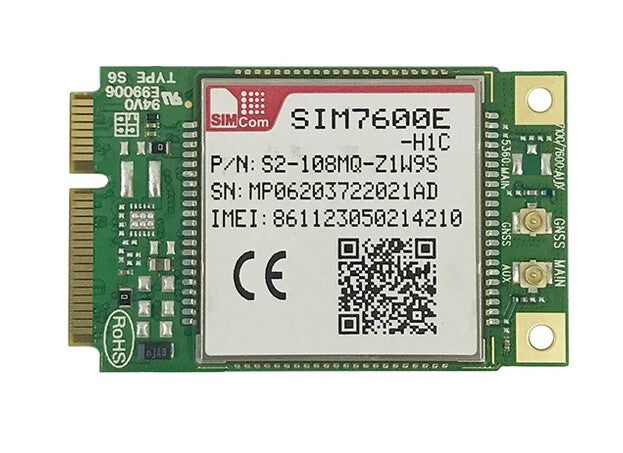
The linked image shows a module meant for easy integration, but it could also simply be a part of the main board of the TV. They could "hide" the GSM antenna alongside the wifi antenna.
I could see a threat if the TV had access to the internet and could establish a TLS tunnel or similar from the mothership, and execute commands on my LAN (or IoT network as it stands), and report back. That could establish a command & control channel that could potentially orchestrate an attack on my infrastructure via the TV.
However, reporting that "network X exists and has these devices" over a different network complicates things a fair bit. In theory they could still use the TV as a command and control platform, but it would have to switch networks between my closed network and the open network in order to execute commands and report results. Not saying it's impossible, just very unlikely.
Besides, the TVs are not alone in being cut off from the internet. I have two IoT networks, one for trusted devices (AppleTVs, Sonos, and the likes), and one for untrusted devices like TVs. They run on different VLANs, and anything on the untrusted IoT network can pretty much only talk to itself (client isolation) and the gateway, and there's no internet and no open ports to any other VLAN.
Uploading the weeks, months, or years of locally-stored activity [0] data? Text compresses really well and local storage used to be very cheap.
[0] ...mic voice transcription, how often you use the thing, for how long, and a best guess (because of lack of time sync) at when, "automated content detection" logs [1], names of files you've fed to the thing, -if equipped with a camera- number of people in the room and interesting information about them, etc, etc, etc...
[1] ...assuming that that can be done with data loaded from the factory, which I kinda doubt...
1) What I called "automated content detection" is apparently called "automated content recognition", abbreviated as "ACR".
2) That weeks, months, or years of locally-stored activity I mentioned can also contain historical ACR records. Given that the audio and video of what's being displayed on the screen is "fingerprinted", those fingerprints can be saved just like everything else picked up by the "TV" and uploaded whenever the thing next has Internet connectivity. The "TV" manufacturer will lose the "what are they doing right now?" aspect of the feature, but the "what have they been doing?" aspect of the feature will work just fine.
Directly related is this section of this Gamers Nexus investigation, but the entire video seems to be worth watching if you're not rather familiar with the topic: <https://youtube.com/watch?v=6IFVTcM28KA&t=26m47s>
> My TVs are on the IoT network so that I can control them from Home Assistant, but they're blocked from accessing the internet. NS lookups are redirected or blocked (53 redirected to my local DNS resolver, 853 blocked),[...]
Unfortunately, from LG's surveillance capitalism point of view, the 0.001% of LG owners that can even think about doing that isn't even a drop in the bucket. They don't care about any one individual, and the vast majority of individuals don't care or understand what LG is doing as long as they can watch TV.
It's only a matter of time before another Cambridge Analytica situation pops up, except with better tools and vastly more data. Or maybe something we can't even imagine yet enabled by simply re-purposing ad-tech into something political and malevolent? Some people will be wise to it, of course, but if enough are caught up in it, it won't matter, we all lose as a whole.
Soon you won't be able to IoT network or block these devices as they begin to partner with Amazon and the likes that sell Internet for near-by IoT devices. Then your only option then is physically removing / de soldering radios from the board.
Laws needed, like yesterday.
Assuming they install some 5G modem in the device, which is pretty much dirt cheap these days (our local water utility uses 5G for meter readings, and the cost per meter is something like $1/year), there's literally nothing short of a faraday cage you can do.
The can report on what you watch freely, and only consumer laws can stop them. However, without a wifi connection they can't snoop on your local network, and they probably can't connect the data to you, assuming you don't register the TV for those 3 months of added warranty or whatever they try to get you to register.
I tend to avoid devices that are built to snoop on you, so no Amazon Alexa, no Google Home, no Apple HomePod. Everything I have utilizes local control via Home Assistant, and most of it is actively blocked in the firewall from accessing the internet. It's not hard to implement, and doesn't require a master of IT, but it does remove a lot of the convenience, which I guess is the reason people don't do it.
I could possibly do it via HDMI CEC, but I have a couple of Sony Bravia TVs that more often than not completely ignores that, so I prefer having control over assuming it happens.
I believe LG doesn’t advertise such an api via Bluetooth
One could build a IR emitter but you need soldering skills for that or buy a usb one which cost north of 30€ + shipping.
War is peace. Freedom is slavery. Ignorance is strength. [1]
Would you like to know more?
1. The Ad data-collecting platform TV-manufacturers are operating, what data they collect and how they use it.
2. The vulnerabilities of the OS in a SmartTV, and the potential issues to exploit them for malicious purposes.
3. The general behavior of the device when connected to your network, with features like voice control, App control, Smart Home etc. enabled, and how it may expose information about yourself.
All the points and scenarios in the video might be valid, but they are not sufficiently grouped into one of the above categories.
Instead, it just mixes them all together to imply that its all the same, weakening the whole investigation.
--
The plain example: Using voice-input for a web-search on the TV [0], make long pauses and observe how it keeps populating the prompt-UI with everything you say. This is a matter of #3 above, accusing a malicious intent already on such a trivial implementation topic is harming the whole story
I prefer the original article and the net-benefit of a google-linked video to explain things that already were properly explained, is rather small, at best, in my opinion.
Sorry, my grouping of topics isn't supposed to replace the entire research-session.
It's merely my observation after watching the actual "investigation video" that they mixed together lots of stuff they discovered into the larger conspiracy that everything is secretly spying on the user to feed a huge Ad-profiling database.
> I prefer the original article and the net-benefit of a google-linked video to explain things that already were properly explained, is rather small, at best, in my opinion
The article was made FROM the video and takes the wrong conclusions and summaries from it. If you want to form an opinion and are a bit technically savvy, you should watch the video instead.
For example: The video actually shows that all audio that is logged was only processed after voice-input was explicitly started on the device, either via the enabled wake-word or by starting voice-input in the web-search UI. The TV continues to show the text-input UI to the user while its transcribing the voice. This is not malicious, this is the expected behavior from user-perspective.
E.g. As soon as someone proves LG, Samsung, etc. recorded and stored credit card details and knowingly have weak security this is going to be a massive business liability.
That's an easy one to put a compensation figure on but there's probably all sorts of other exploits waiting to happen.
I think the most egregious thing here is that if you don't give the TV a network connection that it will actively search for other ways to get the data back to LG such as open WIFI.
That's understating the problem. With or without AI, this should be cause enough to shut down a company or at least their specific product division.
>E.g. As soon as someone proves LG, Samsung, etc. recorded and stored credit card details and knowingly have weak security this is going to be a massive business liability.
They're going to be fine. A slap on the wrist at best.
Never in human history has a government had the means to simultaneously spy on millions of people, to use everyday private conversations to categorise them into various threats to the state, and better yet these tech companies can still sell the commercially valuable side of this to advertisers.
- Larry Ellison (Oracle Corporation)
That said, I think there is a lot of appeal to go hunting for firms, since it really feels like corporations and their owners are engaging in predatory behavior as opposed to customer centric behavior.
My tinfoil hat believes that they've already accounted for this as the price of doing business. They will have already budgeted for the fines that they might incur, pay them off and continue as normal while people become accustomed to it.
No. this is going to go "unnoticed" or at least unactioned. These are surveilance devices - compromising their value as source of surveilance is neither in the interest of industry (who are selling and buying the surveilance) or government (who are buying and acting on it). The age of shame is over. Current world goernments have flourished under the premise of being terrible, horrible, awful, evil enterprises that do bad for the sake of either being bad or enriching the bad - a consumer device with a ToS that says it will spy on you spying on people is nothing now. Laws be damned, because laws mean nothing now. These devices bery well may soon be the only lawfully available devices in the consumer market precisely because of their surveilance capabilities. Governments are reluctanty catching up to the capabilities of digital technologies, and they're finding them more useful now than ever before. We will be burning witches again before we ever prosecute tech companies for doing bad things.
Spot on.
If that's stored as text inside the TV and you lost money because it was copied by a hacker then you have a monetary value to show loss and a trail of liability you can use to sue LG.
The average user would not realize LG was the reason, if they do they will loose more money and effort; LG's reputation and public image won't be even damaged enough for them to take a notice. You are an ant for them and ants are only powerful if they work together.
Then they'll get a joke fine, and continue as before. Maybe cut the price for a while, until they reintroduce it with another pretext a few years down the line.
The legal systems that are in place (at least, those in the US) are not sufficient or even designed to act in any amount of favor of individuals. Even leveraging collective action (class action cases), most individuals are left worse off after judgement when they are wronged. Signalling that you are an affected class is effectively an admission of, at minimum, association - and worse guilt, of whatever an inteligence agency may suspect you of. Intelligence is not justice, and does not "protect" individuals under the same standards. If a government wants you to be wronged, they will accomplish it regardless of law, and the information they have regarding you will be leveraged as aggressively as possible. If you are simply wronged, the cost of accomplishing justice is often insurmountable.
In the most innocent case of wrongdoing by one of these surveilance devices, what would you, as an individual, do if your bank details were compromised as a result of a "smart" device exposing your credentials to bad actors? Obviously, you would contact your banking institution and try your best to rememedy the situation. But say, for example, this smart device is on your home network, has your login details, and possibly used your 2fa details because you used it to log in to your banking institution. That is You™. You logged in. You actioned something. It's verifiable because of your IP and your cookies and your 2fa code and the heuristics of your device usage (time of day, and the previous factors, and more). Many smart device applications already include SDKs that act as residential proxies - it's not impossible to believe that malicious ones may act as MITM or such. The possibility of 0Day expoloits or even backdoors can never be ruled out as you do not own these devices.
People should be subject to shame. Every government and every company are composed of people (for now) - these people are what action these possible futures, and who action the exploits of now. They are shameless by trade because that is their value. Much like the adtech industry thrives on the compromise of compensation to overcome the shame of doing wrong, so does intelligence and clandestine commercial exploitation. Money affords people the things that they want and need, which are becoming ever more impossible to acquire without succumbing to the shame of doing Bad Things™ to acquire it. You are never going to be able to sue LG because your bank details were leaked by a public DB or some other endpoint. Nobody will. Because the value of the information that LG provides to governments circumventing established anti-surveilance law (in the US, the 4th Amendment) through sales is worth more than any dollar amount it costs these parties.
Shame on every fucking one of you stains who implements this, if you can feel it, hidden in the walls of your owned property.
0: https://en.wikipedia.org/wiki/Five_Eyes 1: https://en.wikipedia.org/wiki/Israeli_espionage_in_the_Unite...
Will make surveillance mandatory? I mean we definitely should somehow fight terrorism, protect children, and prevent copyright infringement on trillions of dollars per year.
I wonder what chances a consumer in US has though. If the past is any indication, consumer privacy is not a highly regarded good when ranked against a corporate strategy...
ꭞ Terms and conditions apply
They're not directly or a business associate of an entity involved in providing you healthcare so not this.
  > OpenLGTV[1] is a collective, non-commercial project for legal reverse engineering and research of LG (Smart and non Smart) TVs firmware, which is partially Open Source.
  > The main goal of the project is to improve the functionality of the TVs by adding new features, fixing bugs and providing new software.
It can't just magically connect to an openwifi and update its firmware to start telemetry. It would need a new firmware to even try that.
Folks, never update a TV firmware unless it's necessary.
Why would a TV ever need a firmware update? Either it works out of the box or it doesn't and I return it. I never updated the firmware of my PC monitor either.
I'd rather they just shipped finished firmware, but yanno. I got bit on a monitor that has actual firmware bugs but no firmware upgrade path that doesn't involve trying to ship it to a service center.
... I said something about not sneaking crap in but then I remembered that Dell liked to try and push the Alienware app via Windows Update. I don't have it but I don't remember what I did to block it or if they just stopped pushing it.
Apple's big problem is that whatever they say, goes. If they decide to partner with Hulu for advertisements, you have no escape hatch to install a respectful UX.
I couldn't find any "smoking gun" or discovery of malicious intent.
What's left in the end is the already-known fact in the tech-community: The most-common, most-vulnerable and most-equipped device to spy on you in your home is your Smart-TV.
1. It has all the compute-power and sensors it needs
2. It already does some spying for ad-profiling
3. If a hacker exploits it, it's a problem
For a lot of hacker type stuff (esp. botnets and residential proxies), this is exactly what you want.
I used to believe that piracy couldn't come back in a significant way because people don't want to use computers any more, and phones are a really bad fit for p2p, even if running some hypothetical non-walled-garden OS that wouldn't have issues with that sort of thing. I entirely failed to appreciate the impact of cheap Android TV boxes here.
4. Every single fucked up thing it did was indeed listed in their customer agreement and privacy policy
finally my startup of faraday-cage rooms will boom /j
I certainly believe that it sends back data when you use voice commands, ofc (both for advertising and product improvement). But this would be the first real case of something that's been a 100% false conspiracy theory for over a decade, which feels... unlikely. Kinda like someone finding a Sasquatch.
https://www.eff.org/deeplinks/2026/03/targeted-advertising-g...
https://www.npr.org/2026/03/25/nx-s1-5752369/ice-surveillanc...
Mossad would love to know who to de-bank for criticising Israel, United Health Care would love to know who to deny coverage to based on remarks about their back pain.
"Criticizing Israel" has moved from edgy subversive to lamely pedestrian in the last few years.
There's no great secret that Mossad needs to unearth by spying on you watching tv.
I'm pretty sure that these TVs won't respect WIFI passwords and if you enter a wifi password in once, it will just remember it even when you clear it, and it will try to connect to the internet that way.
So, was realme transcribing all conversations and uploading it? Can someone answer?
My LG tv post-update is never allowed on a network and it will never be updated again. Hopefully it never breaks…
> Only a matter of time before they ship with cell modems
I do wonder about the hackability of this. Will it be a purely telemetry connection or will it be able to stream video via that connection as well? (not that data costs as much these days as it used to). Can we piggy back the rest of our internet data on this connection? LG TV as modem/router?
Will they include GPS, so they can also connect your home address to the profile they're creating on you? Location-specific advertising value would make that answer: yes!
GPS is probably unnecessary since mobile phones are constantly mapping out WLANs. You can get a decent approximation of GPS with just a wireless scan in most places.
I saw a previous conversation here where someone said they were able to “repurpose” a similar IoT modem to get some free data, but the modern chips are soldered on and tightly integrated, so it would be harder to reuse unless you get root on the device. I think they use eSIMs stored in a secure element in the CPU.
Consumers will buy it if they're told they "never have to worry about an over the air TV antenna again" because it has a magic 5G antenna in it!
See “datacasting” for data side. Would be 1-way so hard to know how many eye/ear balls get the noise; I mean; ad.
https://developers.google.com/maps/documentation/geolocation...
Details?
I’m considering opening mine and taking a desoldering braid to both the RJ45 and wireless antenna solder joints. This might break the TV, but at this point if it does I’m ready to just throw it in the trash and find a commercial display.
I bought a television. I didn’t buy an invitation to be watched in the name of surveillance capitalism and until America gets its shit together with data privacy and consumer protection laws this is just going to continue happening.
I haven’t had a chance to watch this yet, but I did watch the preview and all of Steve’s latest work has been great so I’m sure it’ll be great.
again, i don’t think that’s hyperbolic or jaded, i think it’s much more based in reality than the opposite.
Much to my surprise I found out that many modern TVs do in fact come with dev mode that allow some sort of screen capture.
Safe to say I turned off all the "allow metrics and market/dev modes" and have been happier since.
EDIT> Incase anyone was wondering I did some more research about my model ( im NOT a TV guy ) and came across this regarding what screen content could technically be passed remotely: "Most probable raw grab: ThinQ/SSAP on the LAN after pairing — ~960×540 JPEG. Live Plus/ACR: most probably sends a fingerprint, not a retrievable raw frame." No idea what it means but thought it might be relevant. Remember Im saying in my case it was a coincidence.
But yes, after turning a bunch of unnecessary default options off, my TV never restarted again just as I was making a clutch moment.
So in summary - remember it could just be related to high action moment fps drain, heat, high intensity stuff making the nintendo switch2 compatibility cause a kernel affected restart etc etc etc ( which is documented via the HDMI protocols ) which make it SEEM like something weird is up, but it turns out its a related thing thats not that sus.
Both games weren’t particularly intensive, the one i remember last was divinity original sin 2, but i think both games ran on unity.
Performance mode mostly fixed it, but blowing out several years of dust from the vents properly sorted it out.
Normally they show a warning, but i just got a new tcl, and it’s warning is very short leading to shutdown if you don’t pause quick enough to reset it
It seems pretty safe. When it's on, I can ssh into it. When it's off, it doesn't reply to ICMP pings, and doesn't appear to be using much power.
I guess the newer LG TVs have gone to shit.
examine your network when you plug a roku in. then read their privacy policy if you want to see someone give LG a run for their money.
then there's our pocket PCs...
and don't forget about the biggest customers of this "advertising" data.
https://www.npr.org/2026/03/25/nx-s1-5752369/ice-surveillanc...
https://www.eff.org/deeplinks/2026/03/targeted-advertising-g...
My LG is completely offline and I'm using an nvidia shield to display any content, but I'm thinking maybe I need to go the extra mile, there nothing preventing an android tv box to do the same.
For far too many options, see this massive sheet for Kodi support, including newer formats like Dolby Vision and HDR variants: https://docs.google.com/spreadsheets/d/1Uyuw_1dADsRw7u1LGW6q...
Overall I am pretty happy with Kodi on my Android box. 90% of the content is streamed from a local Jellyfin server, so I can't comment on how well it works with DRM media. It occasionally [1] seems to hang, requiring a power reset. The next time it does, I will hook it up to a smart plug to simplify that as well. If you are into tinkering, CoreELEC is based on Linux and you have some basic tools already installed with more available from the addon repos. I have SSHed into LibreELEC to debug network issues with iperf and on a previous iteration to kick over Kodi with systemctl restart.
[1] gonna say less than once a month, I don't remember when it last happened
Are you sure? They will seek out open WiFi and other neighboring LG TVs as relays.
But better watch the whole video. Then get snarky again ;)
I'm not sure about that. Although this reporting is aimed at the everyman, the problem they describe is far more impactful for elites and corporations. This is pervasive violation of their personal, corporate and legally privileged privacy, and is a vector for systematic corporate espionage. So I suspect US Senators will soon get phone calls from donors really upset about this.
:pray emoji:
Definitely need to find a powerful-adjacent group that could be damaged by the kinds of leaks these TVs represent.
Sent from iPhone (for now)
Or what I am trying to say: Everybody has devices which have the potential to spy on you.
Unless your first name is Richard, only travel with open source hardware and software, and you have to ask someone to lend you a phone if you want to call someone even when you are at home.
Of course, the AVR will be able to snoop and send what is available. Any smart fridges, ovens, appliances, whatever can. Doesn’t mean that they or should. Also doesn’t mean we should just lie down and give up.
But I am also practically certain, that, eventually, any pile of data will attract ideas you do not want attracted.
The head of LG ads was banned from serving in a public company for 10 years by the SEC for fraud...
They hacked the TV OS, then used the TV UI to do a web search with voice-input and observed (still on the UI!) that the voice input didn't stop immediately on silence but kept extending the search prompt with everything said [0].
The OS-hack was irrelevant for this, the whole sensationalism that a listening process is running (and therefore the device is listening to everything) is just drama added to the sober fact that someone started voice-input, the input field is still displayed on the bottom of the UI and keeps getting populated with new input.
There is an important message in this about security hardening, privacy, data protection, but this conspiracy theory that everything is made to spy on you is not helping...
Or rather I wish Louis would limit the "bulldozing" persona to the context in which it is necessary instead of all contexts ever at any time.
No issue with people being friends. Just issue in standards deteriorating.
___
Is this how Twitter felt like for journalists back in the day? You see a story, and you think "ah yes, that guy's signature"?
End me.
Have you actually looked at what is being discussed? There is no conspiracy theory, these are simple facts. Just about every electronic device is made to spy on you in 2026. Thinking otherwise is naive, at best.
You've accidentally proven my statement: If you're not specific, you're not helping.
Oh I made no such claim whatsoever. My complete statement was this, in context of the original research the article is based on:
"There is an important message in this about security hardening, privacy, data protection, but this conspiracy theory that everything is made to spy on you is not helping..."
To translate:
It's important to raise and emphasize matters of security hardening, privacy, data protection, and there's alot to raise here.
But doing so by implying broad malicious intent on even the most trivial use-case observed on the device (like user-initiated voice-transcription, as I also elaborated as an example) is not helping to emphasize the actually important findings of that research.
Meanwhile, you started a broad strawman-argument "that anyone who believes we live in a surveillance state is misguided". You need to find a opposing position to argue that, you won't find that with me...
It's only meant to spy on you in the way that won't get really bad viral press right now. If it spies on you in the way that people notice and object, it was clearly a honest mistake.
Having said that, you might be right given the follow up to you
If your position is "We do not want these kinds of stuff to exist/happen", then we are.
If your position however is "Witchhunts are fun, and decisions and dialogue should be driven by emotions", then indeed we are misaligned by a few centuries.
Wait what?
You don't? What?!
I want action. I do not want there to be a microphone array in my TV that may or may not sample at random times and forwards that data god knows where.
And to achieve that, I believe that we need to look at the systems that brought us to this outcome.
Are you a bot designed to disrupt conversations or just doing a good imitation of one?
There are many, many places on the web where performative outrage as in-group signalling is cheered, but, ideally, we also have some spaces where we can think and derive solutions.
By splitting the spaces, people can get the emotional validation they crave, while we can also have a workspace to make things better and reduce the need for that validation in the first place.
I just didn't want to buy any TV that was available 8 years ago because they all seemed invasive to me.
There's also a fair bit of arrogance from LG: "We own the glass..." leading to this great piece of marketing:
"within an LG TV household we can help extend the ad campaign footprint to the other devices in the household" (at ~14:11)
Advertising is a mind virus. These people are fucking gross. And this seems to be what all technology companies are turning into. Advertising is the Paperclip Maximiser of the real world.
I recently divided much of my home network into VLANs (with "Entertainment" devices separated for this very reason), and this makes me happy to have done so, but now makes me want to do the same to my in-laws network, since they have an LG TV and I regularly connect various of my devices through their network...
Tangential point: I recall on a previous article someone commenting on their surprise at how good Gamers Nexus investigative reporting was. This seems to be another example. You go Gamers Nexus. Might have to buy a supporter pack.
The execs shown in those clips used some pretty revealing language. I also had to do a double-take when they described a customer's (compromised) house as an "LG household," where they "know who's in [it], we know which devices are there... we know how to extend that reach into mobile" and tell advertisers they can "own the living room."
The sense of entitlement is so over-the-top that it's difficult to distinguish from satire.
They don't care about any effect on the individual people.
They view their thing in a vacuum with some kind of religious fervor. It's a form of psychosis, and it seems increasingly prevalent in tech company leadership and so spreads into those who aspire to be tech company leadership types.
Essentially little difference from running a tor exit node.
My position is that I assume that most people running a residential proxy are not aware that they're running a residential proxy. I understand why people use them and how they're useful, but I just don't think there's informed consent. I think they essentially grew out of botnets, or botnets just rebranded into 'residential proxies'.
Having said that, I'm not trying to convince you to change your position. Feel free to continue to disagree with me.
These companies need to be fined into the dirt. We need a corporate death penalty, to be honest.
Would you rent out your Internet connection to unknown parties to do whatever they wanted with?
I've been on the end of one of the above, hence my sensitivity to the topic.
Are they doing this with all of their other devices as well? Monitors,
LG monitors silently install software through Windows Update without consent | https://news.ycombinator.com/item?id=48956688
LG monitors installing adware on Windows PCs | https://news.ycombinator.com/item?id=48953226
I don’t really watch tv, but my wife would want something somewhat modern.
I hope someone uses their free time to hack the OS and offer a clean and simple interface to make it a “dumb” TV.
But they stopped updating it years ago, none of its apps work anymore and the only "smart" feature that still works is screen mirroring feature. The tv part itself still works great. Not a 4k oled 120Hz shiny impressive thing but the image quality is still great. What I thought was an unlucky adquisition back then turned out to be a pretty good one.
A comparison of a dumb 4k panel vs the equivalent "smart" tv for example>
https://www.sceptre.com/TV/4K-UHD-TV-category1category73.htm...
With no real influx of 8K tvs one of these will last quite a while until you need to upgrade.
Can anyone recommend a non-spying TV brand or a model? (Modern)
The best option is display only units made for businesses, like what they use for restaurant menus, but those are usually twice the price of normal tvs because they're not app subsidized like smart tvs are.
What I ended up going with was Hisense. They ship with Google TV, but it's disabled by default. On first power up, it asks if you want to activate the Google TV features, and you can just say no. The thing then runs like a basic display.
Instead of a TV set, I use a very big monitor, which is connected to a mini-PC (an old Intel NUC with Linux), which also has a TV tuner and an infrared remote control receiver. Besides just showing a TV channel, a mini-PC can also record it and it can play any other kind of movie or music files, or it can stream some video from the Internet.
BTW corporate meeting rooms with smart TVs...shouldn't have them.
But this response is like when there were meat safety issues in the US and some people said "then buy another brand". People didn't buy that argument (for what I hope are obvious reasons), and so regulation was enacted to protect the public.
It's clear that this problem must be handled with regulation, too. I'm all for markets solving problems, but I'm also for recognizing when it can't. I haven't seen the whole video yet, but I have a sneaking suspicion that it's NOT just LG.
Nothing gets connected to wifi. If temporary connection is required it gets a random one time use guest network SSID and pass that I remove after. (Yes they can collect and send setup metadata during this temporary access period but sometimes it is a worthwhile tradeoff)
When I said 55+ I was talking about the whole size category larger than that, including 65, 77, etc.
If anyone could recommend any dumb TV with good panels in EU, you're more than welcome.
- Samsung 40 inch Odyssey G7 (G75F) Series WUHD Curved Gaming Monitor (https://www.amazon.com/Samsung-Odyssey-Curved-Gaming-Monitor...) -- $699.99
- Acer Nitro 49 inch DQHD 5120x1440 Curved 120Hz Office Monitor (https://www.amazon.com/Acer-Nitro-Gaming-Monitor-UltraWide/d...) -- $549.99
- Acer DM431K A 43 inch Class 4K UHD LED Monitor - 16:9 (https://www.amazon.com/acer-DM431K-Class-UHD-Monitor/dp/B0F3...)-- $334.20
- LG 37G800A-B 37 inch Ultragear 4K UHD (3840 x 2160) Curved Gaming Monitor, 165Hz, 1ms (https://www.amazon.com/gp/product/B0FS3LV3WG) -- $598
- INNOCN 40C1R Ultrawide Monitor 40 inch WQHD 3440 x 1440p 144Hz (https://www.amazon.com/INNOCN-Ultrawide-Monitor-FreeSync-Pre...) -- $479.99
Just don't ever let it connect to the internet.
Unfortunately, you can't have one without the other. The best, image quality -wise, TVs are all "smart".
So yes, you can just walk into the Electronics Store (Best Buy) and purchase a dumb TV.
Starting at 16:04, they say that they merely claim that the TV has the capability to be used as a listening device. In the first 34 minutes, they don't seem to show that LG are actually recording audio from the surroundings (only from the content playing) and after that they start investigating whether you could record audio if you take control of the device (obviously yes).
So the video doesn't seem to support the claim in the article (edit: linked in the merged submission!) that "LG smart TVs continuously [...] log microphone audio while appearing to be turned off".
Of course, all the stuff LG are actually shown to be doing is bad nevertheless, particularly the "Automated Content Recognition".
> So the video doesn't seem to support the claim in the article that "LG smart TVs continuously [...] log microphone audio while appearing to be turned off".
While it is a bit unclear as to whether the logging and transmitting of audio is happening[1], without hacking the device, they were also quite clear that they made it extremely difficult (if not impossible) to MITM certain encrypted communications on their consumer devices. Combining that with claims they make about advertising makes LG's actions highly suspect.
While the video is quite clear that they are not saying LG is doing this (for legal reasons), the set out to prove the capabilities are there and the privacy related configuration options are very weak. For example: the microphone switch only controls one of the onboard microphones. Even if it physically cut off all of the microphones, there are other vectors that could only be software controlled (such as voice enabled remote controls).
Either way, whether it is LG or a third party, the capability to log and transmit audio can certainly be exploited.
Perhaps it is time we start considering whether we should do something just because it can be done. That is to say: do we really need to control a television by voice, or have other features that require a microphone, just because adding a microphone is cheap and there is enough compute to process the data?
[1] I got the impression they were claiming that the audio was recorded and stored on device. They simply could not prove it was sent to LG.
LG's advertising features appear (from what they discover before 34 minutes in and from the clips of the LG execs boasting about their ad platform) to be concerned only with what's played on the TV (and networks, devices, ..., but not microphone audio).
If I'm wrong about this, I would appreciate a timestamp for where in the video they show LG actually storing and transmitting audio recorded from the microphone.
I have an LG. Great OLED panel. It's never seen the internet.
Is there a DNS setting in LG? Could it be as simple as switching to a local DNS server on your network running nextdns.io?
The issue is a lot of the TV traffic is encrypted, and given the other issues reported it likely gets a lot worse for privacy advocates. Air-gaps don't necessarily guarantee anything either. =3
PS: I do have the TV connected to wifi for software updates (on a pi.holed network)
Do they make audiophile grade aluminum foil yet? Seems like a neat business opportunity for customers like me
No network connection, apparently the BBC thinks I should use the LG app to watch UHD TV, perhaps they’re in league with LG
It frequently happens when opening ChatGPT on web.
I know I’m not the only one so I’m sure LG are experiencing the results of consumer democracy.
You'd be better off with an android tv which you can poke at using adb and disable services. Maybe even root it. And install alternative software like smarttubenext.
Unfortunately there very few Android based TVs left. Phillips recently switched to Titanos, Samsung has tizen, Amazon has a new OS. I think it's just Sony that's left on android now.
A lot of the "silent listening" they show in the video is on a TV they rooted. They start recordings through arecord manually. Or, when they show the transcripts from the recording, the AI voice search is clearly visible on the screen and was manually triggered by something.
Now, does a smart TV need all that hardware? Is a compromised TV a security hazard and smart TVs need to learn more in terms of security from modern smartphones in terms of privacy indicators, attested boot and more?
Sure.
But I do not see enough evidence that the TV is actually voice capturing all this stuff on its own, without any notice.
There is plenty of stuff on the video regarding the network scanning, ACR and more that is definitely concerning. And this is something LG actually does by themselves (when you agree to their ToS / privacy policy).
However, I think that mixing the ACR / network scanning in with "let's root the TV and actively start recording ourselves" mixes the narrative of "what LG actually does" versus "what a compromised TV can actually do", and makes it seem like LG is just recording, transcribing and submitting voice transcript automatically by themselves.
This was not proven here. And I feel that GamersNexus is just risking a lawsuit here by not separating these different concerns clear enough.
We have sugar-free, lactose free I want Smart free devices!!!
TV with smart features: $999. TV without smart features: $1,200
LG TVs aren't the only ones spying on you [video]
Disclaimer: I haven't tried any of this myself, I've just been looking into it as I am/was considering buying an LG TV.
I'd just open the TV and yank or desolder the mic out. Or use the TV as a dumb monitor -- don't connect it to WiFi or Ethernet. And use an external Kodi/AppleTV/whatever-rocks-your-viewing-boat
This is not sufficient (for some of these devices) - they will automatically connect to an unsecured hotspot.
If internet is really required, I'd personally flood such an LG tv with fake data - add a raspberry pi to provide it with looped audio streams for the microphone, fake bluetooth devices, and so on. But it's still probably a drop in a bucket.
Just don't by anything from LG. It's easy.
should we all report this illegal behaviour and contract terms?
The snakes in charge of this should be thrown in jail. They talk about "owning the glass and the living room" and you can just tell they've sold out their soul long ago.
And many government officials' households, too.
Just saying.
The thing I'd like is if the remote didn't have 4 buttons for crappy streaming services I will never use, but instead had 4 buttons to select the HDMI inputs directly; but no, I have to press a button, wait for the stupid laggy UI to load, navigate or point and click at input I want, then do the same to the preview window. A tedious pain in arse for basically the one main thing I use the remote for. It annoys me no end, and it seems to me that the last thing LG care about is the UX; they've put all their efforts into underhand and user-hostile profiling.
I also have a Roku Ultra for streaming, which I very rarely use. I don't expect they treat their users any better and they use ACR too
How disrespectful one can be towards its customers. I am honestly disgusted by such behaviour. I know the cheeky confidence biz talk, but is that really what you want your customers to hear? And what about the guys making such disgusting business possible. Is that what you want to build?
The choice between privacy concerns and ineptly coded network stack is tough. But that's the choice we're forced to have
> We value your privacy
Shares my browsing info with 1745 "partners" with no clear way to opt out (which ought to be opt-in by the way to be compliant with ePrivacy and GDPR).
But I guess they still sell my data. I wish they would flag the data of rational people like me as "worthless", and not sell my data.
Anyway, the EU's reasons seem to be entirely legitimate to me.
I don't want to be cynical but face it, the EU really only cares about things that generate money for themselves or big internal market players under the disguise of consumer safety and privacy. Obviously that also comes with some good effects but the perverse incentives are enormous from which we must not be blinded by ideology and warm feelings of our politicians being good and working for the people and the common good.
Such a pity the name is associated with freeing proprietary software.
The _real_ samba: https://www.samba.org/
Vizio TVs were caught taking screen grabs and phoning those home years ago.
I want the public to get upset about this.
Also, can anyone articulate exactly what data the TV is scraping about your other network devices? IP, name, what else?
Even if the manufacturer doesn't do something evil, they may have an exploit or allow 3rd party apps that do whatever
Garmin literally keeps the microphone on 24/7 listening for "OKAY GARMIN"
There should be a consumer law that any device with a microphone must have an LED physically in series so that if the mic has power, the LED is lit, not software control of the LED which can be disabled. Europe might do that someday but unless California does it too it will never happen in USA
You must set your TV to a different standby mode and enable LG voice control.
When you do this, it very plainly tells you that it can listen with the screen off so you can control the TV with voice.
Failure of User Awareness, not some nefarious spyware.
Nothing is going to change until people are that enraged by it.
> Not long until companies partner with Amazon and others to send traffic automatically through their near-by devices like smart speakers, disconnecting will be impossible.
Not surprised if this is happening already. I don't want to remove radios out my TV..
> Samba, a media intelligence company have several partnerships with manufacturers to take screenshots and collect metadata.
Viewer analytics are valuable to companies like Samba, they aren't the only ones. Laws ASAP, these companies will lobby hard to stop anything of the sort.
The enshittification of TV ownership and usage through smart TVs and the apps and other software that runs without user knowledge is a huge problem wherever these devices are sold. The TVs track and log every device on owner networks - smart watches, thermostats, smart phones, etc, anything that uses wireless or that accesses the internet from inside the home.
I am so glad that I have avoided "upgrading" our TV, almost montly, for years now by simply sending all the Best Buy texts to spam or deleting them. The best way is to opt out of Best Buy communications and after watching that video I will do that.
Our TV is a Panasonic plasma TV from 2012. I need to exit the last streaming service that we subscribe with and that will get it set to an OTA device used when weather int he area is bad enough that having that real-time local weather channel adds value.
From the video - RCE vulnerabilities could allow anyone to drop code on your TV that enables them to use it as a surveillance device. Lots of microphones in the device and no way for the user to disable them. The TV is listening all the time and, using the very sensitive microphones, can detect and record voices in conversations happening in other rooms more than 60' distant. They are effectively whole-house listening devices probably using MEMS microphones due to excellent sensitivity of the devices. Users are fingerprinted and everyone in the house can be identified, even children and those who are frequent enough guests to have been ID'd. Everything that happens triggers the recording.
I suspect Amazon's and Google's devices were the same with their voice triggers. LG does not allow the user to disable that functionality even after the user has disabled it (apparently) through the deeply buried menu option.
LG pushes updates to TVs that improve the tracking ability for LG and their "partners", which includes Microsoft through MS's ownership of Nuance. LG tried to separate their data collection/advert business to circumvent restrictions on ...
Man there is so much there. Fortunately the only LG product I own is a dumb monitor. I will be contacting relatives to offer advice about what to do with their smart devices, LG or others, so I know this starts another round of investigation for me.
No Samsung or LG at my house. Almost done canceling subscription-based "services" like TV content and gaming (XBox) stuff. I don't have software subscriptions so that's great. And, I should be finished with MS OSes pretty soon and flipped to Linux on new devices.
A lot of the shit and shit infrastructure that some of you build is destructive. One day, you will get your just desserts after shafting people with Binding Arbitration agreements, huge TOS and Privacy Policies, and other types of enshittifying end results.
Welp, looks like it is a fact.
10+ years later, this is their response. They have learned a large majority of people just don't give a shit. We are sheep. A majority of people just want "cheap" shit, no matter the cost.
This world is cooked man. Need an asteroid to wipe this planet clean, bro.
Lawyers: If it is true that the company is secretly recording voices when the device appears to be off, and then uploading the recordings, does that sound like a felony in many US states?
(And a felony that is bumping into different laws than the "unauthorized computer access" ones that tech industry has been getting leeway with?)
dont know if that means if the tv has 2pt text disclosing the recording in the middle of a multi-language manual and agreeing to plug the tv into power counts as consent or if it even covers tv devices/usage
It must be eradicated.
Do everything in your power to destroy these companies and their immoral business practices.
Newspapers were leveraging sensationalism and attempting to capture attention by any means long long before targeted ads were a driver of revenue.
I'd guess there are plenty of pre-newspaper examples as well.
A handful of newspapers that controlled 95% of the information was much more of a "precision guided missile", in terms of ability to control information, than social media is today.
(That's not to say it's good today, it's terrifying, but at least it's possible to hear different voices, including voices on the ground)
people massively underestimate how insidious having millions of data points about a person is, these companies are literally modeling your behavior
You can see that by looking at more minor or fringe social media sites. Public "liking" is literally all it takes for people to degenerate into performativeness, sensationalism, grandstanding, misinformation, etc.
To associate contextual advertising based on large scale demographics and location with spying, lying, cheating and thieving at an individual level, is a great example of this in real life.
In the old days, the tabloids were obvious. The sensationalism was easy to identify and passive in its voice. They sat on the end caps of grocery stores, far away from the News. TV news was regulated and there was a strict ethics code in place. Today, all news is tabloid as they all chase attention. They have all become the Weekly World News and as a result, we have clowns and ignoramuses running things.
And people fell for it. They actually fell for it...and continue to fall for it.
That is why it's a cancer. Ad tech eats everything in its path and destroys everything good in the process.
When you cannot tell the difference between fact and fiction, you have lost the plot.
This is our key point of disagreement, not any of the rest
I strongly disagree that the "Real News" of yesterday was "good information" as I define that. It served the biases of the publishers and writers. It was sensationalist. It strongly censored and suppressed politically incorrect viewpoints, to a degree not seen today. The Overton Window was miniscule. The ethics codes were largely self-serving and inert against its major flaws.
It seems that you may be conflating journalism with news. They are not the same thing.
Curious wow old you are and where you grew up? When did you and where were you when you experienced this singular market bias.
But we're allowing 1000x worse things, because what, there's a vague line about it buried deep in some EULA, which means laws no longer apply?
Lets treat them the same. Raid LG, seize all of their electronics, at least in the US (other countries are encouraged to do their own raids), arrest the executives, and after they're all in jail, and digital forensics are poring over their products and servers to find what else they did, they can argue in court how actually all these crimes are legal.
It's only fair.
That being said, I have an old LG Tv (pre-android, forget what they call the os), and I never connected it, opting instead to hook up a firetv stick .... (who knows what bad crap they might be up to btw).
But the point is, we are a minority, most people go the path of least resistance.
I cancel those services... but I recognize that many people go the other way.
There are a few large IoT-focused networks like Amazon Sidewalk where conceivably the smart TV could connect to them if you don't connect it to your home wifi. I believe many ISPs like Xfinity also runs shared public wifi from their routers - a tv could connect via your neighbor's ISP-provided router and you wouldn't have any idea.
2. Convenience
3. Cheaper than buying an Apple TV et al
Convenience over all else is what 99% of people are doing.
Are there really that many people technical enough to know what an HDMI cable is without also knowing all TVs are subsidized by spyware with no security protections?
Why would anyone connect a screen to the internet in the first place?
Like, if suddenly computer monitors started asking for wifi credentials would everyone just compulsively punch them in just to see ads and give the manufacturers lots of data just because?
I must be fundamentally disconnected from how consumers think about technology.
so yeah, i totally want a wireless TV screen that is able to connect with all the devices in my house. but it's kind of difficult to achieve that without letting the TV access the internet. (not all home routers do not support blocking internet access to specific devices, and most people would not know that's how to do it)
What else does anyone (average consumer) use their TV for? I don’t want a separate device to plug in and remote just to stream things.
Xbox/Playstation and free over-the-air channels. Great for major & regional sporting events - free ABC/NBC/CBS/FOX - tends to have less of a delay as well (for me anyway)
Pretty sure consoles have all the streaming apps too
The apps built into the screen literally meet the definition of trojans which any casual search on most brands would tell you.
All avoidable by plugging in an $20 dedicated source device for streaming or whatever.
Is saving the $20 really worth it?
No? It's hardly written in the advertising copy for the TV, is it.
This is a technical website with technical users. You are failing to put yourself in the shoes of non-technical, ordinary users who just want to watch Netflix.
> All avoidable
If you know that you should avoid it but people don't.
Which just proves almost no one does 5 minutes of online research before blindly believing whatever a device says about itself.
Those sorts are unfortunately in for a very bad time over the next few years.
A bunch of 5 minute segments of gut check research avoids a ton of pain in life.
Everyone connecting these TVs to the internet, has access to the internet to tell them not to do that.
Obviously though, the TV makers are at fault. I just am baffled how so many still fall for this.
I have no words for how depressing that is.
Then again most consumers use Bytedance, Meta, Google, and Apple products so I guess I should not be too surprised.
"Knowingly". No, they don't know. You seem to think that because you know, then so must everybody else.
I have no words for how depressing that way of thinking is.
I mean obviously I expect Grandma not to know, but anyone that knows enough to connect to the internet knows how to use a search engine.
Corpos get away with blatant factory malware and security negligence because consumers are so predictably unwilling to research anything beyond what their social media algorithm of choice shows them as they scroll.
You must be...
> I must be fundamentally disconnected from how consumers think about technology.'
Right.