
(www.cbsnews.com)
At this point it feels like I have an adversarial relationship with many merchants I use online. I wish the simple “you have a product, I have money” relationship was possible. I don’t want to take part in your giant human behavior optimization problem. You have a product and I have money why does it have to be more complicated than that?
Realistically though I know that’s not happening. I will continue to access online merchants in the way I prefer and will do my best to avoid detection or blocking. At least so far Claude is happy to play along but I suspect I will need to seek out an obliterated agent in the not to distant future. (Once the corporate capture of the frontier cloud AI models is complete.)
Sure, the airline may not notice when it happens but it can cut those processes short when they have a full ban.
[1] https://mashable.com/article/airlines-set-prices-artificial-...
I don't want people to go out of their way to hurt the companies, purposefully buying tickets they don't want and then refunding them or something. I'm just saying that on the occasion that a mistake happens, you shouldn't feel bad about using whatever legal/procedural recourse available so that you don't have to just eat the cost.
I would go for alternative airlines if there were any. Alas.
I've plainly stated that I don't think they are bad to the point you should go out of your way just to attack them.
I also didn't say they are evil, destroying the world or anything like that. If that's what I thought, then yeah, stopping doing business with them altogether might be the best course of action.
But I simply said that you shouldn't feel bad about making use of recourses made available to you by either the law or the company itself. Which I don't think it's at all incongruent with continuing to use these companies' services.
some time ago I was thinking that "well, these dark patterns are there, but I am buying from Ryanair so what I expected"
and then I was buying from more upscale company and it had literally the same dark patterns trying to mislead and upsell you
some specific routes may have de facto monopoly but many, many are not
If this was the intended point, it could be made in dozens of different ways from increasing baggage fees to decreasing legroom to the death of inflight meals. The specific example was obviously chosen because they can both be connected under the nebulous label of “AI” to make it seem more unfair.
They are using algorithms to extract the highest price from you.
You can use algorithms to extract the lowest price from them.
Capitalism is based on the premise that everyone will be as greedy as possible
If/when airlines figure out how to use GenAI to gouge folks they will. Airlines were so eager to enable GenAI and gut service to save money that they rolled out easily manipulated bots and lost money.
> the company's AI price-setting technology sets fares by predicting "the amount people are willing to pay for the premium products related to the base fares."
This is a small world. The US has something like ten major airlines. Eight if you don't count subsidiaries. Someone at the first one made a decision to embrace an exploitative pricing model. And then, someone at the second airline looked at this and thought to themselves, "you know, we're not gonna organize a PR campaign to stigmatize it, we're gonna try the same".
In other words, modern airlines gouge certain customers, but effectively subsidize others. I would be unambiguously outraged only if they were gouging everyone and making fat stacks.
No, the thing they're doing is still awful.
The basic problem is that they do actually have competitors and are offering a product which is basically fungible, so their margins are inherently going to suck, even if they do every slimy thing, because then their competitors will just do the same thing and they're back to having thin margins only now they've made everything more deceptive/inconvenient/confusing.
The ideal thing in a market like that is to have an efficient way for customers to cut through the BS and find the best price for a ticket that isn't screwing them in covert ways, because then the deceptive tactics don't work, which takes away the incentive to do them. They'll still have thin margins, only with less deception.
But an individual airline can't unilaterally allow that if their competitors have a way to block it or they'd be at a competitive disadvantage, so they're going to try to stop that from happening. It's in no one's interest -- not even theirs -- to let them. They just need you to not let their competitors get away with it either.
It's a failure of customer protections laws. The same service legally should cost each customer the same. Sophisticated pricing schemes should be just plainly illegal.
You can't put an item in the store on the shelf and charge every customer what you like. You have to put up a price and adhere to that price regardless of who wants to buy. Anything else is illegal. Or at least should be.
It should be but unfortunately I don't think it is. The main reason store prices are the same for everyone is because it wasn't practical to individualize them without making it clear to purchasers that they are getting screwed. Still, store membership programs / value cards are one way this is being done in a limited way. And some stores are already switching to digital price labels which can be updated instantly so this is going to get a whole lot worse.
If we really care about prices changing per passenger, quality of services, terms and conditions, etc them just don't fly with the airlines that have those practices you disagree with. If that's every airline, well you don't have to fly at all.
I definitely have increased the price of consulting for "annoying" customers doing stuff I don't want to do. Many moons ago, I was doing some contract training for a small airline here in town. I liked teaching but I didn't really want to do the training they wanted me to do - it was a pain in the ass, it took a week, and didn't really pay enough to justify the opportunity cost.
So I kept raising my price, and eventually, they stopped asking me to do the training. It was great because I didn't have to do the thing I didn't want to do anymore, and I made more money. You are allowed to charge different people different amounts of money - some people are just a pain in the butt and charging more pays for the lack of sanity.
Notice also the thing the customers should be doing in response to the second one: Sharing the prices they're shown for everything with the other customers so they can arbitrage by having the person offered the lowest price be the one to order it.
That would get gamed immediately and we'd be in the same spot. Allow price differences for problem customers that require more attention and airlines will say that why they change prices basedcon certain factors.
Ah, but this is worst in industries where resale is not possible. For example, flights, digital games, and rideshare. Of course one has the option to just not fly, buy games, or use Uber, but this limits a lot of convenience and function in a modern society. This is why I think targeted regulation is not such a bad thing - provided, as you explain, that the reason for the price discrimination is not because the customer actually costs the business more.
Negotiating a price is as old as humans. "That merchant over there is charging 10% less. Can you beat that?", "I want to buy 10 of these, can you give me a bulk discount?"
I have friends that haggle at local stores. One goes does the "Store X is cheaper thing". Another does "My parents live in Oregon where they're is no sales tax, can you lower your price to cover the difference? Otherwise I'll just have them bring it down from Oregon", etc....
It is nowhere close to example you gave.
There are many conditions under which price variation allows the seller to maximize the overall amount of services/products that it sells to the largest number of people, all of whom feel like they're getting a good deal.
Should a loaf of bread cost the same thing in Malaysia as it does in the US? No. And if you required it to be such, then people in Malaysia simply wouldn't have bread, and people in the US would likely have higher prices because cutting off less-wealthy markets would reduce the economies of scale that drive overall prices.
>> For most of human history, you had to haggle over prices before you could buy something. The Quakers were among the first people to commit to fixed prices — and they did it because it was good morals. Turned out, it was also good business. This is the strange story of the long journey of that little piece of paper.[0]
Seems maybe this is just getting back to haggling, except where the seller has an unfair advantage, and we are trying to eke back a somewhat fair playing field using AI.
It could end up that (maybe wishful thinking), if enough people do it, United Airlines banning AI booking agents may lose them enough business they will need to cut prices or invite in AI agents.
[0] https://www.npr.org/sections/money/2018/02/28/589278258/plan...
My local grocery store has a senior discount on Tuesday mornings.
Many places have student discounts.
Some places offer a discount if you buy in bulk.
I used to be a book store club member, which would give me a discount on prices. A local history club has monthly public talks, with discounted prices for members. And of course most grocery stores have that sort of scheme.
My father worked for a company which offered family discounts to its employees.
You'll find little support for making all of those illegal.
Of course some of these schemes are illegal in some areas, such as a bar offering discounted drinks for women, but those fall under civil rights law, not customer protection.
I tried to come up with a solid way to prohibit the market segmentation practices you don't like, but it's such a slippery concept that I failed.
Like, consider how some regions require bars to close by, say, midnight, but members-only clubs are allowed to be open after hours. These clubs respond by making membership trivial -- show up at the door, apply for membership, and you are in.
"Do you want to apply for the student club? Membership is free, with student id, and then you can pay the student club fee rather than the public fee." Repeat with "retired club, with proof of age" and "frequent buyer club', etc.
And bulk discounts aren't market segmentation, but a way for the store to pass on reduced costs due to lower overheads to the customer. Again, they are also usually clearly disclosed because incentives are aligned.
I don't every remember seeing places which are transparent about the discounts they offer staff and family off staff. At the very least, I've never seen signs listing those discounts.
Okay, it's not market segmentation. My comment was in response to what scott79 wrote: 'You have to put up a price and adhere to that price regardless of who wants to buy.'
That means that if I didn't list a bulk price and someone comes in and asks what the discount is for a bulk order, then, what, I need to refuse them?
Or can I can scribble the price on the tag right then, for the sale, and erase it immediately afterward?
I'm simply not able to figure out what the guidelines should be. I'm also not sure that "transparent" is that useful of a term, given how easy it is to put clauses in terms&services which people affirm without reading.
Or from HHGTTG: “But the plans were on display…” ... “It was on display in the bottom of a locked filing cabinet stuck in a disused lavatory with a sign on the door saying ‘Beware of the Leopard.”
The rest, such as Frontier, JetBlue, Southwest, Allegiant - are all discount and/or regional airlines.
For example, allegiant flies to most cities secondary airports that are 1-2 hours drive from the city.
EDIT: It's really 4 equally large ones by passenger miles:
* 1 Delta Air Lines 17.8%
* 2 American Airlines 17.5%
* 3 Southwest Airlines 17.3%
* 4 United Airlines 16.0%
The rest are sub 10%
To your edit, Alaska is something like 9.9%. Technically below 10%, but barely.
Like Jet Blue, Alaska has a handful of wide bodies (that it got from its Hawaiian acquisition) and does a few international routes on its own metal, but it is an airline you fly domestically and that primarily serves the west coast most effectively.
It’s not a bad airline (it’s also not anything special), but it’s not the equivalent of American, United, or Delta. And that isn’t to say the individual flying experience might not be the same as those carriers, but it’s not the same class of operation as a business. Again, it does a handful of international flights. To me, major means you have an array of wide-body jets and a large international operation. Not a few seasonal routes on its 29 wide-bodies. For comparison, American has a fleet of 137 wide body jets. Delta has 179. United has over 240.
These are not the same.
Southwest is even less of a major carrier. It’s got a lot of marketshare from its previous era focused on selling the idea that it was cheaper than the majors, but it operates one type of jet, has zero wide bodies and its international destinations don’t count.
And while Alaska might have to use American to pad out its network of flights at major hubs and markets, at least it can. Southwest’s design to eschew major hubs means that tou can’t get a lot of direct flights to major cities. If it happens to fly where you travel to, fine, but otherwise you have to look at at least one hop and go to a smaller airport than what you might expect.
Jetblue doesn’t have widebody aircraft, but they still offer transatlantic connections.
If you're already on the east coast and aren't going to the west coast, then Alaska doesn't have a route. So I suppose they are "regional", where the region is about 70% of the country rather than all of it.
So yes, still a regional airline if your home base isn't exactly on the west coast.
why?
given "Airline tickets were more expensive"
I specifically mentioned the price as the one metric that has improved. And it's a pretty important metric! But not the only one.
Ok, but why do you care how many airlines exist? Competition?
Guess what? There was a larger number of airline CEOs, and... less competition! Airline profit margins were fat back in the day (isn't excessive "producer surplus" supposedly a sign of a non-competitive market?).
Not only did the government set the maximum and minimum price an airline could charge, but all routes had to be approved by the government. Airlines who served a particular route were even allowed to protest when another airline petitioned to offer service on that route, and "too many competitors" was considered a valid reason to deny an application.
The reason we have so many fewer airlines today is that some airlines outcompeted others after airlines were finally allowed to compete for customers. One of the things that nobody likes to talk about w.r.t. competition is "what happens to the competitor who got out-competed?"
The answer is: He exits the market (goes bankrupt or gets merged into another competitor). This happens one-by-one until the number of competitors has been reduced enough to achieve a stable market equilibrium. That equilibrium is achieved when the number of competitors is sufficiently small to give the remaining competitors "pricing power" to maintain reasonable profit margins (and thus not go bankrupt).
> Oh, and service quality. And comfort in flight.
Right, when the government makes it illegal to compete on price, you have to compete on other things.
You can still get that old-school level of service and comfort today. It's called first class, and it's great!
They do all sorts of wonderful things, like offer a glass of bubbly before takeoff, halfway decent food, loads of legroom, wide seats for our fat American butts, a couple free checked bags, and flight attendants who act like they give a damn. Most of that wasn't included in a domestic economy ticket back in the old days.
The best part is that modern domestic first class still only costs about the same as an old-school economy ticket. But it turns out that what almost all customers really want is the cheapest ticket possible. Their revealed preference is that they prefer lower quality, no checked bag, and cheaper prices. Airlines who offered this option survived and those who didn't perished.
I road it once, and the only real difference is an included hard drink, getting off first (which doesn't matter if you have a checked bag), and more leg room before your knees hit the wall in front of you. Debatable about feet room though, since feet can't slide under the wall...
Worse than when the government set, not just the maximum, but also the minimum price an airline could charge for a ticket? You're saying that time, when price competition was literally illegal, was better than today?
Is there any chance that you're not actually old enough to remember that time?
What, pray tell, is the advantage of competition when the competitors are forced by the government to charge the same price for the same route? And not just forced to charge the same price, oh no! But forced to charge a price higher than railroads (which cost more to operate than airlines), so as not to outcompete railroads, which are both slower and more expensive to operate.
It's like getting mad at your cat for killing a bird - it's just what cats do.
The answer to this behavior isn't being mad at or boycotting particular airlines, it is regulation.
And I have actually heard "if you hate it, you should have asked the regulators to stop me from doing it" from a techie, and man... no. You have agency. You own this. If you need a regulator to stop you, you're not a good person, sorry. The market didn't make you do this. You just felt that it absolved you.
Or, you know…accept that a cat is a cat, and stop trying to regulate scratching simply because you don’t like it.
(I get that you probably understand this, but the “regulation is the solution” is kind of a leap. People whining about efficient market pricing have always struck me as just fundamentally misunderstanding what capitalism is.)
Where is the sympathy for me? Why do only large corporations get to use the "competition" excuse?
You cannot price your services however you want.
That has nothing to do with what we are talking about though, and was not the point in the first place. An airline obviously cannot price their services too high or low and expect to survive. You didn't show how the user's comment made sense in the context that it was originally made, nor did you give a proper retort to my comment.
You just picked the wrong thing to focus on and contributed nothing to the conversation.
But anyhow, you see the problem.
Look up food deserts. I'm sure there are myriad issues you think exist only in North Korea.
They are saying the biggest problem with the poor communities you're talking about is the people living in them. That seems true statistically no? Or at least, there's more data that supports that than the idea that there's magic soil in the rich communities.
Are we going to pretend like communities aren't shaped by their people now and everybody is just NPCs that has no influence over what their communities look like?
We can at least rule out that poor people can't make good communities because there are plenty of counterexamples that show otherwise.
Well, I didn't say I had any problems so I'm not sure what you're even referencing here. Weird strawman
> you would see that the reasons some people and communities are poor are due to external factors.
Oh spare me. This is like reaching algebra and thinking you've reached the frontier of mathematics in 2026. As if nature vs nurture wasn't drilled into every prepubescent brain in even the worst school systems in the west. It seems that you're the one that's unable to escape elementary pop psychology.
Or perhaps it’s simply not a functioning competitive market in the first place, for a variety of reasons including obvious ones like large barriers to entry.
Unfortunately I expect this to get continually worse for the foreseeable future. We already have "we can use AI to crack things but you can't" pretty well in place and that is just the harbinger. Companies can use AIs to "nudge" us to their heart's content but we can't use AI to counter it is pretty obviously going to be something they push for.
Or, equivalently, lower the price for those who couldn't afford it otherwise, while still remaining profitable. As others have said here, airlines are low margin, so what it means is that everyone who pays more effectively subsidize those who pay less.
How fair it is depends on your definition of fairness. If your definition of fairness is that everyone should pay the same price for the same service, from a poor, indebted student to a billionaire, then it is unfair. If it is more about giving everyone the same opportunities, then individual pricing can be seen as fairer. The wealthy business traveller will see it as price gouging, but will fly anyways because he can afford it, but the student will be able to fly when he otherwise wouldn't be able to.
Customers using AI for their advantage, as to pay less than they can afford will change the dynamic. Instead of a system where travelers pay as much as they can afford, we get to a system where those who don't know how to use technology to their advantage subsidize those who do, which, to me, is the least fair of all.
Now, you are free to use any trick you want to pay less, in the same way that airlines are using every trick to make you pay more, that's the game, and I am certainly playing it myself. The law and regulations are the rules, and to me, it does not unfairly favor the airlines, otherwise, they would have much higher margins.
"They're not screwing you over, it's just Affirmative Action for ticket pricing."
They should meet the customer where they are instead of being antagonistic to their customer by default
Thats a DoT requirement all flights to, from or within the US. (7 or more days before departure)
Cancelling a United flight is one of the easiest cancellations I've dealt with, their app is one of the best but its just as simple from the website
That might be more of a statement about what you've dealt with than about United. Their primary concern seems to be splitting you from your money, and only incidentally do they give a damn about the rest of your experience, whether it's about refunds or switching flights or another step. To give one example: I've seen them go out of their way to trick you into getting travel credit instead of a refund to the original form of payment for a fully refundable ticket. And correcting that is a hassle, especially if you were in a hurry trying to buy another ticket.
There are so many variables that go into the more complicated cases than assuming a "trick" is at play.
One of the biggest problems is people booking through 3rd party websites/cheap-online-travel websites and then trying to handle that purchase through the airline instead of the booking company they used. Even then -- before I starting flying frequently and learned paying ~$20 more directly from the airline solved a ton of headaches -- United would try to work with you to get the ticket released (not sure the terminology here) from the booking agent. But I have yet to experience a "trick" from United, or to a lesser extent of experience Southwest or Delta. Some lesser known and foreign budget airlines are another story.
I believe my experiences and if you say that was your experience then I believe yours too. I was commenting on similar stories to yours that I heard/read about that had provided more information -- not yours in particular. Some people have consistently bad experiences with a company that others dont.
Sure but United (or whoever) chooses to sell them tickets and create those experiences.
Delta has a product called Delta Vacations, run by Expedia. All of these things are businesses decisions they decide to embark on with 3rd parties. They promote the integrations. They don’t have to do these things. I don’t mind if they do, of course, but I have 0 sympathy for them if someone has a bad experience on a 3rd party site selling their product.
If I buy something from Amazon it’s no different.
Exactly, if you buy a pair of Nike's from Amazon you don't go to the Nike website to try and get a refund and then say Nike tricked you out of your refund. The problem is for a lot of people flying is so infrequent and usually a major source of stress that they overlook this fact and it's the airline -- not the cheap prices company they entered into business with -- gets the blame.
If Amazon started to ship Nikes with rips or something in them you’d think poorly of Nike first, because you’d assume they sent Amazon a faulty product.
No, I'd think the 3rd party I bought from through Amazon is shady. This literally just happened to my mother in law. We know the quality of the shoes and have seen them first hand. It never crossed either of our minds that the brand was shipping defective product through amazon.
However United can (and will) ban problematic customers. This policy just gives them something to point to as to why the customer was banned.
HN has a policy of not posting AI generated slop on here. Why aren’t you lamenting how they should just let you be “you”? Why can’t LinkedIn just let “me” send 10,000 messages per day using my trusty bot?
Yes? Fuck that guy for wanting a company to abide by public policy; really?
I mean, this isn't an either/or situation; companies should follow the law. If they don't, they should be brought into compliance by the masses and the government.
---
As an aside, companies should want me to do business with them and they should make it as easy as fucking possible for me to spend my money. That includes potentially allowing me to use an agent to do so.
They do care if you “abuse” the return/support features.
Walmart accepts returns basically without question; if 89% of their orders were agents and eventually returned they’d change something.
Overall though I think the “abuse” is a good thing as it eliminates pricing arbitrage that the airline is doing and forces them to change their business model and compete somewhere else or in a different manner. We shouldn’t enshrine business models without an extremely good reason.
So what matters most of all is getting good laws in place and not relying on company policies aligning naturally with the people.
People using AI agents to book travel are just lazy as hell.
C’mon, there is a whole industry for finding optimal layovers, point transfers via partners, best times to book and so on. Simple case “I need a flight from XYZ to XXX on 12/32” (where you don’t really have options to choose from) is not the one people are using complex machinery for.
Saying this as someone who spent multiple weeks (pre-AI era) trying to arrange stays and flights in a most optimal manner. Now I don’t fly anywhere but I can see why someone would want to offload the whole dance to a smart machine.
If airlines don’t want that, they should end their loyalty programs shams, which are currently designed to be unusable without said optimizations/reward hacking hoops, as points devalue fast.
Instead we’ll end up with AI agents that don’t actually find the most optimal anything because any hotel or airline who blocks bots and/or doesn’t have an access agreements with AI providers for data access won’t be in the “database.”
The when something goes wrong we are all alone, we’re sending our bot to talk to another bot, rather than a travel agent (human) handling everything when travel issues arise.
Doorman fallacy strikes again.
The two niches of travel agents that have a future are full service event coordination (group bookings, charter, etc., combined with ground transportation), and complex RTW type bookings ("We're going to fly to Germany, stay two nights, take a train to X, stay a night, fly domestically across Italy, then hop on a river cruise, and fly home from Croatia").
For simpler things, there's just no need and many are their own worst enemy.
I took my family to Maui for 11 nights, spending most of that in a resort, then a night in Hana before heading back and home.
The two agents we spoke to that specialized in Maui vacations quoted us a price through them that was $4,000 more than the hotel wanted for the same room direct, and $7,000 more than through Priceline. Both presented itineraries that were in fairly direct contradiction with some requests we made ("we'd like to do x, y, and z, but each with at least a day between them" - one wanted to book them on three consecutive days "so then you could relax"), etc. And both got fairly pissy when we said didn't feel they were giving us something aligned with what we wanted, nor communicating any reason for doing so. "Good luck booking with Priceline, the hotel is going to give you the worst room they can". While I know that there's maybe some stigma with that, ended up being the opposite, "And you're staying with us for ... oh, eleven nights, lets make sure it's the best room we can give you".
I think that the AI travel industry will basically end up not giving you the best options compared to manual simply because steering you one direction or another is so valuable. I.e., AI will sell “sponsored listings” and your AI will book you at those places because you don’t care.
Or the travel providers who don’t want to pay AI firms money will not be booking options, like how Southwest Airlines wasn’t in Google for so long.
The nice part about travel agents is how they’re humans so they have brains and can work around any situation like that. That’s also why booking manually can beat AI.
If you’re traveling to have leisure or exploration, having a prediction engine choose the same probabilistic winner each time is going to end up being a negative aspect. You’ll say “I want a great trip to NYC” and you’ll end up going to Times Square like everyone else because the AI knows that most people go there.
And of course, yes, there are good travel agents and as I described circumstances where they are a useful resource.
But in a world of aggregators and other things, many travel agents are just middle men.
Blaming AI for “destroying another middle class profession” ignores years of decline bringing us here. Might it be the final nail in the coffin? Maybe. But AI can’t really wear the guilt on the demise.
In am not getting why this would be the name of such claim
maybe I am not elite and rich or infirm enough - but I do not get why I would pay extra for doorman or similar servants.
What a terrible take.
Just remember that LLMs as a technology are a prediction engine. If you don’t give it very specific inputs, it will just coalesce to a probabilistic outcome.
Soon your travel plans will be just another purple gradient website: https://prg.sh/ramblings/Why-Your-AI-Keeps-Building-the-Same...
AI is the technology that is going to fast forward our society into Wall-E.
I seriously doubt that this is driven by any actual abuse, it seems much more likely that they’re unhappy that it’s harder to rely on limited user patience/attention/etc to make more money.
> actions taken by these tools may result in unintended purchases, account changes, or use of MileagePlus miles
What could possibly go wrong, rejecting bookings from people busy enough to want help woth mundane stuff like this?
I am at a point where whenever I have to deal with any online booking website, call it support or booking, I rather spin off an agent and spare me the pain.
The added satisfaction of fighting their claw with my claw adds some degree of satisfaction to it.
It’s not only about price, but also about my own mental sanity.
Why is this? If you go look at the financial statements of airlines (for which Airlines for America is the industry trade group), you will understand that a large portion of their profits come from monetizing human friction and attention.
Imagine things like upsells for their branded credit cards, feeding into the points game, etc. These are all things that appeal to humans, but that agents are almost certainly going to skip and then relentlessly price-compare the flight at the end of the funnel.
Now, once Amazon’s appeal was denied by the court, it became obvious that they needed to resort to technical solutions if they could not block it by trying to leverage the CFAA. Therefore, these industries are now implementing technical solutions.
Ultimately, personal agents are a huge consumer benefit, but they challenge the business models underlying much of the internet. I expect to see more of this kind of behavior from incumbents, which ironically leaves them vulnerable to disruption by players who do support agents, as this market shift plays out.
It is possible to detect Claude controlling your Chrome browser, as well as many computer use agents. Give this a try: https://demo.switchfrog.com. Ultimately though the mainstream agents will (and mostly already do) self-identify and businesses will adapt.
Source: I am the founder of a company in the space, Switchfrog.
This is going to be an interesting arms race.
The user also has more fine grained permission over the interaction. They could choose to give permissions just to read account details or flight info or to actually make a purchase. United knows it's an agent acting.
Of course, unbehaved agents will still go around, but by providing a golden path, the better behaved ones will be better citizens.
The alternative is, as parent comment suggests, a user can allow Claude to drive their browser. Then, apart from heuristics, United Airlines can't really tell the difference between Claude driving the browser and a user driving the browser. Therefore you have less granular permissions and more unbounded actions and risk. There is no way to audit what is done by a human being versus by an agent. And United Airlines still has agents interacting with their site.
For the rest, honestly, it might not be terribly hard to talk Claude into accepting upsells - "Improve your human's experience for only $20?" as a required field. Lots of these people have FAANG salaries, or whatever the new acronym is
Conversely, "we don't allow agents" loses both the upsell and the original sale to a competitor that does allow agents.
Competitor's margins also rely on the upsells and ads. If the competitor allows agents, takes the hit on upsells, the price increase will lead the user back to purchasing the ticket from the original company.
Obviously many possible ways it can go, so we don't know.
Eh, I'd give it a standing instruction to upgrade my cabin if the price makes sense.
Isn't that was ITA Matrix [1] is?
but is it load-bearing?
1) they are under tremendous amount compliance boundaries, liabilities ambiguities and customer support issues, when agents go rogue or caused monetary damages to both service providers or merchants and consumers.
2) we collectively haven't figured out a way how agenic commerce would work. They have been some ideas floating around from Google, Shopify Cloudflare, but it nowhere near settled as a consensus.
3) Fraud/spam/cyber - Agents AMPLIFY these malicious interactions with their existing Human User Interface (HCI). In other words, the current HCI is not designed for agentic interactions.
For example: If your Meta Muse agent buys a $5k business class ticket from US to Europe using your Chase credit card that you find out after the fact, and you call your credit card companies for non-authorized transaction chargeback, who's responsible to the damages? Did you authorize the agent to buy tickets not?
If Chase denies your chargeback and make you liable for $5k to be paid, you pay for it or no? If you don't pay for it, United sues you in court, do you tell the judge you didn't authorize your agent to buy that ticket? Or you sue Meta instead? You see where this is going??
Conversely, if there's a chat log of me saying "Buy a ticket to China" and then clicking "yes" on an approval prompt showing the full price, ticket dates, etc. then yeah, obviously that one is on me.
If HF did have any hard feelings about the event, they were likely settled with OpenAI out-of-court.
That's not settled law.
Which is why corporations like these don't want to run the risk.
But apparently, it’s okay for that same Google to unleash bots to scrape entire websites...
No? None of these questions are difficult at all. Where do you think it's going?
They need to make a best-effort demonstration that they are complying with the federal regulations.
The federal regulations require that flyers see notices about banned luggage and other requirements. The article covers this.
The thing is, they don't need to go to extremes to detect and ban everything. They can state their policy and then they have some coverage if regulators come knocking.
I would guess they're also dealing with the same problems that occur in other spaces involving reservations: AI agents tend to operate greedily and optimistically by default. A common situation in other industries is that they'll read a cancellation policy, then proactively make a reservation before asking the user if they want it. The agent will try to hold a spot and then schedule a cancellation before the window ends (example, 23 hours into a 24 hour cancellation period) and wait for the user to confirm.
As a result, the churn rate for agent-created reservations is very different than when humans do it, which breaks a lot of assumptions and financial expectations.
Unregulated spaces like restaurants can charge a non-refundable reservation fee or threaten cancellation fees (which is enough to scare off agents, for now at least) but regulated spaces like airlines may be required to process cancellations according to some rules. So now if you have agents everywhere exhibiting reservation/cancellation behavior that nobody expected and it's changing suddenly with each new update of Meta Muse or other system, it gets messy.
AI agents are a real problem for a lot of interactions that previously assumed humans were making the decisions. When an agent running 24/7 with a goal of maximizing its owners' happiness starts doing things, some of these systems break down.
So I can see multiple reasons why they'd want to officially disallow it. I would expect that making it a formal rule is enough to start getting Claude, Meta Muse, and others to add a guardrail forbidding it too.
Not going to stop the motivated individual running OpenRouter tokens and some complex local agent setup, but that's such a small number of people it can be ignored.
The AI provlems right now are that 1. investors expect your have the AI boost, 2. competitors already use it, and cloning anything is easy now 3. customers use agentic shopping. This thread is about no 3, but a company that does nothing AI still finds itself dealing with all of them. It's a new world.
Perhaps Delta might have considered this when they introduced AI-driven price optimization ("what is the absolute highest we think this human will bear for this flight?"), not "Oh, we only ever assumed we'd be the ones to use AI for optimization purposes!".
Must see by Wendover Productions: https://www.youtube.com/watch?v=ggUduBmvQ_4
So while it’s not an impenetrable barrier, it will almost completely solve the problem they’re trying to.
Why would that be a reason why agents specifically are being banned?
Just like other companies that have similar low alternative services. They let you do it. They log and flag and as soon as you have a problem, instead of working to solve it, they see you are on the flagged list and you are now banned from the service. People who find themselves banned from an airline when they miss a connection or report lost luggage have done some other activity that got them to be flagged as a potential unwanted customer.
Airlines and other companies are faced with a choice: Let everything go to shit for people who don't use AI agents, or start discouraging the use of AI agents. It will be interesting to see whether companies embrace anti-AI AI agents or try to weight the penalties such that deterrence is achieved without them. e.g. Would you continue using an AI agent to book flights if you faced a potential lifetime ban from that airline?
I personally like the idea of AI surcharges. The airline could put it in their ToS that any use of AI booking agents will result in a surcharge. If your account gets flagged for AI agent games, you get an AI surcharge slapped on your flight. In the case of a false positive, if a human calls up and demands the surcharge be dropped, you do it. If an AI agent calls to complain, you double it. Most users of AI agents don't want to deal with customer service to get surcharges dropped every time they book a flight. This would make it cheaper and/or easier to just book a flight yourself... or use a very well behaved AI agent.
It works both ways. If they can use AI to charge me more, I should be able to use AI to save a few dollars.
If you’re actually arguing they should set a fair, stable price and I should pay it, then I agree. But that shipped sailed decades ago.
I would tend to agree that there is the potential for airlines to be more open with how they price flights to spread the load out to let them minimize overall prices. An airline that worked openly with its customers to do this might do well.
Algorithmic pricing will, in general, invite the use of AI agents. Companies who are now considering it in places where it has not previously been used should probably pay attention to what happens here.
Can you though? How would you even know? All I know is airline pricing has been a bit of a blackbox for as long as I've been a buyer of the tickets. Even if they aren't using AI, they're still playing games. And if they're games are such that using an AI on the buyer side, that's what people will use.
And to be clear, I have no desire to use AI to buy my tickets, certainly not the "buy now, refund tomorrow, buy again, repeat until flight time" stuff proposed in comments. I just want a ticket at a fair price, which to me basically means "roughly the same price the guy next to me paid"
Ideally the wish to not have your service accessed by automation should also be legally enforceable. And we need clear precident that users and operators of automation are 100% liable for the damages they cause.
But pretty much every company that's involved with payment risk assessments, identity verification, or bot detection (Forter, Incode, Akamai, etc.) now has services they're trying to sell to merchants so that they can identify agentic traffic. Time will tell how effective they are with the different varieties of automation.
Some merchants want that capability to make sure legitimately authorized AI agents don't get unduly tangled in fraud prevention systems, but others, like United it seems, will use it to try to block them outright.
Then it will be like the higher percent you pay for the Titanium Plus Card holders, and complaints will vanish.
As plenty of others in this thread have pointed out, agents tend to book first and then cancel later if they don't get post-approval from their user. That ruins the experience for all the other potential passengers who could have purchased those tickets and it's clearly better from a business standpoint to prioritize the other potential passengers over the jackasses who care so little about their seats they couldn't even be bothered to book the seats themselves.
It is still but you're not shopping around prices based off "you have a product, I have money". You're shopping around because "you have a product that others also sell and I will pay any one of you the least amount of money I can get away with".
> How do they plan on stopping me from using Claude code with the Claude in chrome plugin, or some other computer use agent?
I proactively answered this very question in my own comment. Initially they will try and block your chrome plugin and if they fail, then those $50 flights will just be gone from the website. More context in my own comment but this is a very reasonable question to ask.
In which case the next step will be AI plugged into a full mouse and keyboard emulator set up that plugs into a USB port and HDMI to read the screen.
And if they try to block that, I would claim it to be an ADA violation because it would be an excellent product for blind people and repetitive strain injury people. Their lawyers will be shit scared when I expose that they're systematically charging disabled people with assistive devices $50 more.
Sure but at that point you're noise and not going to affect the bottom line. Running an MCP server makes the feature available to millions of CharGPT/Claude/Cursor/etc customers.
Fucking tickets are like playing some crazy lottery bullshit. Look from an iPhone. Prices go up. Look too many times, prices go up. Look on the wrong day prices go up.
How a single damned person on HN could root for the airlines is bonkers. They deserve nothing but contempt.
It’s just statistics.
The product-for-money part is never the problem. It's always the refunds, the chargebacks, the customer service complaints, the person filing a complaint with regulators.
A lot of the systems that relied on low levels of these situations are about to be tested by waves of agents doing everything they can to take advantage of the rules: Chargebacks, complaints, refunds, cancellations.
They don't have to. The policy itself allows them to take consequential actions to address various issues in this regard.
Surely the airline company makes money with the actual flight... but also they might start to make money with selling private data. Maybe they even start to make MORE money due to a commission on car rental, hotel, tourist attraction, etc than the actual flight.
The "product", due to pressure from competition, enshittification, novel alternatives, is changing and we as customers don't necessarily notice it. In fact the company is probably doing its very best so that we don't and can thus benefit with side effects that we are not aware of, otherwise we would ask for compensation.
So... I'm not justifying the practice but also business wise, it makes sense that they try to keep control of everything around their product.
The endgame is just to raise prices for everyone. It's not like airlines are making a ton of money. Everything affects their profits and small margins.
Imagine if you just went to their site and honestly got the best price that day / week.
I’m actually skeptical that there are loss-leader seats being sold on normal routes (eg where one airline is not trying to force another out of business). Does anybody have a source for that? I have always assumed that low prices were to extract as much value as possible from a plane on a given route.
> Do you mean stop gouging some customers based on information asymmetry? Doesn’t bother me.
No. The airline will simply 2x gouge everyone instead of the 1x now.
Chrome has this architectural problem where the webpage can see what extensions you have installed. United could just refuse to run if you have that installed.
id dont scrape for profit but for hobby projects. and some of websites them are annoying.
    let cdp = false;
    const orig = Error.prepareStackTrace;
    Error.prepareStackTrace = function () {
      cdp = true;
      return orig;
    };
    console.log(new Error(''));
// cdp === true → a debugger/automation client has the Runtime domain enabledThe righteous Claude would refuse to book on that airline. It already refuses to search amazon.com.
But I agree that at that point I'll just change the agent, or use local model that is less principled.
This is relevant: https://cdn.ca9.uscourts.gov/datastore/opinions/2026/08/04/2...
You see how it's unfair when you do it... right?
They will change when a significant portion of booking are happening via agents, and they would be missing out if they didn't change.
> I prefer and will do my best to avoid detection or blocking
Looks like saga about exporting GPU to China :)
I have been exploring know your agent solutions and nobody can give me an honest answer.
(fingerprint patterns, prompt injection so Claude literally tells the website, atypical load and interaction, etc.).
:^)
Now sure you could bypass this by running your own harness/tooling, but then you'd be in breach of laws. There's various policies like this today around web scraping
It is - these restrictions are part of the product. How you allow people to purchase your offerings is part of the business and has its own costs associated with it. How much more would you pay in order to have a LLM purchase a ticket for you?
I agree. Complaining "I have money, now give me your product!" is tantamount to "I have a product, now give me your money!"
That said, this and so many other aspects of a functional capitalist society rely on customers and corporations having roughly equal leverage over one another. But since corporations have insanely centralized bargaining power as collectives, have bent the legal system in their favor at every turn, and are consistently overprivileged by technological innovation (AI-as-price-researchers being one of the few exceptions), I have long since abandoned any social contract with them.
Maybe they won't be able to stop you, but the average Joe won't be able to cover his tracks as effectively, or most likely, Claude Code and others will by default be required to assert the browser for the current session is being operated by an agent.
(know folks inside United, but not speaking in any way for the company, I just know how the process works, as a curious security person)
By that time, the open obliterated models will have caught up and will be able to do this just as well as the current frontier models, if not better.
https://en.wikipedia.org/wiki/Ablation_(artificial_intellige...
They don’t.
When a dispute that either party(you or United airlines in this theoretical case) decides to litigate an argument far enough that it becomes clear you used an AI agent like Claude then you are going to run afoul of the CFAA[1] and are going to get fucked legally because they stated who could access their site and you violated it with your agents against their stated will.
This is a legal ward, not a technical one. Violate it at your own peril.
[1] https://en.wikipedia.org/wiki/Computer_Fraud_and_Abuse_Act
they just don't want the possible liability of dealing with whatever legalities that might occur from autonomous agent usage. and i can't really blame em for that.
Now it feels like a lot of businesses don't see the customer as any sort of partner. They're an obstacle that stands between the business and the customer's bank account, to be removed by any means possible. Providing goods or services in exchange for part of that bank account is merely an unfortunate and undesirable necessity that they haven't yet figured out how to avoid.
How do they plan to stop you? I don't know but the punishment would be cancelling your tickets if you get caught
- already streamlined (spend 2min on Google flights, seatgeek, etc...); we aren't stuck with early web UX and latency
- I want to have 100% control of the outcome or would have to write a long list of preferences and rules (middle seats, layovers, etc...) to feel good about trusting automation
- require making a large payment. the agent is not getting free reign to use my cc
- give me some personal satisfaction and enjoyment - its delightful to look foward to a trip, concert, etc... and planning is part of the fun and anticipation imo
Booking a flight is obfuscated and you'll have to comparison shop across multiple websites or even devices to get the better deals.
Same with hotels - they have tons of rate obfuscation and you have to cross shop their individual websites and the aggregators as well as third party discounts to figure out best deals.
Concerts are similar but different. Sometimes they should be selling tickets via lottery but make everyone fight over them. Other times there are presales. Other times you have to shop through scalpers. Arguably tickets are less painful than the other two, but they're still a manipulative mess where you waste a lot of time.
What percentage of the total value is typically saved by those who check different devices, browsers, etc?
Personally I mostly use Google Flights for flight search (or seats.aero for award travel search) and booking.com for hotel search, and then book directly. I've booked probably 100+ hotels through booking.com and then quit entirely after hitting that long tail bad experience.
[1]: I'm a few years out of date on this and don't know the current legalities, but major OTAs (Booking.com and Expedia, who control probably 80-90% of third party hotel bookings) used to have a "most favored nation" clause that prevented hotels from advertising lower prices through other channels without a previous commercial relationship. Signing up for a loyalty program qualifies, so being logged in for direct hotel bookings can sometimes get you cheaper room rates. (In the US, things like AARP and AAA memberships also work.) I know the EU was pushing back on these clauses but I'm not clear on what the current state of things is.
OTAs can play "member" pricing games too I think so there's even better deals to be had.
So you definitely need to comparison shop, I make my agent take the pricing from all the OTAs and calculate a post-rebate price, then pick the lowest one.
You are still overpaying when using Amex/Chase/Cap1 portals.
$105-110 book on Amex/chase/cap1 portal
$101-102 after 5-8% travel portal cash back
versus
$100 book direct Hilton/marriott/IHG rate
$96-97 after 3-4% cash back everything card.
Don’t even get me started on “premium programs” like Amex FHR, Chase Edit, etc. Probably overpaying by $100+/night. Much cheaper to just pay for 4 pm checkout. And early check-in is dead anyway.
This hasn't been my experience. I usually search through Booking.com and when I contacted the hotel directly, found that the direct rate is higher than the booking.com rate.
Just a thought but I guess if the airline web services were overwhelmed with noise, they wouldn't be able to do such price adjustments reliably. The only risk is that this might bump the prices for everyone and it will turn out that consumers are not price sensitive enough to force airlines to not do this.
I remember examples of round-trip ticket A-B-A costing $x in A, $x/2 in B (plus another fare for country C) for some city pairs, but I don't think this has really been a thing in a decade at least.
Bonus points I'm not booking through shady websites like Expedia.
Wrong. Searching for which flight is the best to book is obfuscated and needs comparison. Which is not what they are banning.
The actual booking, the purchase of the ticket, is as streamlined as you can get these days.
Pass!
Having never had a PA myself, I have no strong prediction here either way, but I think this can explain for a lot of the confusion of "who'd want this"/"who would not want this".
Also one time it turned out a meeting I didn't even need to be at cost the taxpayer $900 in flights, which I would never have agreed to if I had seen the price before it was booked.
Yeah, the weird part is how the people promoting the idea seem to believe the average (?) consumer will tolerate a particular risk/reward profile: It implies over-spending or cancellation fees or return-restocking fees are beyond reasonable concern, trivial compared to the minutes it saves the user who never does any verification. ("It's one banana, Michael. What could it cost, $10?")
Hotel bookings are mostly fine. Airbnb, bookings.com, fine.
But concerts? Concert booking is fucked. It's the main reason I don't go to concerts, I feel like I'm being absolutely screwed over by ticketing middlemen at every step of a horrible torturous process.
But for most people, we don't do it frequently enough that it's actually a big problem to solve. And when we do, it's a significant enough investment that we want a say.
If this approach of using AI to get around intentionally hostile platforms continues, it would be better for everyone to just regulate. Especially the environment, which air travel is already extremely bad for.
My tech illiterate parents ask me for help with all kinds of dumb things, but they fly at least four times a year and have never needed help booking an airline ticket.
Booking a hotel when traveling with spouse, or spouse and kids, and therefore having some level of expectations around quality, is a stressful lottery. Almost always some dimension (space, bed type/quality, noise, smell) had been misrepresented on the listing/photos to almost, but not quite, point of a bald-faced lie; without time spent on careful review of listings, all of them. When I travel solo, I don't care, so I don't mind.
Contrast that with shopping for any kind of item, even expensive - UX on some sites may be annoying, but at this point, as long as I confirm the site is legitimate and the listing shows the actual product I want to buy, I can safely drop $$$ and get what I want within advertised delivery time. No worries.
Finding good-but-cheap hotels is harder, because it's zero sum. You are looking for hotels that are mispriced usually due to a lack of information. AI doesn't solve this problem, it actually makes it worse by fixing inefficiencies in the market.
By contrast I find ordering food to a table with a QR code enormously complicated and tedious for something that should be simple.
The example the publisher demanded we launch with was the ability to buy a car. Nobody bought a car off our web site.
Really, the problem is that a lot of people that are all-in on AIs aren't very good at a lot of life's little details so they think that AIs will solve everything and don't understand why nobody else agrees. If they got out and lived a little they would quickly realize that AIs are overkill or just the wrong tool for most things, but they have to actually experience life to learn that.
They’re not saying they can’t do it. They’re explaining they don’t want to do it. I have a CS degree and I also hate booking flights. It’s a mess of dark patterns, up-sell, time limits, and details intended to trip up customers. For example, you might not realise there’s an unusually small carry-on limitation until you’re so far into the process that you think “fuck it I guess I’ll have to pay that extra charge.” God help you if you want to compare the exact arrangement between airlines because they do their best to differentiate the service so you can’t compare apples with apples. That’s an intentional product design choice.
I’ve no doubt your mother can book flights. I doubt she’s consistently booking the best value flights.
Weird broad ad hominem you've deployed to dismiss trying to find better prices
If you actually believe that they are violating the law by obfuscating prices you should contact the DOJ or your states attorney general.
If I had an AI doing it, I'd probably spend an hour typing out all of my requirements and thought processes, in the hope that it would make sensible choices. Then sit anxiously whilst it goes off and does its thing.
I guess the best option is, to use a good reseller/travel agency that provides an API/MCP for booking and managing flights.
For finding the cheapest deals agents can still be used. Just the booking itself is probably better done manually. It also eliminates the risk that the agent does something stupid.
edit: they might try to block agents, but this won't be possible with browser use. they can always throttle users by IP or fingerprint. Letting an agent book a flight might be risky, because they might cancel a booking or impose a fee if they somehow detect it.
I often use Kayak or google flights to screen multiple airlines, but once I've found a flight I like, I generally book it on the airline's site, and the UI is basically identical to Kayak. Put in some dates, some locations, click search, browse through the options, pick the one you want. If you are flexible on dates, there is a little +/- 3 days checkbox that will show a table of flight prices.
I'm probably stupid, but what are the improvements that would help customers find the best deals?
Now, if you're buying from consolidators on their consistently-shady-looking sites, which will contact you later with your ticket if they got it at all: oh yeah those are sometimes total insanity.
Many pages took tens of seconds to load and had a single field to fill out, broken links to information, etc. I had to fill in my personal info three times, on different pages, with wildly different layouts and misspelled fields. It had to be done over four separate days, because two pages had 503 errors and a couple others told me to wait up to 5 business days for "procesing" or "processin" or other misspellings, though it only turned out to need a couple minutes or hours.
I watched my card for unexpected charges like a maniac as emails from different domains every time came in to inform me that I was still good to go. But the tickets came through fine, about 3 weeks later, less a week before my flight.
From reddit, I'm under the impression that this is a somewhat average experience.
but generally in Europe many airlines will by default show you only the base fare price without carry-on bags, checked bags, seats, etc., and the surcharges aren't fixed (some flights may have cheaper bags, seats, than the others, on the same airline), and then there are multiple levels of "Economy" pricing with some of the options packaged into the price (e.g. Austrian has "Economy Basic", "Economy Light", "Economy Comfort", "Economy Flex"), but sometimes buying Economy Basic + baggage + seat may be cheaper than Economy Comfort.
Also the rules of what is included in which package differ from the route (longer routes have more included), and from the operating airline (e.g. Air France website also allows you to book lower cost Transavia flights, Austrian/Lufthansa websites also allow you to book lower cost Eurowings/Discover flights...)
And then there is the hell which is Ryanair, where you have to go through multiple pages of "no I don't want travel insurance", "no I don't want to rent a car", "no I don't want to buy fasttrack", "no I don't want to book a hotel with you", "no I don't want to buy a seat", "no I really don't want anything else"...
And all of these employ gray patterns like the "no I don't want it" button being less visible/prominent than the "I do want to pay more" button... (and this is not only true for Ryanair, but also for Austrian's "Upgrade to Economy Comfort" vs. "Continue with current fare", which conveniently shows before selecting if you want bags, seats, etc. where it actually could've been useful if it showed you that you can pay less)
Also most of the airline search sites don't allow you to filter non-stop flights, so if you're flexible on dates it will show you "cheaper flights" on other days, but instead of 2h flight from Vienna to Paris it's gonna be 5 hours because of a transfer in Amsterdam/Frankfurt...
What could be better would be "I want to select a seat at check-in, I want to fly with 1 checked bag and no carry-on bags, I don't want anything else, I want a non-stop flight, show me cheapest prices for this"...
Running Firefox on Linux I often get stuck and need to switch to Chrome. Each time I hit Submit I get a dedicated page indicating it's loading the next one and there's always a noticeable probability I won't get to the next page.
But do these actually exist?
[1] https://developer.sabre.com/product-collection/mcp-server
The usual issue of flight booking APIs is, that those flights are expensive. It's what travel agencies or travel departments in companies use.
- 24 hours to cancel any flight (or some airlines let you reserve with a 24 hour window to pay, which also fits the regulation)
- Seats that are sold cannot be sold to another passenger during this window (it's removed from inventory in GDS)
Now imagine you have people using agents to do the following:
- Book and cancel flights regularly to try to save a few bucks
- Set up an agent "if prices hit $xxx, book immediately and then cancel within 24 hours unless I tell you otherwise"
You suddenly have an inventory problem that can effectively DoS an airline.
I believe the 24 hours free cancellation requirement is only valid 7 days out. If it's for a recent flight I don't think you get free cancellation?
This is something that should be solved with a 2 person team over a weekend.
Airline prices are the absolute worse! I'm trying to book 5 tickets together between 2 major airports that I have flown multiple times in the past. The price has been a rollercoaster!
$2200, I waited a bit too long to confirm with the group $4000 then $3500, then $2500 which changed within 5 minutes to $2600 and then $3000 and now $5000+
Other than memestocks, nothing else has such insane price volatility!
I think this is only true now that the AI's can interpret the pages correctly. Failing to decern the correct information is, I believe, the more human response.
It seems like the upside down turtle again.
CBS being, probably the most reliable and spin-free reporting, I believe the article.
FAA regulations and security are equally as good of reasons as "out to hide deals".
It's mostly a commodity, specially for economy class where price matters.
After gas and grocery, its the most vicious, cut throat business where a customer will switch from United to Delta over $5. Unlike gas and grocery they cannot compete on volume (even a 747 has a fixed capacity per leg).
It sounds counterproductive but personal AI agents cause a local optima while overall increasing cost for rest of the travelers.
For example, if you had an MCP connector to United and found a flight from SFO to DEN for $50, the rest of the seats have to go up in price to compensate and not just by a few cents because the nominal cost of an economy seat is likely $250, not $50.
Now United isn't against offering a $50 flight to customers who they deem "worth it" - they just don't want it to be anyone who can run an MCP connector. They are just betting that the "worth it" will "make it up" in the long run vs. a customer who's just there for the $50 seat.
What happens if you say "screw it, I'll code my own custom MCP connector to United.com!"
Well, eventually they will try and block you and then those $50 flights will just be gone from the website.
If this is indeed the case -- good riddance to that practice! Why should I be sorry that it goes?
Of course everyone wants the $50 tickets, so the market gets all weird trying to both fill flights and charge as much as possible, while being competitive with other airlines that are trying to do the same thing. Because there are competing airlines, the final margins stay low, so the airlines are barely "maximizing" profits so much as they are simply maintaining profitability.
But once the company starts defining "worthy of cheap tickets" groups the system becomes very murky; and murky systems impose costs on everyone.
The effort you (and others) are willing to go to get the $50 doesn't seem to match up with the "fine, the practice should go". If it doesn't matter, why expend effort to do it?
If agents make finding cheaper tickets trivial and the default, customers lose that choice.
They go to those who can steer future purchases: travel office employees on personal trips, etc. That's a form of a soft kickback. The $50 tickets due to an airline making a bad demand forecast and running a fire sale on unsold tickets will not disappear.
Disney is doing similar stuff with their app and queuing nonsense.
Actually if I ran an airline I’d try to prevent everyone from being able to snipe the best seats with their agents as soon as they came out. Using lotteries, special manual two factor authentication etc.
Accepting this is currently true, should we prefer this equilibrium?
If you are an inveterate optimizer, it works to your advantage. If you are not, well I guess you just don't care. So net net, yes we prefer this equilibrium.
Credit card case: people prone to overspending and falling in a debt loop, lured in by $500 due to being poor or in precarious situation (perhaps from falling in similar traps in the past), and who end up keeping the card long-term, as the 3-months spending requirement ends up trapping them in the CC spending loop.
This equilibrium you describe, is in many cases built on preying on the weakest and most vulnerable, so no, I don't think it's fine.
That's the kind of person that will not download the app to get the coupons and hunt for the good deals at Safeway, but will also not accept the exceptionally high sticker price, and instead will go shop at another store.
is the same as
> just don't care
No one with an ounce of respect for their body shops at Safeway regardless of the price.
if you're paying for flights you don't want to take, then I'm sure they're happy for the extra spending money of course. Why would you want to do that?
Contractual discounts--which corporations do have--are usually balanced by a guaranteed spend figure. For small and midsized companies, the spend is often paid in advance, to the benefit of the airline, which can carry the float and lock up a portion of market certainty.
My two cents: I have a deep amount of respect for United's tech stack. It is the best amongst US airlines and among the best in the world. However, this is the wrong move for them, and unless other airlines follow (doubtful, since United taking the lead here gives others competitive advantage,) United will have to backtrack in a year or two.
* they are trying to artificially inflate the price
* they could send cargo that is, per pound, more lucrative than the cost of a ticket
It's not like the weight of a person is going to cost an extra $50 in jet fuel
Not much of a factor on more expensive fares, but for short flights where a $50-100 fare is realistic.
[0]: even with today's oil prices, the extra fuel is only $20-30 for a transcontinental US flight. negligible for short flights.
And? They offered a $50 ticket. Did they expect people not to buy it?
If I search manually and find the $50 flight I planned spending $200 on, I’m not going to decide it’s too cheap. MCP acts the same. For at least a decade there have been services that will alert you when a specific flight drops in price, letting a human basically do what the agents are doing.
If United doesn’t want to sell a ticket for $50, then they should, y’know, not sell tickets for $50.
If airlines didn’t want to play pricing games, they could stop playing pricing games. List a standard fare for a route if you want to sell fares at a standard rate. If you want to try and squeeze me for an extra $20 because I’m buying during work hours, or $100 because I visited your site 5 days ago and now you think I’m desperate then you don’t get to complain when I use underhanded tactics to get the best deal. They make the rules, they shouldn’t be surprised when their convoluted system gets exploited by people that know the rules.
Nicely put.
They make the rules, and so they'll try to do that again.
If they aren't interested in games they could publish a set fare for a set route. Instead they have 4 or more fare classes visible to end users and more in the backend leading to opaque unpredictable pricing, they gamify the experience using literal points and rewards, they constantly change prices, they charge fees for services that vary depending on fare class, what credit card you purchased the ticket with, what credit card you currently hold, how many times you've flown in the past year, how many miles you've flown, how many dollars you've spent to fly those miles. I'm not sure they could make it more of a game (BTW, games are not in opposition to making money, they frequently enable making more money. Exhibit A is airlines. Game theory textbooks use them as examples).
Sounds like Google Flights.
If AI agents were more effectively managing flight paths, determining pricing, managing communication channels on the supply side, it would technically decrease cost per flight, but on the demand side, if AI agents just find the cheapest flight and book it, all it does is beat someone else who likely would have gotten to that flight a bit later.
I do think eventually it's going to be supply agents communicating with demand agents that lead to a coordination equilibrium. But until then it's just a race to who has the faster, more integrated models, and now, who has models which can bypass the restrictions providers place on their use.
It doesn’t take much compute or anything really above the cheapest claude subscription to do this.
Similar to how internet evened out access to many things that were in the past blocked by access to knowledge.
Imagine two competing political candidates, one has funding from an AI lab and produces thousands of short-form AI videos per day and spends millions of analysis of the full spectrum of feedback and performance of the ads, simulates public sentiment, pruning every aspect of their persona, response strategy, channels to focus on, etc. Or a company accused of misconduct creating an AI psychological profile of the judge and every jury member via their social media history and demographic information and curating the best permutation of arguments from millions of options that maximize every predicable sentimental vector.
Campaign spending is textbook example of a negative sum game - it can waste unbounded amount of resources and everyone is worse off from it happening.
Your sentence and the comment you linked say completely different things. You say airlines are trying to reduce prices for everyone, the comment says they're trying to achieve perfect price discrimination to maximize revenue. Those are not the same thing.
Agentic access would give Alice the chance to cross-shop and buy the cheaper flight as well. But now, to net the same amount, the airline has to charge $75 per seat, excluding Bob from participating in this market.
There is nothing stopping the airline offering Bob $50 per seat in the second scenario, other than profit preservation. If they were making a profit on the $50 ticket in the first scenario, they are making it in the second. They just happen to also be making less profit on the $100 ticket.
In effect you are making corporate profit a constraint on the market, which is not the case.
Your example actually shows that the welfare extractive pricing algos companies use today can be undermined by AI, which is good for consumers in this narrow example.
It might not be profitable to fly a route at all if not for high paying customers. But if you can get a few high paying customers and provide return on capital, then extra customers are, relatively speaking, gravy.
And the cheap flights for those customers? Consumer surplus, baby.
The industry responded with aggressive unbundling - basic eco now has no carry-on, no seat selection, no changes. All can then be bought as extras.
This is a scenario across many industries - hotels, car rental, cruise, concerts, online retail etc.
Basically - yes that trend is bad for Bob, but it makes things more transparent, fair, and increases competition. It's the way the world goes - hard to stop that.
A similar example discussed recently on the podcast ”The Real Eisman Playbook”[0] illustrates the point: Many retail investors have trading accounts with some cash sitting idle. The brokers earn a healthy margin by investing that cash into short-term money market funds (MMF).
Now obviously, the diligent investors could easily buy the MMFs and pocket the profit themselves. However, many of them are lazy or don’t care. But now with agentic access, even the laziest user can optimize their short-term cash holdings, which might cost the brokers relying on this income dearly.
[0] https://youtu.be/y45yqiCdfI4?si=TzVcAb0mXjdXObUs&t=490[Edit: didn't pay enough attention to the flow of the conversation here - this is really a response to ProblemExplorer's original post, which linked to _diyar's post (parent to this one) as explanation].
No they did not. I am the grandparent and linked to their comment because they concisely explain how the airline made $150 off two sears instead of $100 while giving Bob the $50 deal he wanted (bay making Alice subsidize Bob).
If Alice used an MCP too, there would be no subsidy and neither Bob gets the $50 seat nor does Alice get her $100 seat
"made $150 off two seats instead of $100 while giving Bob the $50 deal he wanted" is maximizing the amount each passenger would pay.
My post was a response to ProblemExplorer's language, not yours.
And you vastly overestimate the price discrimination that airlines have today for comparable classes of service.
They don't make their money on economy seats.
Dynamic pricing is mostly a seasonal and timing game. And the actual money is made in higher classes of service.
This idea that Bob and Alice are shown drastically different pricing for the same seat because of insights into their specific purchasing behavior is just ludicrous.
Most people buy tickets from aggregators who have been already gutted the ability to do this anyway.
You basically argued literally the entire thesis for customer segmentation and behavior based pricing and then called it ludicrous. I hope PhDs and statisticians who make living building these very models don't see this comment and begin to question their entire existence.
You've just read past what I said because you want to disagree.
Why did airlines fly a 737 with full staff on board for just 3 economy grade passengers on a leg (like during times of COVID) ?
Been there! CRW → CLT on Christmas Eve. Just me, and three air hostesses.
I assume it's so the planes will all be in the right place when they're needed the next morning.
In your example ($50/$100), the airline is extracting all consumer surplus. This is called perfect price discrimination, and it is bad for consumers.
There is nothing stopping the airline offering Bob $50 per seat in the second scenario, other than profit preservation. If they were making a profit on the $50 ticket in the first scenario, they are making it in the second. They just happen to also be making less profit on the $100 ticket.
In effect you are making corporate profit a constraint on the market, which is not the case.
Your example actually shows that the welfare extractive pricing algos companies use today can be undermined by AI, which is good for consumers in this narrow example.
Just to be clear, your argument is that it's "counterproductive" and a "local optima" for people to have complete and accurate price information available for purchasing their tickets? And that making this information harder for them to find is better for them? Can you point to any real-world examples of an asymmetry in pricing information ending up saving the side with less information money rather than the side with more information to use that in a way that disadvantages the other side?
Since you explain that the rest of us are effectively paying for that subsidised seat, I’m okay with this.
But isn’t this the same argument, more or less, that police make for not wanting to have body cameras on all the time, because they would then be “forced” to give everyone who was breaking the law a ticket or to arrest them instead of letting them go if it “feels like they should”?
The analogy being that the police could pick and choose who they should arrest versus who they should not and let off with a warning - who is “worth it” (i.e. generally, people of, umm, not color, it turns out).
Anyways… it does seem that some kinda of preferential treatment could be lost here. But preferential good treatment for some is kind preferential bad treatment for others, so theres that.
Feel free to ridicule my argument.
Later on, assuming all of the carriers are affected by this, flights will get more expensive and maybe we will invest in other modes of transport that is cheaper
This has nothing to do with AI. Any sale pricing cause the average non-sale price to go up! This is why many companies outright refuse to participate in sales outside of damaged / opened goods.
> Now United isn't against offering a $50 flight to customers who they deem "worth it" - they just don't want it to be anyone who can run an MCP connector.
I don't understand the premise you're painting here.
Airlines lower the price because they have unfilled seats that are not selling at the current price. The price is lowered as an intentional choice to reduce margins on that seat because making any margin over the fuel cost of that passenger's additional weight is worth more than getting nothing at all.
They aren't thinking about the customer and how lil' Timmy wants to visit his dad in Idaho, they're maximizing profit by rapidly adjusting their service to the supply-demand curve.
This is rarely the case for popular routes. Airlines lower the price for popular routes to increase margin per utilization which is why skiplagging is not encouraged because it decreases the margin per utilization.
> they're maximizing profit by rapidly adjusting their service to the supply-demand curve
if they were doing that, they would be booting off customers who paid less than those on the wait list.
If it was legal they would definitely do this. And the times they are allowed under the law to boot paying passengers, it is definitely someone in economy
Do “many”? The companies I’m familiar with who used to do this have largely abandoned the practice due to consumer expectations of sales.
I agree, a lot of them give it up and "many" is overly generous. I think I remember that Thursday Boot Company still does it?
Your premise is false, as it rests on the logic that there is a zero sum game between passengers. Airlines offer tickets at the level and price they feel like they can sell them in the marketplace. There's not some invisible total allocated to passengers on each flight, where if one person "gets a deal" others pay for it.
If I need to fill a seat last minute at a ridiculous low price, I'm glad an MCP client will fill it for me.
If the concern is that everyone will wait until last minute, that sounds like a problem that solves itself, last minute tickets will increase in price until the minimum price for air time is achieved.
Economics and all that...
Yes there is an issue.
An airplane can only fit a fixed number of people per leg. One way you can make money in a low margin business is make up in volume - this is the game gas stations, grocery and discount stores play - like Walmart.
You cannot play the volume game when you're physically constrained on volume, so you have to play another game.
I am not sure I understand.
I guess you're saying that they can't have volume because space is limited, but fine, then charge more than $50. Right? They are charging that because they need to fill the seat, I'd think. That's not a volume issue, it's the opposite.
No?
I don’t know anyone that’s seen a cheap flight for sale and decided to wait for the price to go up.
There are less price sensitive customers, but even the most price sensitive people don’t ask United if they could please charge them a bit more than the listed price.
Want to block bots? Okay, watch your customers just seamlessly move to a competitor without requiring even the slightest thought or action from the customer.
Of course, if--somehow--customers moving to a competitor doesn't actually hurt the company they're moving away from... I might have to start questioning exactly how this whole "free market capitalism" experiment is working out. I think companies want to compete to win customers, but I'm not 100% sure anymore.
A lot of online retailers refuse to load for me as a human. But Amazon does. I used to avoid them in the past but guess who's getting my money now.
It made me think, an agent would be nice. Too bad.
How much can it cost? And if it's so expensive, wouldn't intermediaries who cache results actually be cheaper?
I was pretty frustrated recently when I got a flight for 20% less by clicking through from a Google Flights link than I did from searching directly on aircanada.com while logged in with my Aeroplan account. I know exactly why it's the way it is, but it's pretty discouraging to feel that loyal-customer behaviour like going directly to the airline instead of an aggregator is punished with a higher price.
Almost always, if you walk up to the front desk and ask for a room, the price is 15-20% more than what you see online at that very moment.
This is baffling, and has to be coming from some convoluted agreement.
The hotel makes a lower amount if I book through priceline or expedia or whatever.
The hotels hate expedia but they can't opt out of it so they just degrade the product that is offered at expedia's discount rate -- and they degrade it in a way that expedia can't force them to stop (room assignment is always done at checkin).
Usually it is done on GDS, which take their cut for each search. And those searches are frequently done on systems can remember 60s when they were created.
I'd argue that's the root of the problem here.
Airlines could solve that problem themselves. And will the instant it’s actually worth it to them.
Airlines are being pressured to change the way they do their differential pricing, but the old system wasn’t some gold star land of virtue method either.
https://en.wikipedia.org/wiki/ITA_Software
ITA, in particular, is memorable as a HN favorite because their software was pretty much 100% lisp, at least before the google acquisition.
But at the same time they should’ve just made it more accessible and just raised the prices anyway.
The airlines use every nasty practice they can to raise costs to you. Hidden fees, raising costs by just viewing flights and all kinds of other crap.
Let them burn.
You could expose all prices as add-ons, that way it's totally transparent. Ryanair does that and people love them…
/s
That’s ridiculous.
They just want to keep their price list miserable to compare so they can overcharge people.
I do not look forward to when rules like this run up against a11y concerns. The AI equivalent of the Domino's case will certainly be interesting!
If they can forbid us to use AI to interact with them, their customers should be able to opt out of being handled by their AIs as well.
Tit-for-tat.
I think this is because people are purchasing only what they need as recommended by their AI and nothing extra. This is a better outcome for the customer.
OpenAI is really eating Google's lunch hard[2]!
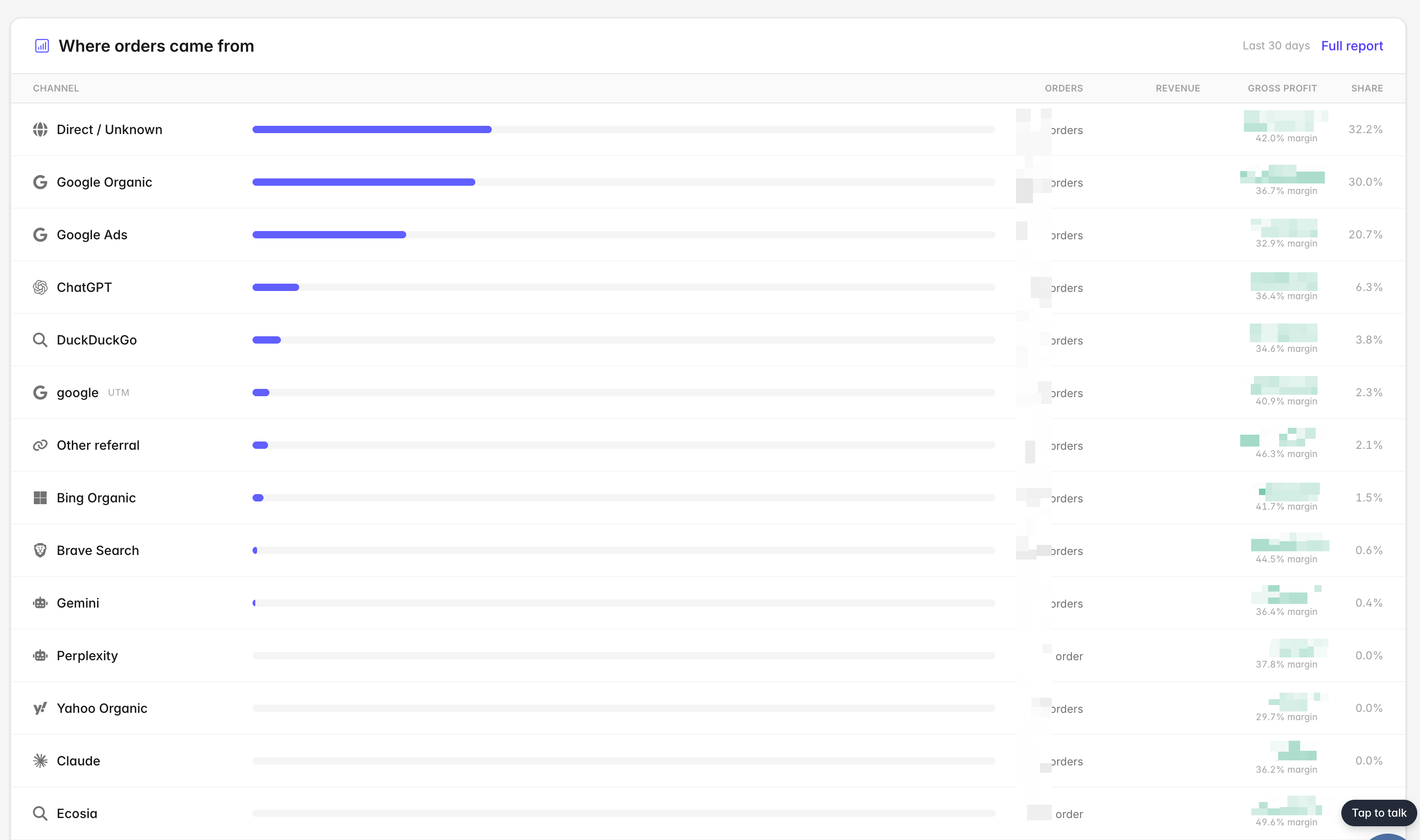
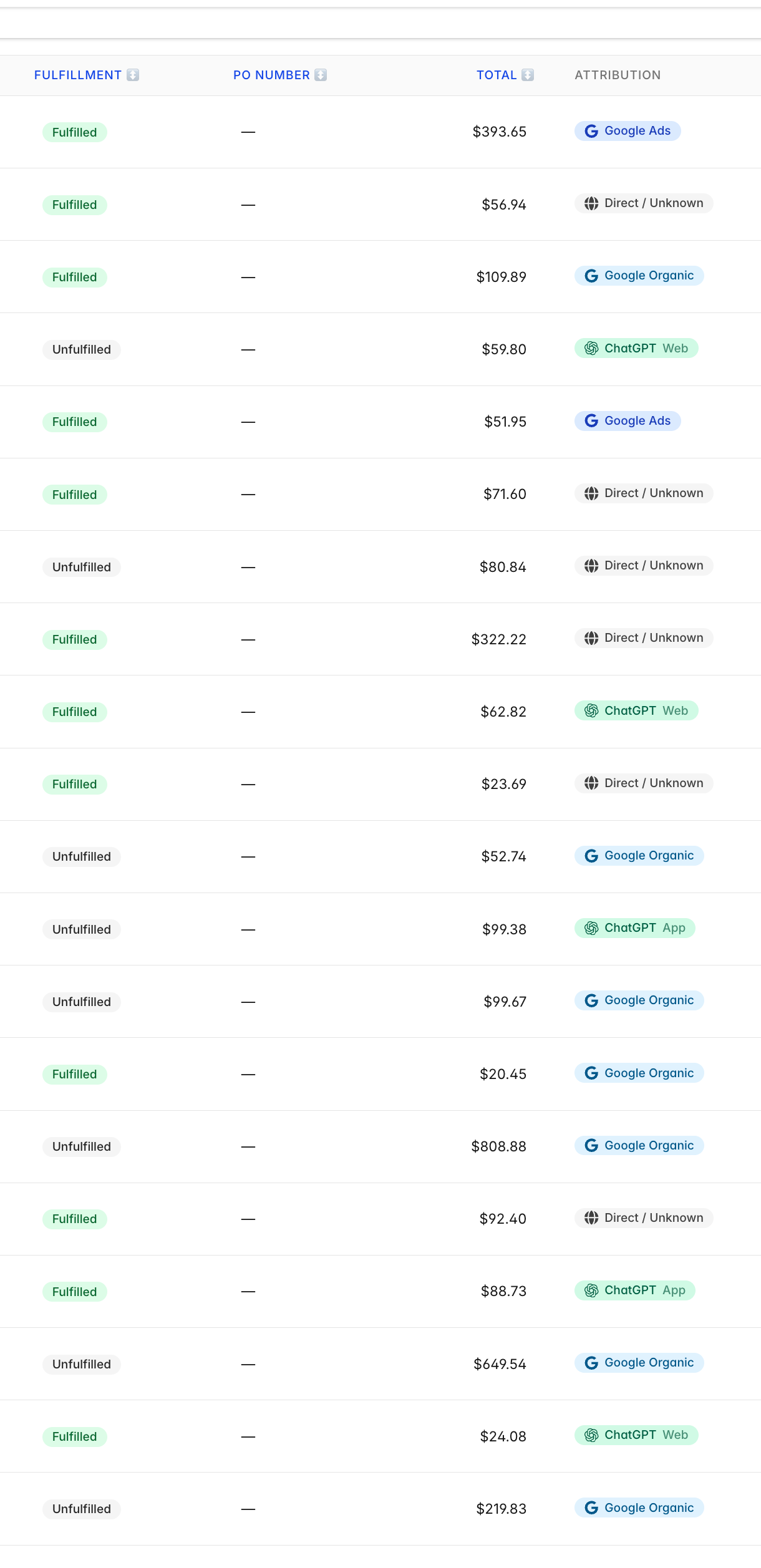
What does “optimally refinancing” mean?? Really. This sounds like spreading FUD.
A perfect decision about financing would need to know future interest rates and how long you will stay in the house.
You start with the 20% of mortgagees that completely fail to refinance even though it would save them money [1] and then move on the other 17% that wait too long to refinance and then the 52% that do so at the wrong rate by using rules of thumb instead of more sophisticated models. [2]
If you'd like to better understand this "FUD", Matt Levine is a much better write than I am: https://archive.is/WljUV
[1] https://www.nber.org/papers/w20401 [2] https://www.econstor.eu/bitstream/10419/96658/1/74522380X.pd...
It's funny how many AI tool demos have used flight booking as an example task. I always groan at that. I just don't think that will be the way most people book flights. Maybe the 1%ers or less. Are you you currently doing this?
I want to ask the AI to search for flights to my next trip, with x y z restrictions. It shows me the flights and gives me options A B and C. I tap B and it goes and books it for me. That's no different than a traditional experience like Kayak except that instead of pressing "book now" and manually filling in the details (or rather: these days letting safari autofill) I press the "LGTM" button and software fills in the rest.
ETA: the shopping experience is the same. I don't want my muse (or whichever) agent to "autonomously" "decide" to purchase an item for me that I've mentioned off hand at some point in time. The use case is treating muse as an addition/alternative to the traditional search experience.
"hey muse I want to buy a new tv, what are the popular/good models from 2025+ with reviews from reputable websites? Shortlist me ~3 within x-y budget also ensure that the local Best Buy or Costco has it in stock so I can pick it up. Actually also let me know if the box will fit in my Toyota or if I need to rent a van. Also for each positive review find me a negative review to balance it out."
And then after I do my own reading on what it surfaced me, I just say "ok muse place an order for the top option, schedule a pickup time for Saturday"
There's not a ton of money in skimming commissions off of flights (probably < 1%), but there is if you can attach a hotel booking to it (upwards of 10%), so if you can become the preferred vendor for a business traveler, there's money to be made.
Unless you have money to throw away I can’t imagine not checking the details and comparing prices. Hell, even if you do have money to throw away you still want to double check everything just before the last purchase decision. Is it going to the right city? Is it at a reasonable hour? Is baggage included or purchased? Etc
The most useful feature for me is google's price/date grid. For personal travel, I'm flexible with dates, so I always use that to just find when flights are cheap. For work, I try to find the best price, but I'm not super picky since the company is paying for it.
I feel like the travel site UIs do a good job of summarizing all the info and putting it in front of you.
Do you want the agent to book it for you? Or just find it?
Google flights is great and I use it every time I want to fly, but it's very rare that you can purchase the actual flight on google flights too.
Will the agent represent the individual or the organization?
The only world that doesn't lead to accelerated manipulation, wealth inequality, and ultimately oppression is the one where the is answer absolutely clear: It is the individual.
The social norms for this are being shaped right now. This is the most important question in AI.
We're distracted by the far less important questions. Safety, nationalism, and tribalism are how we don't talk about this.
This is /the/ important question of our time.
I was having an agent search for a set of skincare products to the lowest price within a certain budget, and a lot of sites just blocked it, so I ended up buying it from a site that didn't.
Monopoly/Duopoly-type companies like United can make decisions that hurt the consumer without a natural market backstop. This is when social norms need to come in as a backstop.
Another way this could go is simply that it is impossible to defend against an individual accessing services through the agents. Which I believe is already the case.
But entrenched interests in the existing organizations will see some real creative destruction as more consumer-friendly models outcompete them. In those cases, they reach for legislation. Which has been happening.
The public needs convincing, though. And that's why right now, the narrative is all about AI safety and protection from job loss.
Legislation to meet those worries would almost certainly be crafted to entrench the current organizations.
The real battle is not about jobs and safety. Personal agents would do more second-order good for the average person at the cost of a lot of 'capital destruction' - one of those newspeak words. The word here means that consumers no longer have to pay too much money - labor - for something because now they can get a better version of it for free/cheap.
GDP doesn't capture free things - as in beer or freedom.
AI has the potential to make a lot of things free in both senses. The entrenched are a headwind.
Should everyone and their grandma be allowed to send a robot to interact with any site?
What are you going to do when muse books the wrong flight non-refundable? Will you go to Meta support or airline support?
Probably many other things too. But it's an arms race.
I would not have done it myself: it takes quite a bit of work and clickery to access all the reviews for every hotel.
Pretty sure booking.com will soon follow with an agent ban.
If it is ok for them to do it, then it should also be ok for the customers to do it.
I predict the same thing happening with AI agents. The direct analogy here is United is missing out on revenue by being unable to trick me into paying to choose my seats or whatever. Luckily, it will be a harder for the platforms to cut off agents but they will try.
United makes a real share of its money on the screens between search and pay. An agent moves right past all of that. Idk, I think eventually everyone will accept the AI agents.
I don't like the "agentic web" any more than I liked the advertising-funded web, but that doesn't make me right. The web will continue to be less and less about human attention and more about LLMs using the web on our behalf. Advertising on the web will be useless, gobbled up by advertising on the LLM platforms.
What are airlines they really afraid of? That people get an advantage by comparing prices?
And for banks, for years US banks have managed to keep data internally, only exposing it through Plaid, and thus getting paid for it. API like the PSD2 in Europe allow me to connect my software to pull in the transactions for free. In the US you have to hand over money to say Monarch.
They want a person to go through the checkout flow because people might click on the high margin ad-ons they offer. United has a bunch.
Usually they are for selling more tickets
So the question is : what are they not telling us ??
It arguably makes it fairer. An option to trade effort => value.
If they would give the best price to everyone right away,the lowest price would be higher.
I'd rather have uniform pricing than have to hunt to not get fucked
If they make me wait in a phone tree for hours, they should be able to talk to my AI to resolve some issues.
That kind of argument in bad faith is enough to tell they blocked it because it's detrimental to them and adventageous to customers.
I also wanted to play with some ideas I have around approval of agentic actions and sharing of credentials. I can selectively share browser cookies with my MCP server and it'll inject them into browsers the agent can use for a limited scoped task. I use a decision API to try and see if the browser actions match the approved work or if they're going awry. This is generally preferable (for me) vs just handling my credentials over and letting the agents YOLO with their cloud browser. I get saved recordings sent to my phone.
Or at least a California state law.
Checking in is a different matter and understood. That is flight safety matter.
I guess that would be a great opportunity for non-tech people to discover local LLMs.
And the reason for it is that a good agent will just bulldoze its way through all dark patterns and ways to upsell you. And the airline or hotel (speaking from booking.com experience) want to upsell you so badly it hurts.
Which is why any agentic setup, except for a completely self-hosted one, is not viable in this situation.
Some of the points they raise, I do think are cause for concern as it relates to potential legal liabilities... but I don't see how they could possibly restrict AI usage meaningfully, besides just getting the big popular groups to assist in limiting their own services somehow, which doesn't solve the issue entirely of course, especially with local LLM usage on the rise.
Oh, you need me to go through twenty separate pages and popups to finally cancel my subscription to your shitty predatory service? Claude doesn't care.
My Flight was cancelled, so I need to wait on hold for 10 hours, re-calling after getting dropped 'accidentally' 12 times during said process so I can talk to someone who will process a refund for me? Claude is happy to do that.
Claude doesn't care if he has to wait 2 months. Claude just needs my "Text-To-Voice" custom tool, my "User-Verification-Values" custom tool, and my "Call via IP" custom tool/etc and he will work as long as I need him to.
What if the airlines instead focused on delivering great service at a competitive price?
"Nah, let's escalate this arms race instead."
Germania, IIRC, tried that in the late 90s, offering a flat fare for every seat.
They had to roll it back very quickly because their bookings dropped unsustainably - nobody wanted to pay a fair price for a seat, even if it was cheaper than they might realistically have had to pay under dynamic pricing.
All that potential customers fixated on was that the flat fares were more expensive than the few cheap loss-leader seats advertised on rival airlines.
"The market can remain irrational longer than you can remain solvent" etc etc
https://www.msn.com/en-us/money/economy/delta-united-jetblue...
It’s an industry AI vs consumer AI arms race, and industry sure doesn’t want the consumer to win.
Unless there is some Claude AI safety concern of booking tickets.
So basically, not a ban. They all ARE authorized.
I was happy, because we now finally have AI to take the drudgery of our lives, so that I can write my poetry, paint and do other human stuff. But no, the airlines will ensure that the drudgery is ours, AI is only for them to use in automated "assistants".
If you now say something with the word "competition" in it, I will laugh at you out loud. There is no competition. All airlines will copy the same idiotic pattern.
If Meta or Claude or whoever came to an airline offering that kind of deal, they'd build an MCP in a week and solve the very simple regulatory issues - simply add a skill that shows the exact same UI of "promise you have no swords, machine guns or bombs in your luggage") to the user that the airline's own site uses.
Until that happens, they'll just ban them.
They are not going to care too much if you as an individual have hacked up something that does it for you. Hope you get a good seat!
I'm bearing on the impacts of AI in general but maybe, just maybe, it might be the death blow to the demand pricing that is so rife in booking airline tickets? Customers hate it. People know that a given flight might cost $200 or $1000 depending on what time of your day you try and book, whether you try and book on a weekday or weekend, if you're booking from a corporate IP address and so on. None of these things have anything to do with how full the plane is. They're all UX anti-patterns to ask "how much money do you have?" before giving you a price. And it needs to die.
Airlines better get used to this because this is an arms race they cannot possibly win. Good.
And some banks are forcing the use of their insecure apps that rely on SMS 2FA.